Uncategorized
African Cichlid Aquarium Setup in Canada: A Practical Guide to Rockwork, Water, and Stocking
Nov
African cichlids are among the most colourful and engaging freshwater fish available to Canadian aquarists. Their bright patterns, active behaviour, and distinctive social structure make them excellent centrepiece fish for a properly planned aquarium. They are also less forgiving of poor preparation than many community species, especially when water quality, aggression, and stocking are not managed carefully.
This evergreen guide explains how to plan an African cichlid aquarium setup in Canada. It covers the main cichlid groups, tank requirements, rockwork, filtration, water chemistry, feeding, stocking, and long-term maintenance. Whether you are considering mbuna, peacock cichlids, or haplochromis, the goal is the same: create a stable environment that supports healthy fish and predictable behaviour.
Choose the right African cichlid group first
“African cichlid” describes a very large range of fish. Species from Lake Malawi, Lake Tanganyika, and Lake Victoria can have different sizes, temperaments, diets, and water requirements. Choosing the group before buying the aquarium helps prevent compatibility and space problems later.
Mbuna
Mbuna are rock-dwelling cichlids from Lake Malawi. Many remain relatively compact, but they are often highly territorial. Males may defend caves, ledges, or sections of rockwork, particularly when breeding.
Mbuna setups usually benefit from abundant rockwork with multiple visual barriers and hiding places. A larger group of compatible fish can sometimes distribute aggression more effectively than a small number, but overstocking is not a substitute for filtration, maintenance, or thoughtful species selection.
Peacock cichlids
Peacock cichlids, generally from the genus Aulonocara, are known for striking colour and a somewhat calmer temperament than many mbuna. They are often chosen for display aquariums because they combine attractive patterns with active but manageable behaviour.
Peacocks usually appreciate open swimming space, sandy areas, and moderate rockwork. They should not automatically be mixed with every mbuna species. Highly aggressive tank mates may outcompete them for food or keep them stressed.
Haplochromis and larger Malawi cichlids
Haplochromis-type cichlids and other larger Lake Malawi species can be impressive additions to a spacious aquarium. Their adult size, feeding habits, and temperament vary considerably, so a species-by-species plan is important.
These fish may require a longer aquarium, stronger filtration, and more open swimming room than a small mbuna community. Always consider adult size rather than the size of the juveniles available for sale.
You can browse the African cichlid selection at Monster Aquarium Canada while comparing species and planning your stocking list.
How large should an African cichlid aquarium be?
There is no single tank size that suits every African cichlid. A small, carefully selected group of dwarf or less aggressive species may work in a medium aquarium, while larger or more active combinations need substantially more space.
- Medium aquariums: suitable only for carefully selected smaller species and conservative stocking.
- Four-foot aquariums: a practical starting point for many mixed Malawi displays, depending on the fish chosen.
- Large aquariums: preferable for larger haplochromis, Lake Tanganyika communities, aggressive combinations, or multiple groups.
Length and footprint are often more useful than height. A longer tank provides more territory and allows subordinate fish to escape the direct line of sight of dominant individuals. A tall aquarium may look impressive but offer limited usable floor area for rock-dwelling species.
Before ordering fish, write down the expected adult size, minimum recommended aquarium, temperament, diet, and preferred water conditions for every species. If the final aquarium will be smaller than the recommended adult setup, choose different fish rather than relying on future upgrades.
Build stable rockwork without creating hazards
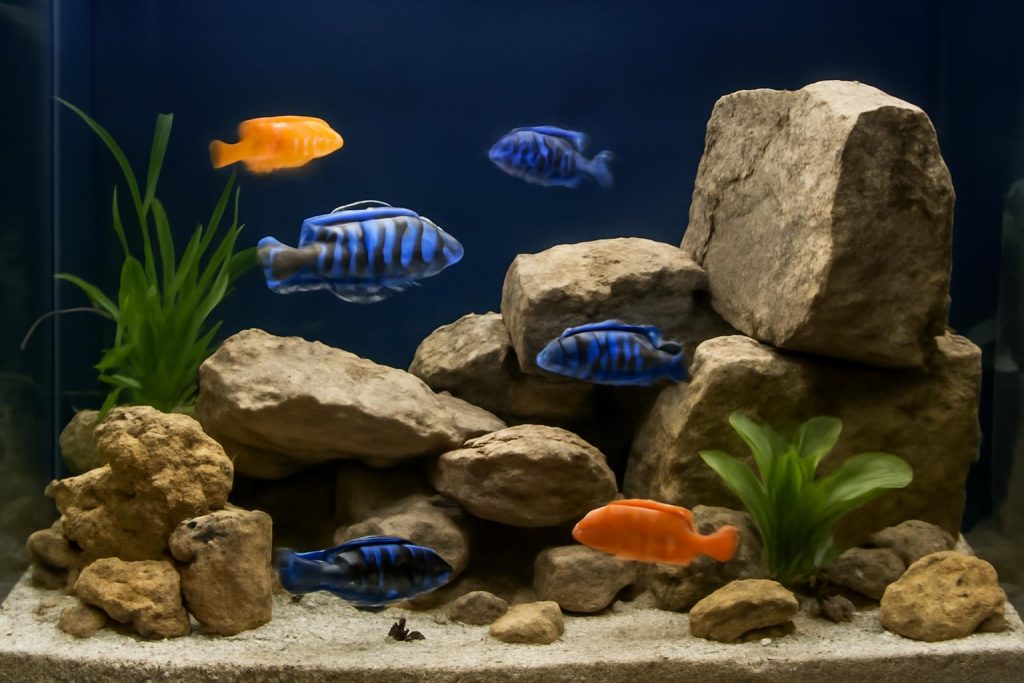
Rockwork is both decoration and territory in an African cichlid aquarium. It gives fish places to shelter, establish boundaries, and retreat from persistent aggression. However, unstable rocks can crack glass, trap fish, or collapse when fish excavate beneath them.
Safe rockwork principles
- Place heavy rocks directly on the aquarium base or on a properly fitted protective layer before adding substrate.
- Test each structure for wobbling before filling the aquarium.
- Create several caves and sight breaks rather than one large pile with limited exits.
- Leave open swimming space, especially for peacocks and larger haplochromis.
- Avoid narrow gaps where a fish could become wedged.
- Keep rocks away from the glass if movement or maintenance could cause contact.
Many keepers use inert sand because it resembles the natural environments of several African cichlid groups and allows fish to sift or rearrange the substrate. Choose aquarium-safe materials and rinse them thoroughly before use. Avoid sharp gravel that can damage mouths or gill areas in fish that constantly sift the bottom.
Plan filtration for a high-bioload aquarium
African cichlids are active eaters and can produce a substantial amount of waste, particularly in a well-stocked aquarium. Strong mechanical filtration is essential for removing uneaten food and solid waste, while biological filtration converts toxic ammonia and nitrite into less harmful nitrate.
A canister filter, large hang-on-back filter, sump, or combination of filters can work when correctly sized and maintained. Aim for reliable circulation throughout the aquarium, but avoid creating such strong flow that fish struggle to swim or cannot rest.
Useful filtration features
- Mechanical media: captures particles and keeps the water clear.
- Biological media: provides surface area for beneficial bacteria.
- Adjustable circulation: helps eliminate dead spots behind rockwork.
- Pre-filter sponges: protect young fish and reduce the chance of clogging.
Do not replace all biological media at once. Rinse reusable media in removed aquarium water rather than untreated tap water, which may damage the beneficial bacterial colony. Replace disposable polishing material when it becomes clogged, but do not confuse clear water with safe water; testing remains important.
Understand African cichlid water chemistry
Many African cichlids come from mineral-rich lakes with alkaline, moderately hard to hard water. The exact needs differ by species and lake, but stable conditions are generally more important than chasing a perfect number.
Test your source water for pH, general hardness (GH), carbonate hardness (KH), ammonia, nitrite, and nitrate. Canadian tap water can vary significantly between municipalities and may also change seasonally. Test the water you actually plan to use rather than relying on a general regional assumption.
Aquarium buffers or mineral products may be useful when source water is too soft or unstable, but they should be added gradually and according to product directions. Sudden pH changes can stress fish. The aquarium water quality category can help you find testing and maintenance products for monitoring the system.
Important water-quality targets
- Ammonia: should remain at zero in a mature, properly functioning aquarium.
- Nitrite: should remain at zero.
- Nitrate: should be controlled with water changes, plants where appropriate, and sensible stocking.
- pH and hardness: should be appropriate for the selected species and remain stable.
Cycle the aquarium completely before adding fish. A biological supplement can support the process, but it does not replace testing or adequate time for beneficial bacteria to establish. Add livestock gradually rather than introducing the entire planned population on the first day.
Stocking and compatibility: avoid common mistakes
Compatibility is more than matching water temperature. African cichlids may compete over territory, food, and breeding sites. A peaceful-looking juvenile can become significantly more territorial as it matures.
When planning a community, compare species by adult size, aggression, swimming level, diet, and colour pattern. Avoid combining fish that are so similar in appearance that males may repeatedly challenge one another, especially when both occupy the same territory.
Introducing new rockwork or rearranging existing rockwork can temporarily reduce established territories. Some keepers rearrange the layout before adding new compatible fish, allowing the group to establish a new hierarchy. This does not guarantee harmony, so observe the aquarium closely after any change.
Keep a backup plan for an unusually aggressive individual. A divider, spare aquarium, or rehoming option may be necessary if one fish causes continuous injury. Chasing that lasts for a few minutes is different from a fish being pinned in a corner, hiding constantly, losing scales, or refusing food.
Feed for colour, growth, and digestive health
Diet should match the species. Many mbuna are adapted to grazing algae and biofilm, while peacocks and some haplochromis may accept a broader diet. Feeding the wrong foods, overfeeding, or offering an excessively rich diet can contribute to digestive problems and poor water quality.
- Offer a quality staple food suited to the cichlid group.
- Feed small portions that are consumed quickly.
- Use sinking foods when appropriate so subordinate fish can feed without competing at the surface.
- Vary the diet carefully rather than changing foods constantly.
- Remove uneaten food and reduce portions if waste accumulates.
Premium foods such as NorthFin products may be useful when their ingredients and feeding instructions suit your fish. Treats and live foods should be used thoughtfully, particularly in herbivorous mbuna communities. A high-quality diet cannot compensate for poor water quality or overcrowding.
Maintenance for a healthy cichlid aquarium
Consistency is the foundation of African cichlid care. Establish a weekly routine that includes checking equipment, testing key parameters, removing debris, and performing a partial water change. The correct water-change volume depends on stocking, nitrate levels, feeding, and filtration, so use test results to refine your schedule.
Inspect heaters, filter intakes, airline tubing, lids, and rock structures. Clean algae from viewing panels without disturbing the entire aquascape. If the filter flow has dropped, inspect the intake and mechanical media before replacing biological media.
Keep records of test results, water changes, fish behaviour, and feeding. A simple log can reveal gradual changes before they become serious problems. For example, rising nitrate may indicate that the aquarium has become overstocked as juveniles grow, or that feeding has increased without a corresponding maintenance adjustment.
Buying African cichlids online in Canada
When buying fish online, confirm the species name, expected size, availability, shipping schedule, and livestock policies before placing an order. Delivery timing matters because live fish should be received promptly and transferred into a prepared aquarium.
Choose fish that fit the aquarium you have today, not a tank you might purchase later. If you are building a new system, have the aquarium fully cycled and ready before ordering. You can start by visiting the Monster Aquarium Canada home page to review available livestock, equipment, food, and aquarium care products.
For current shipping details, packaging expectations, and any arrive-alive terms, review the store’s policies and contact the seller before checkout. Policies can vary by destination, season, carrier, and livestock type, so do not assume that every order has identical conditions.
Frequently asked questions
Can African cichlids live in Canadian tap water?
Often, yes, but it depends on the water chemistry in your municipality and the species selected. Test pH, GH, KH, ammonia, nitrite, and nitrate. If your water is very soft or unstable, use an appropriate mineral or buffering strategy gradually and monitor the results.
Are African cichlids suitable for beginners?
They can be, provided the aquarium is properly cycled, the stocking plan is conservative, and the keeper is prepared to manage aggression and water quality. A carefully selected group is usually a better first project than a random mixture of species.
Can mbuna and peacock cichlids be kept together?
Sometimes, but it is not always ideal. Mbuna may be more aggressive and may compete strongly for food, while peacocks often prefer calmer tank mates. Aquarium size, individual temperament, diet, and species selection all matter.
Do African cichlids need live plants?
No. Many cichlid aquariums use rockwork and sand instead. Some fish may uproot or eat plants, although tough plants attached to rocks or wood can work in selected setups. Prioritize safe structure, swimming space, and stable water conditions.
Build the aquarium around the fish
The best African cichlid aquarium setup in Canada begins with a realistic stocking plan. Select one compatible group, provide a stable and well-filtered environment, secure the rockwork, test your water, and feed according to the species rather than appearance alone.
With thoughtful preparation and consistent maintenance, African cichlids can become active, colourful, long-term residents that reward careful observation. Start with a manageable community, allow the aquarium to mature, and expand only when the fish, filtration, and available space can support it.
