Cockatoo Dwarf Cichlid (Apistogramma cacatuoides) for Sale in Canada
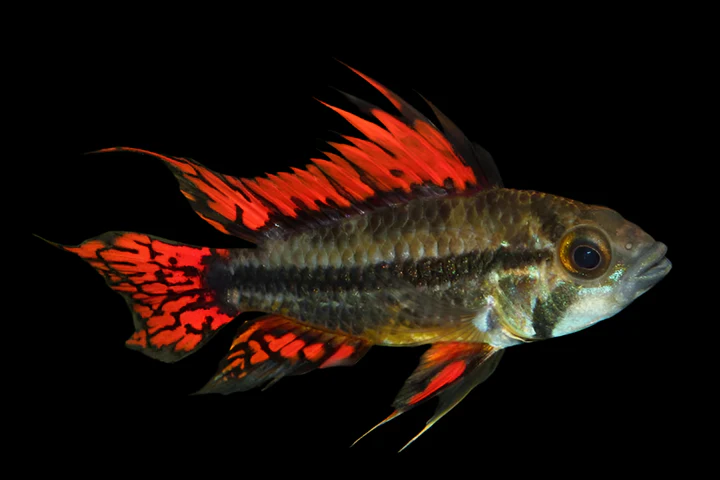
The Cockatoo Dwarf Cichlid (Apistogramma cacatuoides) is one of the most popular and attractive dwarf cichlids in the aquarium hobby. Native to South America, this fascinating species is admired for its elongated dorsal fin, colourful body, interesting personality, and manageable adult size.
The common name Cockatoo Dwarf Cichlid comes from the distinctive extended rays of the dorsal fin, which can resemble the raised crest of a cockatoo. Depending on the individual fish and colour variety, males may develop beautiful shades of orange, red, yellow, and blue, especially under excellent aquarium conditions.
Despite their relatively small size, Cockatoo Dwarf Cichlids have plenty of personality. They can establish territories, explore caves, interact with tank mates, and display fascinating breeding behaviour. This makes them an excellent choice for aquarists looking for a colourful centerpiece fish for a planted or carefully planned community aquarium.
Monster Aquarium Canada offers Cockatoo Dwarf Cichlids (Apistogramma cacatuoides) for aquarium hobbyists across Canada.
Why Choose a Cockatoo Dwarf Cichlid?
A Colourful South American Dwarf Cichlid
Cockatoo Dwarf Cichlids are admired for their:
Unique Features
Premium Characteristics
- Distinctive cockatoo-like dorsal fin
- Attractive orange, red, yellow, and blue coloration
- Fascinating personality
- Manageable adult size
- Interesting territorial behaviour
- Excellent centerpiece fish for planted aquariums
- Fascinating breeding behaviour
- Popular South American dwarf cichlid
Colour intensity and finnage can vary depending on sex, genetics, age, diet, health, and aquarium conditions.
How Large Does a Cockatoo Dwarf Cichlid Get?
Male Cockatoo Dwarf Cichlids generally reach approximately 3–4 inches (7.5–10 cm), while females are usually smaller at approximately 2 inches (5 cm).
Males are often more colourful and develop longer, more elaborate fins.
Aquarium Size
A 20-gallon aquarium or larger is recommended for a single fish or carefully planned pair, while a 30-gallon or larger aquarium is preferable for a pair with tank mates.
Recommended Aquarium Setup
- Mature biological filtration
- Stable, clean water
- Gentle water movement
- Fine sand substrate
- Driftwood
- Leaf litter
- Live plants
- Caves
- Coconut shells or spawning shelters
- Visual barriers between territories
- Open swimming areas
Providing multiple hiding places can help reduce territorial stress.
Water Parameters
- Scientific Name: Apistogramma cacatuoides
- Common Name: Cockatoo Dwarf Cichlid
- Origin: South America
- Adult Size: Males approximately 3–4 inches, females approximately 2 inches
- Temperature: 24–29°C (75–84°F)
- pH: Approximately 6.0–7.5
- Water Hardness: Soft to moderately hard
- Care Level: Moderate
- Temperament: Semi-peaceful and territorial
- Diet: Omnivorous with a strong preference for protein-rich foods
- Swimming Level: Bottom and lower-middle levels
- Lifespan: Approximately 3–5 years with proper care
Stable water quality is especially important for this species.
Feeding Your Cockatoo Dwarf Cichlid
A Varied Protein-Rich Diet
Cockatoo Dwarf Cichlids benefit from a varied diet of high-quality prepared and frozen foods.
Recommended Foods
- High-quality small cichlid pellets
- Micro pellets
- Frozen brine shrimp
- Frozen bloodworms in moderation
- Daphnia
- Mysis shrimp
- Insect-based foods
- Other appropriately sized protein-rich foods
Feed small portions and avoid excessive waste, particularly in heavily planted aquariums.
Behaviour and Temperament
Small Cichlid, Big Personality
Cockatoo Dwarf Cichlids can be peaceful in the right aquarium but may become territorial, particularly during breeding.
They may:
- Defend a cave or preferred territory
- Display to other fish
- Chase intruders away
- Explore the aquarium actively
- Become more protective during spawning
Males and females may show different behaviours, and individual temperament can vary.
Adequate space and visual barriers are important when keeping multiple cichlids.
Compatible Tank Mates
Potential Tank Mates
Cockatoo Dwarf Cichlids may live with peaceful fish that occupy different areas of the aquarium, including:
- Small peaceful tetras
- Pencilfish
- Peaceful rasboras
- Hatchetfish
- Small Corydoras, where conditions are suitable
- Other peaceful community fish
Avoid
- Large aggressive cichlids
- Highly territorial fish
- Large predators
- Fin-nipping species
- Fish that require incompatible water conditions
Avoid overcrowding the aquarium, especially when keeping a breeding pair.
Cockatoo Dwarf Cichlid in a Planted Aquarium
A Beautiful Centerpiece Fish
A planted aquarium can be an excellent environment for this species.
Consider including:
- Fine-leaved plants
- Broad-leaved plants
- Driftwood
- Leaf litter
- Caves
- Coconut shelters
- Shaded areas
- Open sandy areas
Plants and décor can help create visual barriers and separate territories.
Breeding Cockatoo Dwarf Cichlids
A Fascinating Cave-Spawning Species
Apistogramma cacatuoides is a cave-spawning dwarf cichlid. A female may choose and defend a suitable cave or sheltered spawning site.
Breeding Setup
A successful breeding setup may include:
- Stable warm water
- Excellent water quality
- Suitable caves
- Fine sand substrate
- A nutritious diet
- Low stress
- Limited competition
Females can become extremely protective of eggs and fry.
For breeding, provide sufficient space and monitor aggression carefully.
Why Buy Cockatoo Dwarf Cichlids from Monster Aquarium Canada?
Colourful South American Fish for Canadian Aquarists
Monster Aquarium Canada offers unique freshwater fish for hobbyists interested in dwarf cichlids, South American fish, planted aquarium fish, rare tropical fish, community fish, and specialist aquarium species.
Carefully Selected Aquarium Fish
Fish are selected for qualities such as:
- Healthy body condition
- Alert behaviour
- Good overall condition
- Natural swimming behaviour
- Strong feeding response
- Attractive coloration and finnage
Canadian Aquarium Fish Supplier
Monster Aquarium Canada specializes in freshwater fish, rare tropical fish, monster fish, aquarium plants, shrimp, crayfish, snails, fish foods, medications, and aquarium supplies for Canadian aquarium hobbyists.
Frequently Asked Questions
1. How large does a Cockatoo Dwarf Cichlid grow?
Males generally reach approximately 3–4 inches (7.5–10 cm), while females are usually around 2 inches (5 cm).
2. Are Cockatoo Dwarf Cichlids aggressive?
They can be semi-peaceful but territorial, particularly during breeding. Adequate space, caves, and visual barriers can help manage aggression.
3. What size aquarium does a Cockatoo Dwarf Cichlid need?
A 20-gallon aquarium or larger is recommended, while a 30-gallon or larger aquarium is preferable for a pair with community tank mates.
4. What do Cockatoo Dwarf Cichlids eat?
They benefit from high-quality small cichlid pellets, micro pellets, brine shrimp, Daphnia, mysis shrimp, insect-based foods, and other appropriately sized protein-rich foods.
5. Can Cockatoo Dwarf Cichlids live in a planted aquarium?
Yes. They can make excellent centerpiece fish for planted aquariums with caves, driftwood, fine substrate, visual barriers, and appropriate tank mates.
Be the first to review “Cockatoo Dwarf Cichlid for Sale in Canada | Buy Apistogramma cacatuoides”
Related products
Reviews
There are no reviews yet.