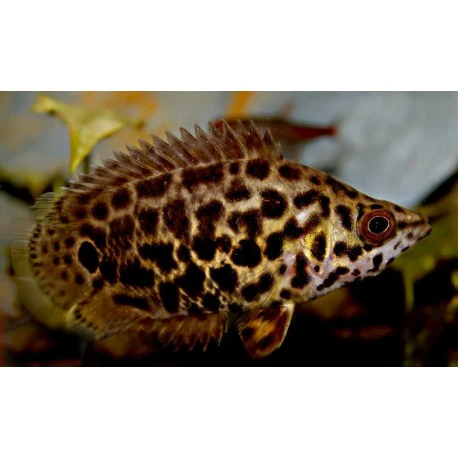
LEOPARD CTENOPOMA (LEAF FISH) (Ctenopoma acutirostre) LG 3.5″
Leopard Ctenopoma (Leaf Fish) for Sale in Canada
The Leopard Ctenopoma (Ctenopoma acutirostre), commonly known as the Leopard Bushfish or Leaf Fish, is a fascinating and cryptic freshwater predator prized for its leaf-like camouflage pattern and slow, stealthy hunting behavior. This unique species is popular among aquarists in Canada who want an unusual centerpiece fish with prehistoric looks and patient, ambush-style behavior. Leopard Ctenopoma Canada
Native to slow-moving rivers, floodplains, and densely vegetated waters of Central Africa, Ctenopoma acutirostre thrives in calm aquariums with plenty of cover. Its mottled leopard-like pattern allows it to blend perfectly into plants, driftwood, and leaf litter, making it one of the most naturally camouflaged aquarium fish available.
Why Choose Leopard Ctenopoma?
This species is all about stealth, personality, and unique predator behavior.
Incredible Leaf-Like Camouflage Pattern
The most striking feature of the Leopard Ctenopoma is its irregular black spotting over a golden-brown body, closely resembling dead leaves or floating debris. This natural camouflage helps it ambush prey in the wild and gives it an almost “invisible” appearance in planted aquariums.
Its pattern shifts in intensity depending on mood, lighting, and surroundings.
Slow, Intelligent Predator Behavior
Unlike fast predatory fish, Ctenopoma acutirostre is a slow ambush hunter. It patiently observes its surroundings before striking small prey with precision.
This makes it a highly engaging fish to watch, especially in dimly lit, heavily planted aquariums.
Ideal Tank Mates for Leopard Ctenopoma
Tank mates must be chosen carefully due to its predatory nature.
Compatible Tank Mates
- Medium to large tetras (Congo, Colombian, Black Phantom)
- Rainbowfish
- Gouramis (larger species)
- Severums
- Bristlenose Plecos
- Synodontis catfish
- Other medium peaceful fish too large to be eaten
Avoid very small fish like neon tetras or nano rasboras, as they may be considered food.
Ideal Aquarium Setup
Leopard Ctenopoma thrives in calm, heavily structured aquariums.
Recommended Tank Conditions
- Temperature: 72°F – 82°F (22°C – 28°C)
- pH: 6.0 – 7.5
- Soft to moderately hard water
- Low to moderate flow
- Heavily planted tank with driftwood and leaf litter
- Dim lighting preferred
- Minimum tank size: 30–40 gallons for a single fish
Providing cover is essential to reduce stress and encourage natural behavior.
Feeding Requirements
This species is a carnivorous ambush predator with a preference for live or frozen foods.
Recommended Foods
- Frozen bloodworms
- Brine shrimp
- Krill
- Small fish (occasionally in wild diet; avoid in captivity if possible)
- Blackworms
- High-quality carnivore pellets
- Live foods (if available)
Over time, many individuals can be trained onto frozen and prepared foods.
Behavior and Temperament
Leopard Ctenopoma is a solitary, slow-moving predator that spends most of its time hovering motionless among plants and décor. It is generally peaceful toward appropriately sized tank mates but will eat anything small enough to fit in its mouth.
It is nocturnal and crepuscular, becoming more active during low light periods.
Why Buy Leopard Ctenopoma from Monster Aquarium Canada?
Monster Aquarium Canada provides healthy, high-quality Ctenopoma acutirostre selected for strong feeding response, body condition, and coloration. Each fish is carefully acclimated for successful transition into home aquariums across Canada.
Whether you’re building a West African biotope, predator display tank, or species-focused setup, Leopard Ctenopoma offers unmatched camouflage beauty and slow, intelligent behavior.
Frequently Asked Questions
How big do Leopard Ctenopoma get?
They typically grow to about 6–8 inches (15–20 cm).
Are they aggressive?
Not usually, but they are predatory toward small fish.
Can they live in community tanks?
Yes, with medium to large tank mates.
Do they need live food?
Not necessarily, but live or frozen foods are preferred.
Are they good for beginners?
They are better suited for intermediate aquarists due to diet and tank mate requirements.
Be the first to review “Leopard Ctenopoma (Ctenopoma acutirostre) 3.5″ For Sale Canada | Leaf Fish Predator”
Related products
Monster Aquarium
Reviews
There are no reviews yet.