NANDOPSIS TETRACANTHUS 3″ UPSIZED (Nandopsis tetracanthus)
Nandopsis Tetracanthus Overview
The Nandopsis tetracanthus 3″ Upsized is a highly desirable Central American cichlid known for its powerful body, attractive patterning, territorial personality, and impressive adult development.
Often referred to in the aquarium trade as the Cuban Cichlid, Nandopsis tetracanthus is one of the more specialized cichlids for experienced keepers. Even at a juvenile 3-inch size, this fish is already developing the characteristics that make mature specimens so impressive.
The “upsized” designation makes this specimen particularly attractive to aquarists looking for a juvenile that has already progressed beyond the smallest available sizes.
Scientific name: Nandopsis tetracanthus
Common name: Cuban Cichlid, Cuban Cichlid Fish
Family: Cichlidae
Type: Large Central American/Caribbean cichlid
Origin: Cuba
Water type: Freshwater
Temperament: Territorial / aggressive
Diet: Omnivorous
Size offered: 3″ Upsized
Difficulty: Intermediate to advanced
Appearance and Coloration
Juvenile Appearance
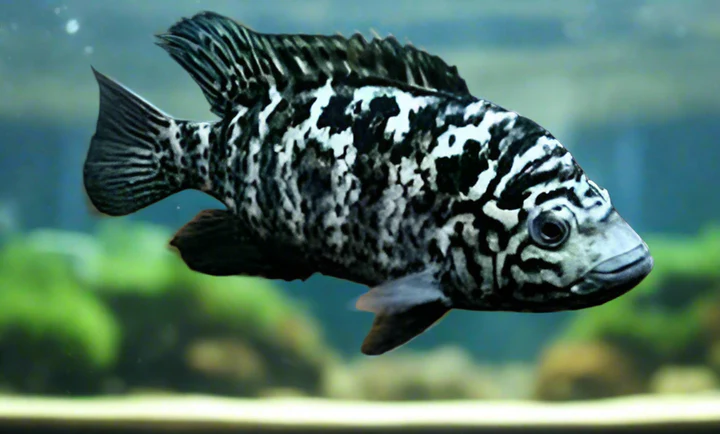
At approximately 3 inches, this Nandopsis tetracanthus is still developing its mature coloration and body proportions.
Young specimens can display a combination of:
- Gray
- Olive
- Brown
- Cream
- Gold
- Dark vertical markings
- Iridescent blue or green highlights
As the fish matures, its pattern and coloration can become significantly more pronounced.
Adult Development
One of the biggest attractions of Nandopsis tetracanthus is watching it transition from juvenile to adult.
Mature specimens can develop a robust body, strong facial features, and striking contrasting coloration. Males can become particularly impressive as they mature.
Color intensity can change according to genetics, mood, social hierarchy, breeding condition, lighting, and water quality.
Natural Origin and Habitat
Nandopsis tetracanthus is endemic to Cuba, where it occurs in freshwater environments.
Its natural habitat includes rivers, streams, and other freshwater systems with rocky areas, submerged structures, and open swimming zones.
A suitable aquarium should provide a combination of:
- Open swimming space
- Rocky structures
- Driftwood
- Hiding areas
- Strong filtration
- Excellent oxygenation
Aquarium Setup
The Cuban Cichlid is best kept by aquarists who understand the behavior of large territorial cichlids.
Recommended Tank Size
A 3-inch juvenile can be grown in a suitably sized aquarium, but its long-term housing must be planned around its adult size and territorial behavior.
For an adult, a 75–100 gallon aquarium or larger is recommended for a single specimen, with larger systems strongly preferred for pairs or community setups.
A large footprint is particularly useful because this species may establish a substantial territory.
Substrate
Choose:
- Fine sand
- Smooth gravel
- Natural river-style substrate
Avoid sharp gravel or décor that could cause injury during territorial activity.
Decorations
Use durable décor such as:
- Large rocks
- Driftwood
- Roots
- Caves
- Heavy ornaments
- Hardy plants
Create caves and visual barriers so the fish can establish defined territories.
Water Parameters
Maintain warm, clean, well-oxygenated freshwater.
Recommended range:
- Temperature: 75–82°F (24–28°C)
- pH: approximately 6.5–8.0
- Hardness: Soft to moderately hard
- Ammonia: 0 ppm
- Nitrite: 0 ppm
- Nitrate: Preferably kept below approximately 20–40 ppm
Stable water quality is more important than attempting to maintain one exact pH value.
Regular partial water changes are essential, particularly as the fish grows.
Diet and Feeding
Nandopsis tetracanthus is an omnivorous predator that benefits from a varied diet.
Recommended Foods
Use a high-quality staple food such as:
- Cichlid pellets
- Large sinking pellets
- Carnivore pellets
- Spirulina-based foods
- Frozen shrimp
- Mysis shrimp
- Krill
- Bloodworms
- Brine shrimp
- Insect-based foods
A varied diet provides a broad nutritional profile and can help support healthy growth and coloration.
Feeding the 3″ Juvenile
Because this is a growing 3-inch fish, appropriately sized meals can be offered regularly.
Avoid overfeeding. Uneaten food should not be allowed to accumulate because it can quickly affect water quality.
Behavior and Temperament
Territorial Personality
The Cuban Cichlid is not a typical peaceful community fish.
It can become strongly territorial, especially as it matures. Providing sufficient aquarium space and plenty of territory-defining structures can help manage aggression.
Active and Intelligent
This species is an active fish that frequently investigates its surroundings.
Many specimens become highly responsive to their keeper and can recognize feeding routines.
Aggression Can Increase With Age
A young 3-inch specimen may appear relatively manageable, but temperament can change significantly as the fish approaches maturity.
Plan tank mates around the adult personality, not juvenile behavior.
Tank Mates
Careful planning is essential when selecting companions.
Potential Tank Mates
In a sufficiently large aquarium, potential companions may include other appropriately sized:
- Large Central American cichlids
- Robust South American cichlids
- Large plecos
- Large catfish
- Other compatible predatory or semi-aggressive fish
Compatibility depends heavily on individual temperament and aquarium size.
Avoid Small Fish
Small community fish may be chased, injured, or eaten.
Never assume that a tank mate will remain safe simply because the Cuban Cichlid is currently only 3 inches long.
Plants and Aquascaping
Cuban Cichlids can disturb substrate and move aquarium décor.
Hardy Plant Options
If plants are desired, consider sturdy species such as:
- Anubias
- Java fern
- Vallisneria
- Amazon sword
Plants attached securely to rocks or driftwood are less likely to be uprooted.
A rock-and-driftwood aquascape with open swimming space is often a practical choice.
Growth and Adult Development
The 3-inch upsized specimen gives the aquarist a head start on raising this impressive species.
Growth depends on:
- Genetics
- Diet
- Water quality
- Aquarium size
- Temperature
- Filtration
- Feeding schedule
- Stress
Providing excellent conditions during this stage can support healthy development.
Because Nandopsis tetracanthus can become a substantial and powerful cichlid, owners should have a long-term aquarium plan.
Filtration and Maintenance
Strong Filtration
A mature Cuban Cichlid produces a considerable biological load.
Recommended filtration includes:
- Large canister filters
- Sump filtration
- High-capacity biological media
- Mechanical filtration
- Strong water circulation
Oversized filtration is particularly useful for large territorial cichlids.
Regular Water Changes
Regular partial water changes help maintain low nitrate levels and stable water chemistry.
Good oxygenation and surface agitation should also be maintained.
Breeding
Nandopsis tetracanthus can become highly territorial when a compatible pair begins breeding.
Breeding behavior may include:
- Pair formation
- Territory selection
- Cleaning a spawning surface
- Courtship
- Egg laying
- Egg and fry protection
A breeding pair may become considerably more aggressive toward other aquarium inhabitants.
For this reason, additional aquarium space and careful tank-mate selection are important.
Why Choose Nandopsis Tetracanthus 3″ Upsized?
The 3-inch upsized Cuban Cichlid is an exciting choice for aquarists who enjoy raising rare and powerful cichlids.
Key Highlights
- 3-inch upsized juvenile
- Cuban origin
- Large adult potential
- Strong territorial personality
- Attractive developing coloration
- Powerful body shape
- Active behavior
- Excellent choice for experienced cichlid keepers
- Fascinating juvenile-to-adult transformation
- Highly desirable specialty cichlid
This fish is particularly suited to collectors who want something less common than standard aquarium cichlids.
Nandopsis Tetracanthus 3″ Upsized for Sale in Canada
Looking to buy Nandopsis tetracanthus 3″ Upsized in Canada?
Monster Aquarium Canada specializes in unusual freshwater fish and specialty cichlids for Canadian aquarists.
This upsized 3-inch Cuban Cichlid is an excellent opportunity for hobbyists who want to raise a young specimen while already having a substantial start in its development.
Before purchasing, ensure that your aquarium is fully cycled, appropriately filtered, and large enough for the fish’s eventual adult size and territorial behavior.
Livestock availability, size, coloration, and individual temperament can vary. Current inventory should always be checked before ordering.
Canada-Only Sales
Monster Aquarium Canada focuses on customers in Canada looking for specialty freshwater aquarium livestock.
Prepare the aquarium before shipment by confirming temperature, filtration, water quality, and appropriate food.
Frequently Asked Questions
1. What is a Nandopsis tetracanthus?
Nandopsis tetracanthus is a freshwater cichlid endemic to Cuba, commonly known in the aquarium trade as the Cuban Cichlid.
2. How big does Nandopsis tetracanthus get?
It is a large-growing cichlid, with adults capable of reaching approximately 12 inches or more, depending on genetics, sex, diet, and husbandry.
3. Is the Cuban Cichlid aggressive?
Yes. It can be territorial and aggressive, particularly as it matures and during breeding. Adequate space and carefully selected tank mates are important.
4. What size tank does a 3-inch Cuban Cichlid need?
A 3-inch juvenile can be grown in an appropriately sized aquarium, but long-term care should be planned around a 75–100 gallon aquarium or larger for a single adult, with more space recommended for pairs or communities.
5. What does Nandopsis tetracanthus eat?
It is an omnivore that benefits from quality cichlid and carnivore pellets supplemented with foods such as shrimp, krill, bloodworms, brine shrimp, spirulina-based foods, and insect-based foods.
Be the first to review “Nandopsis Tetracanthus 3″ for Sale in Canada | Cuban Cichlid”
Related products
Reviews
There are no reviews yet.