
SUMATRAN TIGERFISH (Datnioides microlepis) for Sale in Canada
SUMATRAN TIGERFISH (Datnioides microlepis) for Sale in Canada
Jun
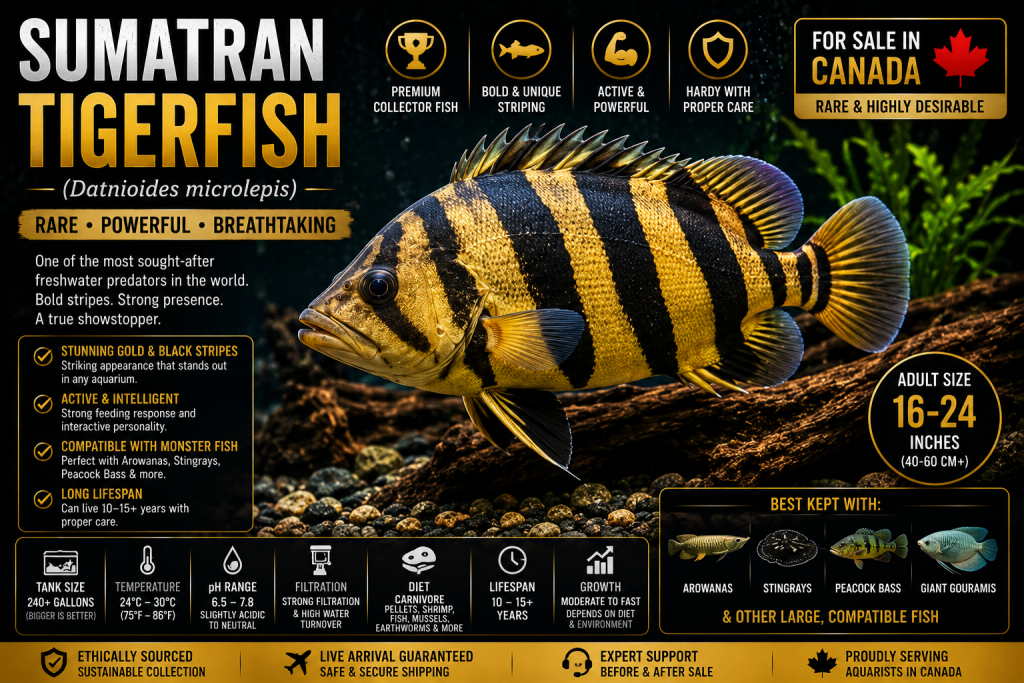
The Sumatran Tigerfish (Datnioides microlepis) is one of the most sought-after freshwater predator fish in the aquarium hobby. Famous for its bold vertical stripes, commanding presence, and rarity within the trade, this species has become a prized possession among monster fish enthusiasts worldwide. Whether displayed as a solitary centerpiece or housed within a carefully planned predator aquarium, the Sumatran Tigerfish never fails to attract attention. SUMATRAN TIGERFISH (Datnioides microlepis) for Sale in Canada
Often referred to simply as a “Datnoid” or “Indonesian Tigerfish,” Datnioides microlepis is highly valued for its stunning coloration and powerful appearance. Unlike many freshwater predators that rely on size alone, the Sumatran Tigerfish combines beauty, intelligence, and personality, making it one of the most desirable fish for serious collectors.
For Canadian aquarists seeking a rare and impressive predator, few fish offer the same combination of elegance and prestige as the Sumatran Tigerfish. SUMATRAN TIGERFISH (Datnioides microlepis) for Sale in Canada
What Is a Sumatran Tigerfish?
The Sumatran Tigerfish belongs to the Datnoid family and originates from freshwater river systems throughout Indonesia and Southeast Asia.
Quick Facts
- Scientific Name: Datnioides microlepis
- Common Name: Sumatran Tigerfish
- Family: Datnioididae
- Origin: Indonesia and Southeast Asia
- Temperament: Semi-aggressive
- Difficulty Level: Intermediate to Advanced
- Diet: Carnivorous
Its bold black bars and golden-yellow coloration make it one of the most recognizable freshwater predator fish in the world.
Why Sumatran Tigerfish Are So Popular
Few freshwater species generate as much excitement among monster fish keepers.
Reasons for their popularity include:
- Stunning tiger-like markings
- Rare availability
- Strong collector value
- Active swimming behavior
- Compatibility with many monster fish
- Long lifespan
Their unique appearance often makes them the centerpiece of large predator aquariums.
Appearance and Coloration
The defining feature of the Sumatran Tigerfish is its dramatic striped pattern.
Healthy specimens typically display:
- Bright golden body coloration
- Thick black vertical bars
- Silver highlights
- Large reflective scales
- Powerful body shape
The contrast between the gold and black markings creates one of the most striking visual displays found in freshwater fish.
Premium specimens often exhibit exceptionally dark bars and intense coloration, making them especially desirable among collectors.
How Large Does a Sumatran Tigerfish Grow?
One of the reasons hobbyists admire Datnoids is their substantial adult size.
Average Adult Size
- 16–24 inches
- Occasionally larger under ideal conditions
Growth depends heavily on diet, water quality, genetics, and aquarium size.
While not as massive as giant catfish or Arowanas, mature Tigerfish still become impressive aquarium residents.
Natural Habitat
In the wild, Datnioides microlepis inhabits large river systems, floodplains, and slow-moving waterways throughout Southeast Asia.
Typical habitats include:
- Rivers
- Flooded forests
- Tributaries
- Deep channels
- Areas with submerged wood
These environments provide abundant hunting opportunities and cover from predators.
Aquarium Size Requirements
The Sumatran Tigerfish requires a spacious aquarium due to its adult size and active swimming behavior.
Recommended Tank Sizes
- Juveniles: 125 gallons minimum
- Sub-adults: 180 gallons
- Adults: 240 gallons or larger
Larger aquariums help promote proper growth and reduce stress.
Because these fish are active swimmers, aquarium length is especially important.
Aquarium Setup
A natural predator aquarium setup works exceptionally well.
Recommended Décor
- Large driftwood
- Smooth rocks
- Open swimming space
- Moderate lighting
- Strong filtration
Many hobbyists intentionally leave significant open areas to allow unrestricted swimming.
Tigerfish appreciate structure but should never feel confined.
Water Parameters
Stable water conditions are critical for maintaining health and coloration.
Ideal Water Conditions
- Temperature: 24–30°C
- pH: 6.5–7.8
- Ammonia: 0 ppm
- Nitrite: 0 ppm
- Low nitrate levels
Consistency is often more important than achieving a specific number within the recommended range.
Filtration Requirements
Tigerfish are messy eaters and produce a significant bioload.
Recommended Filtration
- Large canister filters
- Sump systems
- Biological filtration media
- High water turnover
Excellent filtration helps maintain water quality and encourages optimal coloration.
Sumatran Tigerfish Diet
In the wild, Tigerfish are opportunistic predators.
In captivity, they thrive on a varied carnivorous diet.
Recommended Foods
- High-quality predator pellets
- Shrimp
- Mussels
- Earthworms
- Fish fillets
- Krill
- Prawns
Many experienced keepers train juvenile Datnoids to accept prepared foods early, which simplifies long-term care.
A varied diet promotes better growth and stronger coloration.
Behavior and Personality
One of the most appealing aspects of the Sumatran Tigerfish is its behavior.
Common traits include:
- Alertness
- Curiosity
- Strong feeding response
- Territorial tendencies
- Active swimming
Many specimens learn feeding routines and become increasingly interactive over time.
They often recognize their owners and associate people with food.
Are Sumatran Tigerfish Aggressive?
Tigerfish are generally considered semi-aggressive.
While not excessively hostile, they can become territorial, especially in smaller aquariums.
Factors Affecting Aggression
- Tank size
- Number of fish
- Availability of hiding spots
- Feeding frequency
- Individual temperament
Proper planning significantly reduces compatibility issues.
Best Tank Mates
One reason Datnoids remain popular is their compatibility with many large freshwater species.
Suitable Tank Mates
- Arowanas
- Freshwater Stingrays
- Peacock Bass
- Large Severums
- Giant Gouramis
- Bichirs
- Larger Catfish
Tank mates should be similar in size and capable of thriving under the same conditions.
Tank Mates to Avoid
Avoid housing Tigerfish with:
- Small tetras
- Guppies
- Tiny catfish
- Slow-moving prey-sized fish
Anything small enough to fit into a Tigerfish’s mouth may eventually become food.
Growth Rate
Tigerfish grow steadily when provided with proper nutrition and water quality.
Growth Factors
- Feeding quality
- Water changes
- Filtration
- Genetics
- Aquarium size
Young specimens can experience rapid growth during their first few years.
Lifespan
Tigerfish are a long-term commitment.
Average Lifespan
- 10–15 years
- Sometimes longer with exceptional care
Their longevity makes them ideal for hobbyists seeking a lasting aquarium centerpiece.
Why Tigerfish Lose Their Bars
One concern frequently discussed among Datnoid keepers is “dropping bars.”
This occurs when the fish’s dark stripes become faded or partially disappear.
Possible causes include:
- Stress
- Poor water quality
- Inadequate diet
- Illness
- Social hierarchy issues
Healthy Tigerfish often regain strong coloration once conditions improve.
Common Care Challenges
Stress
Newly imported specimens can be shy and sensitive.
Feeding Transition
Some fish initially prefer live foods before accepting prepared diets.
Water Quality
Poor water conditions can quickly affect coloration and health.
Tank Size
Many hobbyists underestimate the adult space requirements of Datnoids.
Planning ahead is essential.
Why Collectors Love Sumatran Tigerfish
Among monster fish enthusiasts, few species possess the prestige of a high-quality Sumatran Tigerfish.
Collectors appreciate:
- Rare availability
- Beautiful markings
- Impressive size
- Strong personality
- Display value
A mature Tigerfish with bold, thick bars often becomes the focal point of an entire aquarium.
Buying Sumatran Tigerfish in Canada
When searching for a Sumatran Tigerfish for sale in Canada, it is important to choose healthy specimens from reputable suppliers.
Look for fish that display:
- Strong body condition
- Clear eyes
- Intact fins
- Bright coloration
- Active swimming behavior
- Healthy feeding response
Proper acclimation and quarantine help ensure long-term success.
Is the Sumatran Tigerfish Right for You?
The Sumatran Tigerfish is an excellent choice for aquarists who:
- Enjoy monster fish
- Have access to large aquariums
- Want a rare collector species
- Appreciate predator fish behavior
- Are prepared for long-term care
Their combination of beauty, rarity, and personality has secured their place among the most desirable freshwater predator fish in the aquarium hobby.
Frequently Asked Questions
How big does a Sumatran Tigerfish get?
Most adults reach between 16 and 24 inches in length.
Are Sumatran Tigerfish aggressive?
They are generally semi-aggressive and may become territorial in smaller aquariums.
What do Sumatran Tigerfish eat?
They thrive on predator pellets, shrimp, fish fillets, worms, mussels, and other meaty foods.
Can Sumatran Tigerfish live with Arowanas?
Yes. They are commonly housed with Arowanas in large monster fish aquariums.
Why do Tigerfish lose their bars?
Stress, poor water quality, illness, and social hierarchy issues can cause temporary fading of their markings.
What tank size do they need?
Adult specimens typically require aquariums of 240 gallons or larger.
How long do Sumatran Tigerfish live?
With proper care, they commonly live between 10 and 15 years.
Are Sumatran Tigerfish suitable for beginners?
They are generally better suited for intermediate and advanced aquarists due to their size and specialized care requirements.
