DRIFTWOOD CATFISH (Tatia intermedia) for Sale in Canada
DRIFTWOOD CATFISH (Tatia intermedia) for Sale in Canada
Jun
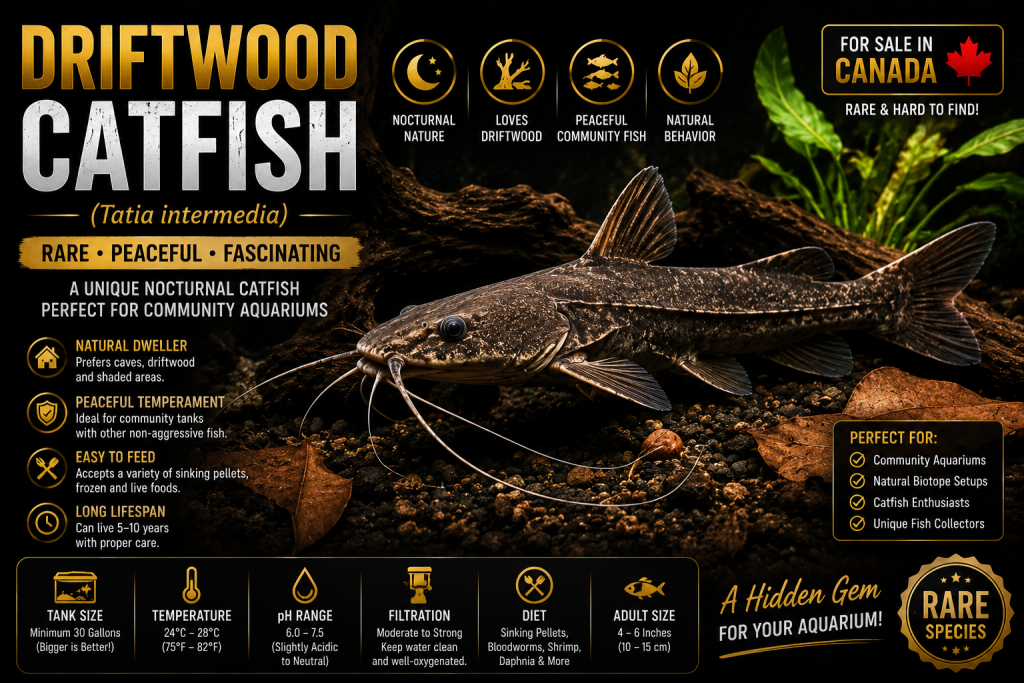
The Driftwood Catfish (Tatia intermedia) is one of the most fascinating yet underrated freshwater catfish available to aquarium hobbyists. Known for its unusual appearance, nocturnal behavior, and preference for hiding among driftwood and submerged structures, this species has become increasingly popular among collectors seeking something different from traditional community fish.
Native to South American river systems, the Driftwood Catfish belongs to the Auchenipteridae family, commonly known as Driftwood Catfishes. These fish are admired for their peaceful temperament, manageable size, and unique behavior patterns that make them an interesting addition to carefully planned freshwater aquariums.
For aquarists looking to add a rare and unusual catfish to their collection, Tatia intermedia offers a rewarding and captivating fishkeeping experience.
What Is a Driftwood Catfish?
The Driftwood Catfish is a small to medium-sized freshwater catfish native to slow-moving rivers and tributaries in South America.
Unlike many active catfish species, Driftwood Catfish spend much of their time hidden among roots, driftwood, caves, and submerged structures.
Quick Facts
- Scientific Name: Tatia intermedia
- Family: Auchenipteridae
- Origin: South America
- Temperament: Peaceful
- Activity Level: Mostly nocturnal
- Difficulty Level: Easy to Moderate
- Diet: Omnivorous
Their secretive nature makes them especially appealing to hobbyists who appreciate natural fish behavior.
Why Driftwood Catfish Are Popular
Although not as widely known as Corydoras or Plecos, Driftwood Catfish have developed a dedicated following among experienced aquarists.
Reasons for their popularity include:
- Unique appearance
- Peaceful temperament
- Manageable adult size
- Excellent community fish potential
- Interesting nocturnal behavior
- Rare availability in the hobby
Their unusual habits often make them a conversation piece among aquarium enthusiasts.
Appearance and Coloration
The Driftwood Catfish possesses a streamlined body designed for navigating submerged wood and root systems.
Common features include:
- Elongated body shape
- Smooth skin
- Prominent barbels
- Dark brown or gray coloration
- Subtle patterning
- Camouflaged appearance
Their coloration helps them blend naturally into driftwood-rich environments.
This camouflage provides protection from predators in the wild and contributes to their secretive nature in aquariums.
How Large Does Tatia intermedia Grow?
One advantage of Driftwood Catfish is their relatively modest adult size.
Average Adult Size
- Approximately 4–6 inches
- Occasionally larger under ideal conditions
Their manageable size allows them to thrive in aquariums that would be too small for many larger catfish species.
Natural Habitat
In the wild, Driftwood Catfish inhabit slow-moving freshwater systems containing abundant submerged wood and vegetation.
Common habitats include:
- Flooded forests
- River margins
- Backwaters
- Tributaries
- Root-filled environments
These habitats provide shelter, feeding opportunities, and protection from larger predators.
Aquarium Size Requirements
Although not a large species, Driftwood Catfish appreciate spacious aquariums with plenty of hiding places.
Recommended Aquarium Sizes
- Minimum: 30 gallons
- Preferred: 40–55 gallons
- Larger community setups are beneficial
Providing sufficient space allows natural behavior and reduces stress.
Aquarium Setup
A natural South American-inspired aquarium works exceptionally well.
Recommended Decorations
- Driftwood
- Bogwood
- Root structures
- Rock caves
- Leaf litter
- Dense plants
The more hiding places available, the more secure the fish will feel.
Ironically, fish that feel secure often become more visible over time.
Water Parameters
Driftwood Catfish are relatively adaptable but perform best in stable conditions.
Ideal Parameters
- Temperature: 24–28°C
- pH: 6.0–7.5
- Ammonia: 0 ppm
- Nitrite: 0 ppm
- Nitrate: Low levels
Regular maintenance and water changes contribute significantly to long-term health.
Filtration Requirements
Clean, oxygen-rich water is essential.
Recommended Filtration
- Canister filters
- Sponge filters
- Hang-on-back filters
- Moderate water movement
Strong biological filtration helps maintain excellent water quality.
Driftwood Catfish Diet
Tatia intermedia is an omnivore with a varied appetite.
Recommended Foods
- Sinking pellets
- Catfish wafers
- Bloodworms
- Brine shrimp
- Daphnia
- Frozen foods
- Small invertebrates
A varied diet promotes better coloration and overall health.
Because they are often most active after dark, evening feeding may encourage natural behavior.
Behavior and Temperament
Driftwood Catfish are generally peaceful and shy.
Common behaviors include:
- Hiding during daylight hours
- Exploring after lights-out
- Resting beneath wood structures
- Slow, deliberate swimming
- Searching for food along the substrate
Their nocturnal nature makes nighttime observation especially rewarding.
Are Driftwood Catfish Aggressive?
No.
They are considered peaceful community fish and rarely cause problems with tank mates.
Unlike larger predatory catfish, they are generally non-aggressive and coexist well with similarly sized species.
Best Tank Mates
Driftwood Catfish can be housed with a variety of peaceful freshwater fish.
Suitable Tank Mates
- Tetras
- Rasboras
- Corydoras
- Hatchetfish
- Dwarf Cichlids
- Pencilfish
- Small peaceful catfish
Avoid
- Large aggressive cichlids
- Predatory fish
- Fin nippers
- Extremely territorial species
Proper compatibility helps reduce stress and encourages natural behavior.
Breeding Driftwood Catfish
Breeding Tatia intermedia in home aquariums remains relatively uncommon.
Successful breeding generally requires:
- Excellent water quality
- Mature fish
- Proper conditioning
- Suitable spawning environments
Because captive breeding information remains somewhat limited, most hobbyists focus primarily on maintaining healthy display specimens.
Lifespan
With proper care, Driftwood Catfish can live for many years.
Average Lifespan
- 5–10 years
- Occasionally longer under ideal conditions
Stable water quality and a balanced diet contribute significantly to longevity.
Common Care Challenges
Excessive Hiding
This is normal behavior, particularly in newly acquired specimens.
Poor Water Quality
Like most catfish, Driftwood Catfish thrive in clean environments.
Inadequate Shelter
Insufficient hiding spots may lead to stress.
Competition During Feeding
More aggressive tank mates may outcompete them for food.
Target feeding can help ensure adequate nutrition.
Why Collectors Appreciate Driftwood Catfish
Rare fish enthusiasts often seek species that display unusual behaviors rather than simply bright coloration.
The Driftwood Catfish offers:
- Natural camouflage
- Nocturnal activity
- Unique appearance
- Peaceful nature
- Rare availability
These qualities make them particularly attractive to aquarists interested in creating authentic biotope-style aquariums.
Buying Driftwood Catfish in Canada
When searching for Driftwood Catfish for sale in Canada, choose reputable aquarium retailers that specialize in rare freshwater species.
Look for specimens displaying:
- Healthy body condition
- Clear eyes
- Intact barbels
- Active nighttime behavior
- Healthy feeding response
Healthy fish adapt more quickly and experience less stress during acclimation.
Is the Driftwood Catfish Right for You?
The Driftwood Catfish may be an excellent choice if you:
- Enjoy unusual catfish species
- Appreciate natural fish behavior
- Maintain a peaceful community aquarium
- Prefer rare and uncommon fish
- Want a manageable-sized catfish
Their combination of rarity, peaceful nature, and fascinating habits makes them an excellent addition to many freshwater aquariums.
Frequently Asked Questions
How big does a Driftwood Catfish get?
Most Tatia intermedia reach approximately 4–6 inches in length.
Are Driftwood Catfish aggressive?
No. They are generally peaceful and suitable for community aquariums.
What do Driftwood Catfish eat?
They accept sinking pellets, frozen foods, bloodworms, brine shrimp, and other meaty foods.
Why are they called Driftwood Catfish?
They spend much of their time hiding among submerged wood and root structures.
Are Driftwood Catfish nocturnal?
Yes. They are most active during the evening and nighttime hours.
What tank size do they require?
A 30-gallon aquarium is generally considered the minimum, with larger setups preferred.
Can Driftwood Catfish live with tetras?
Yes. Peaceful schooling fish such as tetras make excellent tank mates.
How long do Driftwood Catfish live?
With proper care, they commonly live between 5 and 10 years.
