Uncategorized
Freshwater Shrimp in Canada: A Practical Guide to Choosing, Acclimating, and Keeping Them Healthy
Oct
Freshwater shrimp are among the most fascinating animals available to Canadian aquarists. They are colourful, active, and small enough to fit into many planted aquariums. A healthy colony can also contribute to the aquarium’s clean-up crew by grazing on biofilm, soft algae, and leftover food.
However, shrimp are not simply decorative additions. They are sensitive to sudden changes in temperature, pH, hardness, and water chemistry. The best results come from matching the species to your aquarium rather than trying to force the aquarium to suit an unsuitable purchase.
This guide explains how to choose freshwater shrimp in Canada, prepare their environment, acclimate them after delivery, and maintain the stable conditions they need to thrive.
Why Keep Freshwater Shrimp?
Shrimp bring a different type of activity to an aquarium. Instead of swimming through the open water like tetras or rasboras, they spend much of their time grazing across plants, wood, rocks, sponge filters, and other surfaces. Their constant movement makes them especially enjoyable to observe in a planted or nano aquarium.
They can also help process small amounts of organic debris. This does not mean shrimp replace regular maintenance, water changes, or algae control. Rather, they complement a responsible maintenance routine by consuming biofilm and accessible food particles.
Many freshwater shrimp are also suitable for carefully planned community aquariums. Their compatibility depends on the fish, tank layout, shrimp size, and availability of cover. A peaceful community may allow a colony to grow, while a tank containing larger or predatory fish may turn shrimp into prey.
Popular Freshwater Shrimp Choices
Neocaridina shrimp
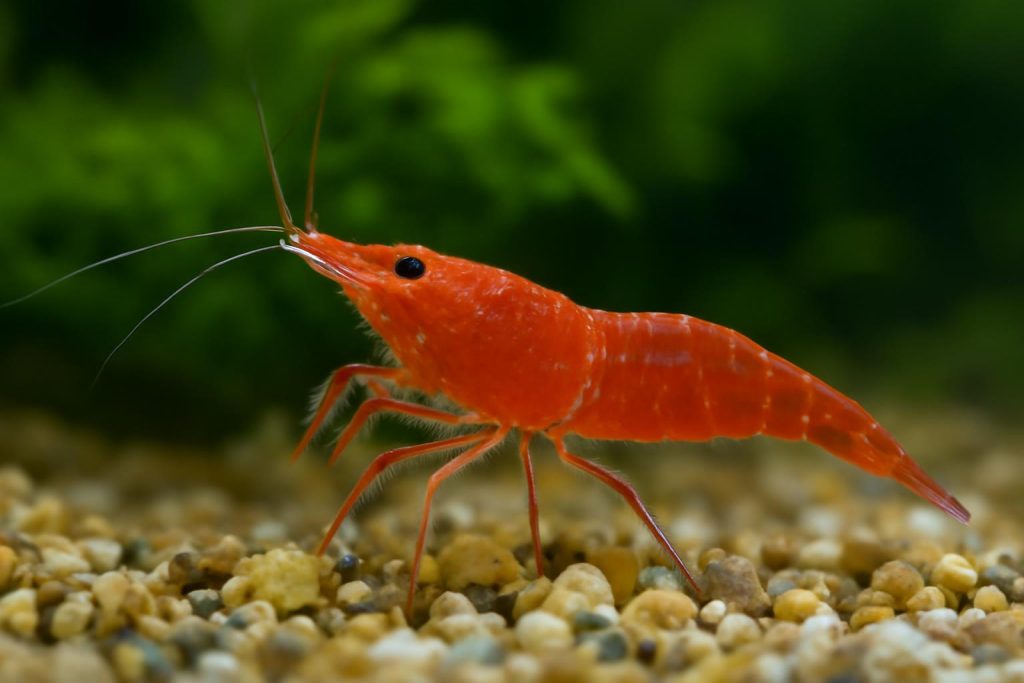
Neocaridina varieties are often a practical starting point for aquarists who are new to shrimp. They are available in many colours, including red, blue, yellow, orange, and patterned forms. They generally adapt well to a range of stable freshwater conditions and can reproduce in a mature aquarium.
Although they are considered forgiving, Neocaridina shrimp still need clean water, adequate minerals, and a stable temperature. Rapid changes are more dangerous than a slightly imperfect but consistent parameter.
Caridina shrimp
Caridina shrimp include several highly sought-after varieties with striking patterns and colours. They often require closer attention to water chemistry, particularly general hardness, carbonate hardness, pH, and dissolved solids. Many keepers use active substrate and carefully prepared water to create the softer, slightly acidic conditions preferred by specific Caridina types.
These shrimp can be rewarding for experienced aquarists, but they are best purchased after the aquarium has been tested and stabilised. If you are comparing livestock options, the Monster Aquarium Canada home page provides a starting point for exploring aquarium livestock and supplies.
Amano shrimp
Amano shrimp are valued for their appetite for certain types of algae and their active behaviour. They are usually larger and more robust than many ornamental dwarf shrimp, although they can still be vulnerable during transport, acclimation, and major changes in water quality.
Unlike Neocaridina and many Caridina varieties, Amano shrimp larvae require brackish conditions to develop successfully. They may live in freshwater aquariums, but breeding a self-sustaining colony is not usually straightforward.
Check Your Aquarium Before Buying Shrimp
The most important preparation step is confirming that the aquarium is mature. A newly set-up tank may look clean but still lack the biological stability shrimp require. Beneficial microorganisms should be established, ammonia and nitrite should remain at zero, and nitrate should be controlled through routine maintenance.
Before ordering or bringing home shrimp, check:
- Ammonia and nitrite are undetectable.
- Nitrate is kept at a reasonable level with regular water changes.
- The filter is fully cycled and has safe intake protection.
- The aquarium temperature is stable.
- The water hardness is suitable for the chosen species.
- Plants, moss, wood, or other surfaces provide grazing areas and cover.
- Tank mates are unlikely to hunt adult shrimp or shrimplets.
A sponge pre-filter or fine mesh guard on the intake is particularly useful. Small shrimp and young shrimplets can be pulled into unprotected filters, especially in tanks with strong circulation.
Water Parameters and Mineral Balance
Shrimp need minerals to build and maintain their exoskeleton. This is especially important during moulting, when a shrimp sheds its old shell and forms a new one. Water that is too soft may contribute to failed moults, while excessive hardness or sudden mineral changes can create other problems.
There is no single ideal number for every shrimp species. Neocaridina, Caridina, and Amano shrimp have different preferences, and individual breeding lines may be maintained in slightly different conditions. Instead of chasing a “perfect” number, aim for a stable range appropriate for the species you select.
Test your source water and aquarium water before making adjustments. If minerals must be added, use a product designed for the intended shrimp type and follow the label directions. Avoid adding calcium, salts, buffers, or other additives by guesswork.
When planning an order through an aquarium livestock and product catalogue, review the care requirements for the specific shrimp variety rather than assuming all freshwater invertebrates have identical needs.
Creating a Shrimp-Friendly Habitat
A shrimp aquarium should provide more than open swimming space. Surfaces covered with natural biofilm are an important food source, especially for newly introduced shrimp and young shrimplets.
Plants and moss
Fine-leaved plants and mosses create grazing areas and shelter. Java moss, Christmas moss, guppy grass, subwassertang, and dense stem plants can all provide useful structure. Live plants also support microorganisms that shrimp naturally browse.
Do not scrub every surface spotless. A mature aquarium with a controlled amount of biofilm is usually more suitable than a sterile-looking setup. Remove problem algae when necessary, but leave safe grazing areas available.
Wood, rocks, and hiding places
Driftwood, smooth stones, cholla-style structures, shrimp tubes, and leaf litter can increase usable surface area. Arrange hardscape so shrimp can retreat during moulting and avoid direct competition with larger tank mates.
Lighting and filtration
Moderate lighting supports plant growth and helps develop natural grazing surfaces. Filtration should provide oxygenation and circulation without creating dangerous suction or excessive turbulence. Shrimp benefit from well-oxygenated water, but they should still be able to move comfortably across the substrate and plants.
How to Acclimate Shrimp After Delivery
Acclimation is one of the most important steps when you buy freshwater shrimp online in Canada. Shrimp may spend many hours in a transport bag, and the water inside the bag can differ substantially from the aquarium.
Prepare the aquarium first
Confirm that the tank is ready before the shipment arrives. Turn off bright lighting, make sure the temperature is stable, and keep a clean container, airline tubing, and a shrimp net available. Avoid adding new shrimp to an aquarium that has recently been treated with medication, exposed to household chemicals, or undergone a large, unplanned change.
Use a slow acclimation method
- Float the unopened bag briefly if needed to reduce temperature differences.
- Transfer the shrimp and shipping water into a clean container reserved for aquarium use.
- Use airline tubing to drip aquarium water into the container slowly.
- Allow the water volume to increase gradually over an extended period.
- Net the shrimp gently and place them into the aquarium.
- Discard the shipping water rather than pouring it into the display tank.
The exact acclimation time depends on the temperature and chemistry difference between the shipping water and your aquarium. A slower approach is generally safer when the difference is significant. Do not leave shrimp exposed to bright light or allow the acclimation container to become cold.
After release, the shrimp may hide for several hours. This is normal. Keep the aquarium calm, avoid feeding heavily, and observe their movement and posture over the next day.
Feeding Freshwater Shrimp
A mature aquarium may provide some natural food, but most colonies benefit from supplemental feeding. Offer small portions of shrimp-specific food, algae-based wafers, blanched vegetables, or other suitable foods. Remove uneaten food before it decomposes and affects water quality.
Overfeeding is one of the most common shrimp-keeping mistakes. Because shrimp are small, a tiny amount may be enough. Feed according to the colony size, observe how quickly the food is consumed, and adjust the portion rather than adding more automatically.
Some keepers use leaf litter as a long-lasting grazing surface. Only use leaves that are free of pesticides, road salt, fertilisers, and other contaminants. Any prepared food or supplement should be shrimp-safe and used according to its instructions.
Choosing Tank Mates Carefully
Peaceful nano fish may coexist with adult shrimp, but almost any fish can eat shrimplets if given the opportunity. Even small tetras, rasboras, gouramis, and livebearers may consume newly hatched young.
If colony growth is your priority, a species-only shrimp aquarium is usually the safest option. In a community setup, use dense plants, moss, rockwork, and small crevices to give young shrimp places to hide.
Avoid mixing shrimp with known predators, large cichlids, puffers, aggressive barbs, monster fish, or fish that regularly search the substrate. Compatibility should be judged by adult size, mouth size, temperament, and hunting behaviour—not simply by whether two species occupy different areas of the tank.
Common Problems and What They May Mean
Shrimp are hiding
Hiding may be normal after transport or moulting. It can also indicate stress from bright lighting, unsuitable tank mates, poor water quality, or a recent parameter change. Check the aquarium before assuming the shrimp are simply shy.
Shrimp are inactive
Review temperature, oxygenation, ammonia, nitrite, nitrate, and mineral levels. A sudden decline in activity after a water change may indicate a temperature or chemistry mismatch.
Failed moulting
Repeated moulting problems can be associated with unstable conditions, inadequate minerals, poor nutrition, or chronic stress. Do not respond by adding random supplements. Test the water and make measured, gradual corrections.
Shrimp disappear
Missing shrimp may have died and been scavenged, hidden during moulting, or been eaten by tank mates. Inspect filters, decorations, and plant growth, and consider whether the aquarium has enough protected areas.
Buying Freshwater Shrimp in Canada Responsibly
When purchasing live invertebrates, look for clear species information, realistic care requirements, and a shipping process designed for live aquatic animals. Ask questions about temperature, delivery timing, acclimation, and the seller’s live-arrival policy before placing an order.
It is also wise to buy only what your aquarium can support. A small, healthy starter group is often better than ordering more shrimp than the tank has food, cover, or biological capacity to handle. If you are comparing available aquarium invertebrates, the current product listings can help you explore livestock and related aquarium products in one place.
Canadian aquarists should also confirm local rules before purchasing unusual species. Requirements can vary by province, municipality, and species. Never release aquarium animals into natural waterways, even if they appear healthy or cannot survive the local climate.
Frequently Asked Questions
Are freshwater shrimp suitable for beginners?
Some Neocaridina and Amano shrimp can be suitable for beginners when kept in a mature, stable aquarium. They are not ideal for an uncycled tank or an aquarium with aggressive fish. Beginners should start with a species whose water requirements match their existing source water.
How many shrimp should I start with?
A small group is generally preferable to a single shrimp because many species are social and a group gives you a better opportunity to establish a colony. The correct number depends on aquarium size, filtration, cover, and tank mates.
Can shrimp live with bettas?
Some bettas tolerate adult shrimp, while others actively hunt them. Even a peaceful betta may eat shrimplets. If you attempt the combination, provide dense cover and have a separate aquarium ready in case aggression occurs.
Do shrimp need a heater?
Many indoor Canadian aquariums benefit from a reliable heater because room temperatures can fluctuate. Select a stable temperature appropriate for the species and use a thermometer to verify actual conditions rather than relying only on the heater setting.
Can I keep different shrimp colours together?
Different Neocaridina colour lines can usually live together, but they may interbreed and produce less predictable offspring over time. If maintaining a specific colour line is important, keep it separately or understand the possible results of mixed breeding.
Final Thoughts
Freshwater shrimp are rewarding when treated as living animals with specific environmental needs. Stable water, mature biological filtration, mineral balance, gentle acclimation, suitable food, and protective habitat matter more than simply choosing the brightest colour.
By preparing the aquarium before purchase and selecting shrimp that match your water and community, you can build a healthy colony that adds subtle movement and lasting interest to your aquarium. For aquarists across Canada, careful planning is the foundation of a successful live-invertebrate experience.
