Uncategorized
Schooling Fish in Canada: How to Choose the Right Group for Your Aquarium
Oct
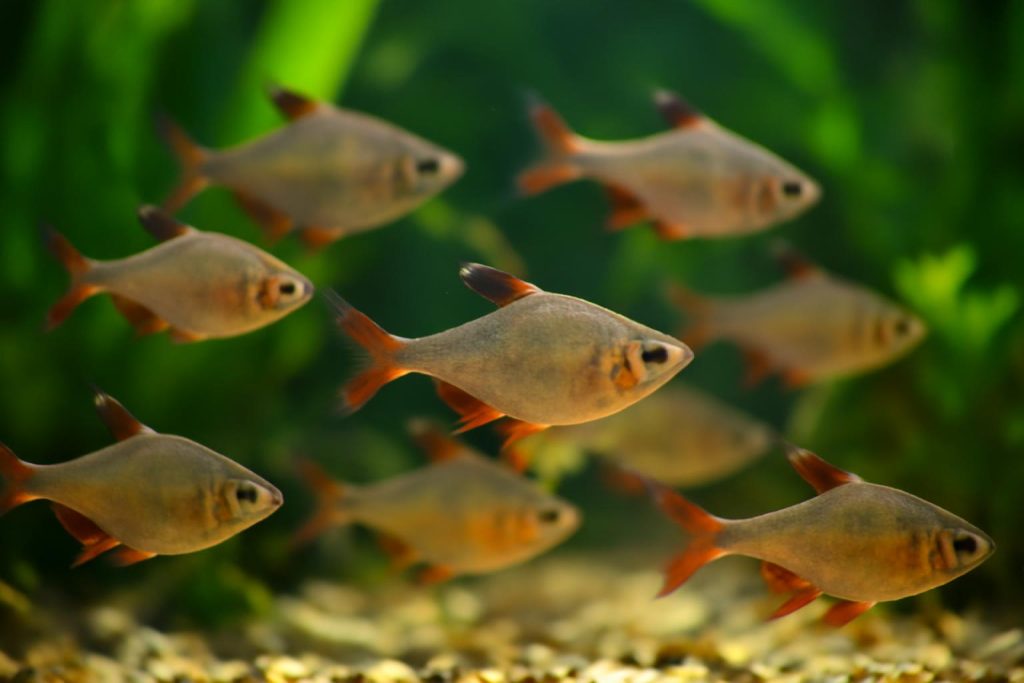
Schooling fish are among the best choices for creating a lively, natural-looking freshwater aquarium. A coordinated group of tetras, rasboras, danios, barbs, or rainbowfish can transform an otherwise quiet tank into a constantly moving display. Their group behaviour also gives aquarists the opportunity to observe communication, hierarchy, feeding responses, and social activity up close.
For aquarists across Canada, choosing schooling fish requires more than selecting the brightest colour or the most attractive photograph. Tank size, water temperature, temperament, adult size, shipping conditions, and compatibility all influence long-term success. This practical guide explains how to choose schooling fish in Canada and build a healthier community aquarium around them.
What Makes a Fish a Schooling Species?
Schooling and shoaling are related but slightly different behaviours. Shoaling fish stay together for social, feeding, or safety reasons, while schooling fish coordinate their swimming direction and movements more closely. In the aquarium, many species marketed as schooling fish may alternate between loose shoaling and tighter schooling depending on their environment.
A group often becomes more confident when it feels secure. Fish kept in very small numbers may hide, display nervous behaviour, or remain close to aquarium décor. When kept in a suitable group, they usually spend more time in open water and show more natural movement.
Group size is important, but it is not the only factor. A well-planned aquarium should also provide open swimming space, cover around the edges, stable water quality, and tank mates that do not intimidate or consume smaller fish.
Popular Schooling Fish for Canadian Aquariums
Tetras
Tetras are popular community fish because many species remain relatively small and adapt well to planted or lightly decorated aquariums. Neon tetras, cardinal tetras, rummynose tetras, black skirt tetras, lemon tetras, glowlight tetras, and emperor tetras each offer a different combination of colour, size, and activity.
Most small tetras do best in groups of at least six, although larger groups often produce more confident behaviour and a stronger visual effect. A group of 10 or more can look especially impressive in a suitably sized aquarium. Avoid combining tiny tetras with large predatory fish, aggressive cichlids, or species that may view them as food.
Rasboras
Rasboras are excellent choices for peaceful planted tanks and nano aquariums, depending on the species. Harlequin rasboras, lambchop rasboras, chili rasboras, phoenix rasboras, and other small Boraras species can provide attractive colour without requiring the footprint of larger fish.
Small rasboras should be kept in a generous group and given gentle filtration, fine-leaved plants, and shaded areas. Because they have small mouths and delicate bodies, they may struggle when housed with fast, highly competitive feeders. They are often most successful with other peaceful species of a similar size.
Danios
Danios are active, hardy schooling fish that spend much of their time in the upper and middle areas of the aquarium. Zebra danios, leopard danios, celestial pearl danios, and giant danios differ considerably in adult size and temperament, so the species should be researched before purchase.
Fast-moving danios generally appreciate strong oxygenation, open swimming space, and a secure lid. Their constant activity may stress slow-moving or long-finned tank mates. Smaller danio species can work in peaceful community setups, while larger varieties need more room and should not be treated as nano fish.
Barbs
Barbs range from peaceful schooling fish to boisterous fin nippers. Cherry barbs are a popular community option, particularly when kept in a group with a suitable balance of males and females. Rosy barbs, gold barbs, tiger barbs, and denisoni barbs require more careful planning because of their size, energy, or potential for fin-nipping.
Keeping barbs in an appropriately sized group can reduce the chance that one fish will be singled out. However, group size does not eliminate compatibility concerns. Tiger barbs, for example, may harass slow-moving or long-finned fish even when kept in a proper shoal. Choose tank mates that can tolerate active swimming and occasional chasing.
Rainbowfish
Rainbowfish are colourful, energetic schooling fish that often become more impressive as they mature. Boesemani rainbowfish, turquoise rainbowfish, dwarf neon rainbowfish, and threadfin rainbowfish have different space requirements and levels of activity.
Many rainbowfish look best in groups, with males displaying their colours to females and one another. They typically appreciate clean, well-oxygenated water and open areas for swimming. Larger rainbowfish should be reserved for spacious aquariums, while dwarf varieties may suit medium-sized community tanks.
How Many Schooling Fish Should You Buy?
There is no universal number that works for every species or aquarium. A group of six is often considered a reasonable starting point for many small schooling fish, but a larger group is usually more natural and visually appealing when filtration and tank volume allow it.
Before ordering, consider these factors:
- Adult size: Plan for the fish your specimens will become, not just their size at purchase.
- Swimming level: Avoid filling the same area of the aquarium with several active midwater species.
- Bioload: A large school produces more waste and requires mature biological filtration.
- Group behaviour: Some species need six fish, while others show better confidence in groups of 10, 15, or more.
- Tank footprint: Length is often more important than height for active schooling fish.
A lightly stocked aquarium with one impressive school often looks more natural than a crowded tank containing many small groups. It also makes it easier to observe the fish and maintain stable water quality.
Choosing the Right Aquarium Size
Nano fish do not automatically belong in very small aquariums. Even tiny fish need stable temperature, reliable filtration, swimming room, and enough water volume to dilute waste. A longer aquarium is usually preferable to a tall, narrow aquarium for schooling species.
For a small group of nano rasboras or other tiny fish, a properly filtered aquarium in the approximate 40-litre range may be suitable, depending on the species and stocking plan. Small tetras, cherry barbs, and similar community fish often benefit from a larger footprint, such as a 75-litre or longer aquarium. Active danios, larger barbs, and rainbowfish may require substantially more room.
These are general planning guidelines rather than fixed rules. Always compare the adult size, activity level, and social needs of the exact species you intend to keep. If you are building a new setup, explore the available aquarium fish categories before choosing livestock so your stocking plan matches the space you have available.
Water Conditions and Temperature
Most commonly kept schooling fish are tropical freshwater species and require a dependable aquarium heater. Room temperature in many Canadian homes is too cool and may fluctuate significantly, especially during winter. A stable temperature is generally more important than attempting to match a narrow number perfectly.
Many community tetras, rasboras, and barbs are comfortable in moderately warm freshwater, while some species have more specific preferences. Test the aquarium before the fish arrive and confirm that the heater, thermometer, filter, and cover are working correctly.
Water quality should be stable, with ammonia and nitrite at zero in a cycled aquarium. Nitrate should be controlled through regular maintenance and sensible stocking. Sudden changes in temperature, pH, or hardness can be stressful, particularly for newly arrived fish.
Building a Compatible Community Aquarium
Schooling fish are usually peaceful, but peaceful does not mean compatible with every species. Consider the following when selecting tank mates:
- Choose fish with similar temperature and water chemistry preferences.
- Avoid pairing tiny schooling fish with predators or large fish that can swallow them.
- Do not place slow, long-finned species with persistent fin nippers.
- Provide bottom-dwelling species with separate feeding areas and hiding places.
- Keep territorial fish, including some cichlids, only when the aquarium layout and species combination are appropriate.
Corydoras, peaceful gouramis, smaller plecos, and compatible livebearers may work in some community aquariums. However, every combination should be evaluated by adult size, temperament, diet, and swimming zone rather than by appearance alone.
When planning a larger collection, you can browse the broader livestock selection and compare species before deciding whether a single-species school or a mixed community is the better fit.
Preparing for Live Fish Delivery Across Canada
Buying fish online can provide access to species that are not always available locally, but preparation is essential. Before placing an order, make sure the aquarium is fully cycled and that you have a quarantine or acclimation plan. Do not order fish simply because the tank is empty; order when the system is mature and ready.
For delivery, select a time when someone can receive the shipment promptly. Have a clean bucket, soft net, water conditioner, thermometer, and quarantine container ready. Avoid feeding heavily immediately before newly arrived fish are introduced, and keep the aquarium lights low during the first several hours.
Shipping conditions may vary across Canada, particularly when temperatures are very low or very high. A responsible seller should provide livestock shipping instructions and explain applicable arrival procedures. Review the store’s current policies before ordering and contact the seller if you are unsure whether conditions are suitable for shipment.
Monster Aquarium Canada serves aquarists looking for freshwater fish, schooling species, aquarium plants, invertebrates, foods, and aquarium supplies. Visit the Monster Aquarium Canada home page to review available products and current ordering information.
Feeding Schooling Fish
Small schooling fish benefit from small, appropriately sized foods. High-quality micro pellets, crushed flakes, frozen foods, and suitable live foods can be rotated to provide variety. The food should be small enough for the fish to consume comfortably without constant spitting.
Feed modest portions that disappear within a few minutes. Overfeeding is one of the most common causes of declining water quality. Active species may accept food quickly at the surface, while timid fish may need slower-sinking foods or multiple feeding points.
Young fish and newly settled specimens may benefit from smaller meals more frequently, while established adults can usually be maintained on a consistent daily schedule. Observe body condition rather than feeding by habit alone.
Common Mistakes to Avoid
Buying too few fish
A school of three or four may not provide the security and behaviour expected from the species. If the aquarium can support it, purchasing a properly sized group is usually better than adding a few fish at a time.
Ignoring adult size
Many schooling fish are sold as juveniles. A species that looks suitable in a small aquarium may become too large or too active as it matures.
Mixing incompatible activity levels
Fast danios and barbs may overwhelm delicate tetras or slow-moving gouramis. Match energy levels as carefully as temperature and water chemistry.
Adding fish before cycling the aquarium
A new aquarium may look clean but still lack the beneficial bacteria needed to process waste. Test the water and confirm that the biological filter is established before adding livestock.
Changing water conditions too quickly
Acclimation should be gradual and controlled. Avoid pouring transport water into the display aquarium, and monitor the fish closely during the first few days.
Frequently Asked Questions
What are the best schooling fish for beginners in Canada?
Cherry barbs, harlequin rasboras, many common tetras, and zebra danios can be good choices when their space, temperature, and compatibility requirements are met. The best species is the one that fits your aquarium rather than the one that is simply easiest to find.
Can I keep different schooling fish together?
Yes, in many cases. Different species can share an aquarium when they have compatible water requirements, adult sizes, temperaments, and activity levels. However, one larger school often produces stronger natural behaviour than several undersized groups.
Do schooling fish need live plants?
Live plants are not mandatory, but they provide cover, improve the appearance of the aquarium, and can help fish feel secure. Use open space in the centre or front of the aquarium so the school has room to swim.
How long should I quarantine new schooling fish?
A separate quarantine period gives you time to observe feeding, behaviour, and health before introducing fish to an established display. The ideal duration depends on your biosecurity routine, but rushing new livestock directly into the main aquarium increases risk.
Is it better to buy schooling fish online or locally?
Both options can work. A local store allows you to see fish in person, while an online fish store may provide broader access to species and delivery across Canada. In either case, choose a knowledgeable seller, confirm shipping policies, and prepare the aquarium before purchase.
Final Thoughts
Schooling fish can be the foundation of a beautiful and engaging freshwater aquarium. The key is to plan around adult size, group requirements, swimming space, water stability, and compatibility. Select one or two suitable species, provide a properly sized group, and give them a mature, well-maintained environment.
Whether you are setting up a planted nano aquarium or a larger community display, thoughtful stocking will help your fish behave naturally and remain healthier over time. With the right preparation, aquarists across Canada can enjoy colourful, active schools delivered to a ready aquarium and cared for with confidence.
