
Uncategorized
Smart Aquarium Heaters in Canada: How to Choose Safer, More Reliable Temperature Control
Nov
Temperature stability is one of the most important parts of keeping tropical freshwater fish healthy. A heater that runs too hot, switches off unexpectedly, or struggles to warm the entire aquarium can create stress long before a problem becomes obvious. For aquarists across Canada, where indoor temperatures can change significantly between seasons, dependable temperature control is especially important.
That is why interest in the smart aquarium heater Canada market continues to grow. Modern heaters may include digital controls, external temperature probes, automatic shut-off systems, alarms, and app-based monitoring. These features can make aquarium care more convenient, but technology alone does not guarantee safety. The heater still needs to be correctly sized, installed, monitored, and maintained.
This guide explains how smart aquarium heaters work, which features are genuinely useful, and how to select a reliable model for a freshwater aquarium in a Canadian home.
What Is a Smart Aquarium Heater?
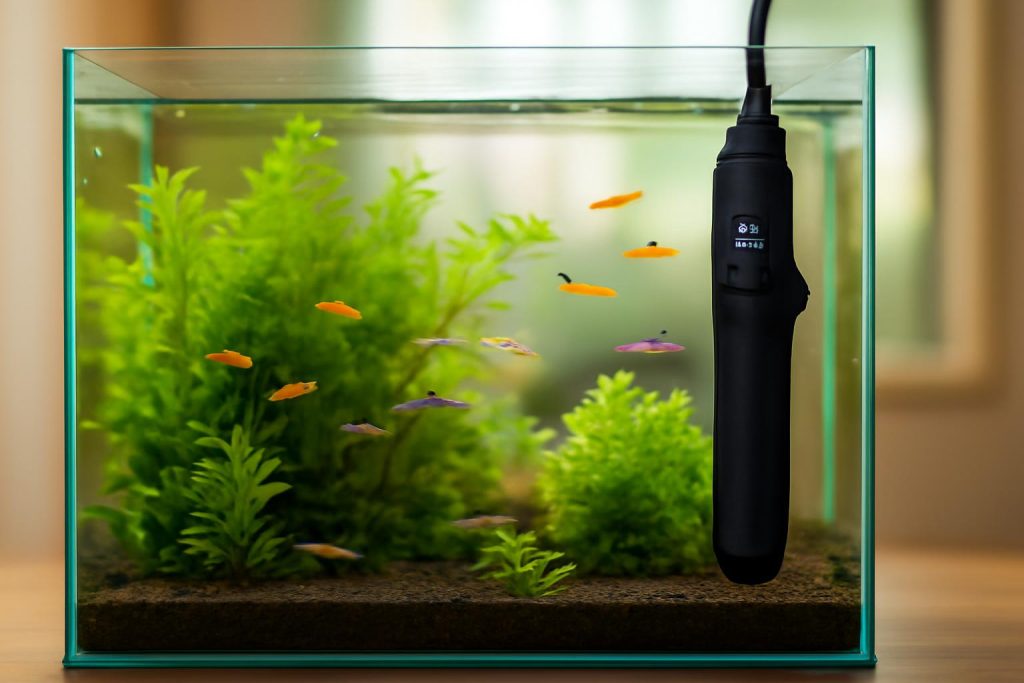
A smart aquarium heater is a temperature-control device that uses electronic sensors or connected technology to regulate aquarium water more precisely than a basic mechanical heater. Depending on the model, “smart” may refer to a digital thermostat, a separate temperature probe, an external controller, Wi-Fi monitoring, or a combination of these features.
Most systems have three main components:
- Heating element: Converts electricity into heat and warms the aquarium water.
- Temperature sensor: Measures water temperature and tells the controller when heating is required.
- Control system: Turns the heater on or off according to the selected temperature.
Some advanced models display the temperature on a digital screen, while others send notifications to a phone when the water falls outside a chosen range. This can be helpful when an aquarium is located in a basement, office, or room that is not checked frequently.
Why Temperature Control Matters in Canadian Aquariums
Many popular freshwater fish are tropical species that depend on relatively stable temperatures. Discus, angelfish, gouramis, tetras, rasboras, dwarf cichlids, plecos, freshwater shrimp, and many other aquarium animals can react poorly to sudden changes.
Temperature affects more than comfort. It influences metabolism, appetite, digestion, oxygen availability, immune function, and the activity of beneficial biological processes in the aquarium. Water that is consistently too cold may reduce feeding and activity, while excessive heat can increase metabolism and reduce dissolved oxygen.
Canadian homes can present several temperature-control challenges:
- Cold rooms, unfinished basements, and garages may require more heating power.
- Winter drafts can cool an aquarium from one side.
- Room temperatures may change when a furnace or heat pump cycles.
- Power interruptions can stop heating temporarily.
- Large aquariums may take longer to recover from a heater failure.
- Small aquariums can warm or cool quickly because they have less water volume.
A reliable heater will not eliminate every risk, but it can reduce temperature swings and give the aquarist earlier warning when something is wrong.
Key Features to Look for in a Smart Aquarium Heater
1. Accurate digital temperature control
A digital display makes it easier to set and verify the target temperature. Look for a model that allows small adjustments rather than forcing large temperature increments. Precision is useful when keeping species with narrower preferences or when matching the temperature of a quarantine aquarium.
Remember that the number shown on the heater is not always the same as the actual aquarium temperature. Use an independent thermometer to confirm the reading, especially during installation and after water changes.
2. A separate temperature probe
Some smart systems measure temperature with a probe positioned away from the heating element. This can provide a more representative reading than a sensor built directly into the heater body.
Place the probe in an area with good water movement, such as near the filter return, but do not position it directly against the heater. A probe that is too close may detect warm water before the rest of the aquarium reaches the target temperature.
3. Overheat protection
Overheat protection is one of the most valuable safety features. If the sensor detects an abnormal temperature or the heater becomes exposed during a low-water event, the system should shut down or trigger an alert.
No electronic protection system should be treated as a replacement for regular observation. Check that the heater is fully submerged when required by the manufacturer, and unplug it before removing it from the water. Heating elements can become extremely hot when operated outside their intended conditions.
4. Low-water and dry-run protection
Aquarium water levels can fall because of evaporation, maintenance, splashing, or a small leak. A heater with dry-run protection can help prevent damage when the water level drops below the safe operating point.
This feature is particularly helpful for open-top aquariums, sumps, turtle systems, and tanks in warm rooms where evaporation is faster. Even with protection, mark the normal water line and make topping up part of your regular maintenance routine.
5. Alarm and notification functions
Alarms may warn you about low temperature, high temperature, sensor failure, or loss of connection. Wi-Fi alerts can be useful for busy aquarists, fish rooms, and valuable livestock such as discus, rare plecos, African cichlids, and large tropical species.
Before relying on an app, confirm that the system continues to operate if the internet connection fails. The heater should still regulate temperature locally. Connectivity should improve monitoring, not become the only way the equipment functions.
6. Durable construction and aquarium-safe materials
Choose equipment designed specifically for aquarium use. The housing should be resistant to corrosion and suitable for continuous submersion where applicable. A protective guard can reduce the risk of fish contacting the heating element, especially in aquariums containing active catfish, loaches, plecos, crayfish, or large cichlids.
Inspect cords, suction cups, seals, and connectors regularly. Replace equipment that shows cracks, swelling, exposed wires, or water intrusion.
How to Choose the Correct Heater Size
Heater wattage should match the aquarium volume, room temperature, tank design, and desired temperature increase. Manufacturer charts are a useful starting point, but they cannot account for every Canadian home.
A tank in a warm living room may need less power than the same tank in a cool basement. An aquarium with a lid generally retains heat more effectively than an open-top setup. Large tanks may benefit from two appropriately sized heaters rather than one oversized unit.
Using two heaters can provide a measure of redundancy. If one fails, the second may slow the temperature decline while you arrange a replacement. It also allows the heat to be distributed across two areas of the aquarium. However, two heaters do not remove the need for a thermometer and routine checks.
Signs that a heater may be undersized
- The heater runs almost continuously but cannot reach the target temperature.
- Temperature drops noticeably overnight.
- Water near the heater is warm while the opposite side remains cool.
- The aquarium becomes colder whenever the room temperature falls.
Signs that a heater may be oversized or malfunctioning
- The aquarium temperature rises above the selected setting.
- The heater remains on after the independent thermometer shows the target has been reached.
- Fish show rapid breathing or unusual lethargy associated with warm water.
- The display and an independent thermometer show a large difference.
Best Installation Practices
Install the heater where water movement is consistent. Positioning it near a filter outlet or circulation pump helps distribute warmth throughout the tank. Avoid placing it behind dense décor where water flow is restricted.
Follow the manufacturer’s instructions for orientation. Some heaters may be installed horizontally or vertically, while others require a particular position. Allow a submersible heater to acclimate in the water before plugging it in if the instructions recommend this, and always unplug it before removing it.
Use a separate thermometer on the opposite side of the aquarium. For larger aquariums, a second thermometer can help identify temperature differences between areas. This is especially useful in long tanks housing schooling fish, African cichlids, or bottom-dwelling species.
Smart Heater Safety During Water Changes and Power Outages
Water changes are a common time for heater accidents. Before draining the aquarium, switch off and unplug the heater. If it remains powered while exposed to air, the heating element may overheat or crack. Wait until it has cooled before removing it from the tank.
After a power outage, check the aquarium temperature rather than immediately changing the thermostat. Fish may be stressed by rapid corrections. Restore circulation and heating, then allow the temperature to return gradually. Avoid adding hot water directly to the aquarium.
For valuable or temperature-sensitive livestock, a battery backup for circulation equipment, a room thermometer, or a connected temperature monitor can provide additional protection. Keep a spare heater suitable for the aquarium volume so a failure can be addressed quickly.
Pairing a Smart Heater with the Rest of Your Equipment
A heater performs best as part of a complete aquarium system. Good circulation helps distribute heat, while a properly maintained filter supports water quality and oxygen exchange. A secure lid can reduce heat loss and evaporation, although ventilation must still be adequate.
When planning a new setup, consider the fish’s adult size, activity level, and preferred environment before purchasing equipment. You can shop current aquarium livestock and supplies at Monster Aquarium Canada, including options for freshwater community tanks, cichlid aquariums, invertebrate setups, and larger systems.
It is also useful to review available equipment alongside livestock rather than choosing a heater in isolation. The aquarium product categories provide a broader view of equipment, fish foods, water-care products, and aquarium livestock that may be relevant to your setup.
How to Test a New Smart Aquarium Heater
Do not wait for a problem to discover whether a new heater works correctly. Test it during the first several days:
- Set the heater to the intended temperature.
- Place an independent thermometer on the opposite side of the aquarium.
- Observe the temperature at different times of day.
- Confirm that the heater cycles off after reaching the target.
- Check that the display, probe, and thermometer remain reasonably consistent.
- Inspect the equipment after water changes and cleaning.
A small difference between readings may be normal, but a large or increasing difference deserves attention. Calibrate the system if the manufacturer provides that option, or replace equipment that cannot maintain a reliable temperature.
Are Smart Aquarium Heaters Worth the Cost?
For a basic, stable aquarium in a warm room, a conventional quality heater and an independent thermometer may be sufficient. Smart features become more valuable when the aquarium contains sensitive fish, expensive livestock, a large volume of water, or when the aquarist travels frequently.
The most useful upgrades are usually accurate control, an independent probe, overheat protection, and a clear alarm system. Wi-Fi connectivity is convenient, but it should be considered an added monitoring feature rather than the main reason to choose a heater.
When comparing products, consider the cost of replacing livestock, correcting a temperature-related illness, or repairing damage from a failed heater. Reliable equipment is an important part of responsible aquarium ownership.
Frequently Asked Questions
What temperature should a tropical freshwater aquarium be?
The correct temperature depends on the species. Many tropical community fish are kept in the mid-to-upper 20s Celsius, while some species prefer slightly cooler or warmer conditions. Always research the requirements of the fish you keep, and avoid choosing a temperature based only on the heater’s maximum setting.
Can I trust the temperature shown on a smart heater?
Use the heater display as a guide, but verify it with an independent thermometer. Sensor placement, calibration, and equipment age can affect readings. A second thermometer is inexpensive insurance for a valuable aquarium.
Should I use one large heater or two smaller heaters?
Two appropriately sized heaters can distribute warmth more evenly and provide limited redundancy. They must still be installed safely and monitored independently. Follow the manufacturer’s recommendations for wattage and aquarium volume.
Do smart heaters work without Wi-Fi?
Many systems continue to regulate temperature locally without an internet connection, but this depends on the design. Confirm this before purchasing. A heater should not stop maintaining a safe temperature simply because an app or router is unavailable.
Where can I find aquarium equipment and freshwater fish in Canada?
Canadian aquarists can browse current livestock, equipment, and care products through the available aquarium product listings. Always confirm current stock, shipping conditions, and care requirements before ordering live fish or invertebrates.
Final Thoughts
A smart aquarium heater can make temperature control more precise and give Canadian aquarists better visibility into their tanks. The best system combines accurate sensing, suitable wattage, safety shut-offs, good water movement, and an independent thermometer.
Whether you keep tetras and corydoras, discus and angelfish, African cichlids, freshwater shrimp, or larger tropical fish, stable temperature is part of a healthy environment. Choose equipment based on the aquarium’s real conditions, test it carefully, and continue checking the water even when technology is doing the work automatically.
