Uncategorized
Freshwater Shrimp and Snails in Canada: A Practical Guide to Choosing, Keeping, and Shipping Aquarium Invertebrates
Nov
Freshwater shrimp and snails are among the most rewarding additions to a home aquarium. They occupy different areas of the tank, display interesting natural behaviours, and can be excellent choices for planted aquariums, nano setups, and peaceful community tanks. However, invertebrates have different needs from fish, particularly when it comes to water chemistry, acclimation, tank mates, and shipping.
This is an evergreen care guide rather than a claim about a current trend. Whether you are building your first shrimp aquarium or adding snails to an established community tank, the most important step is matching the species to your setup. Canadian aquarists should also plan for seasonal temperature changes and the longer transport distances that may apply when ordering live aquatic animals.
Why Keep Freshwater Shrimp and Snails?
Shrimp and snails contribute more than visual interest. Many species graze on algae, biofilm, leftover food, and soft organic material. This activity can help keep surfaces looking cleaner, but it should not be viewed as a replacement for water changes, glass cleaning, filtration, or responsible feeding.
Shrimp are especially appealing because of their constant movement and small size. A group of healthy shrimp may explore plants, wood, rocks, and the substrate throughout the day. Snails offer equally interesting behaviour, from climbing the glass to burrowing through the substrate or searching for food after the aquarium lights go out.
Before shopping, review the available aquarium livestock and supplies at Monster Aquarium Canada and make a plan based on your tank size, water parameters, temperature, and existing fish.
Popular Freshwater Shrimp Choices
Neocaridina shrimp
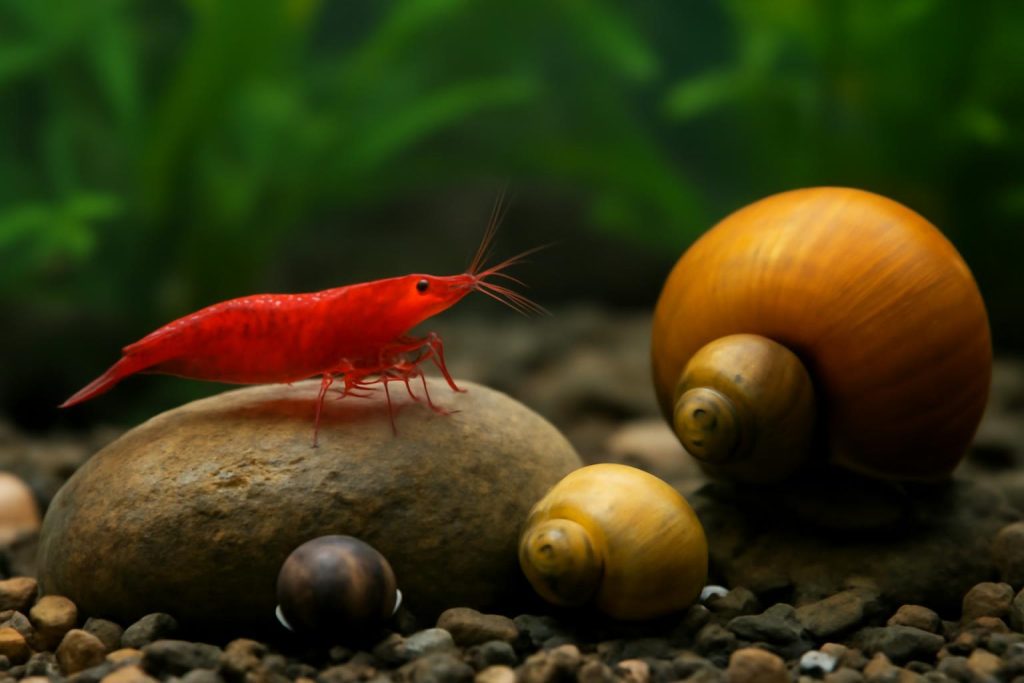
Neocaridina varieties are popular beginner shrimp because they are adaptable, colourful, and available in shades such as red, yellow, blue, orange, and clear or wild-type patterns. They generally prefer stable, moderately hard water and a mature aquarium containing natural biofilm.
Neocaridina shrimp can reproduce in freshwater when conditions are suitable. A female carries eggs beneath her abdomen until miniature shrimp hatch. If you want a growing colony, provide moss, fine-leaved plants, rock crevices, and other areas where young shrimp can avoid fish.
Caridina shrimp
Caridina shrimp include several attractive and more demanding varieties. Many require softer, more acidic water, lower mineral content, and exceptionally stable conditions. They can be excellent choices for experienced aquarists who are prepared to monitor water chemistry carefully.
Do not assume that every shrimp species can share the same parameters. A tank designed for one type may not be suitable for another. Always check the seller’s care information and confirm the recommended temperature, pH, hardness, and mineral requirements before ordering.
Amano shrimp
Amano shrimp are valued for their active grazing and relatively larger adult size. They are often considered useful in planted aquariums because they spend much of their time picking at algae and biofilm. They typically require peaceful tank mates and secure covers, as shrimp can climb out through small openings during periods of stress.
Popular Freshwater Snails
Nerite snails
Nerite snails are well known for grazing algae on glass, rocks, and hardscape. They remain relatively small and are often suitable for peaceful freshwater aquariums. In freshwater, nerites may lay small egg capsules, but their larvae generally cannot develop normally without specific brackish or marine conditions.
They need access to algae, biofilm, or supplemental foods. A spotless aquarium with no natural grazing material may not provide enough nutrition, so supplementing with algae wafers or suitable vegetables may be necessary.
Mystery snails
Mystery snails are larger, colourful, and easy to observe. They can be active during the day and are often appreciated for their personality. Because they produce more waste than smaller snails, avoid overcrowding and maintain good filtration.
Mystery snails also require adequate calcium and appropriate mineral availability to maintain healthy shells. A damaged, thin, or eroded shell may indicate unsuitable water chemistry, poor nutrition, or prolonged exposure to acidic conditions.
Ramshorn and bladder snails
Ramshorn and bladder snails are effective scavengers and may appear in aquariums unintentionally on plants or decorations. Some aquarists appreciate them as part of a balanced ecosystem, while others prefer to limit their numbers.
Their population usually reflects food availability. If a tank becomes crowded with small snails, reduce overfeeding, remove excess food, and manually remove unwanted individuals. Avoid relying on chemical treatments that may harm shrimp, beneficial organisms, or other invertebrates.
Tank Setup for Freshwater Invertebrates
A mature aquarium is usually safer than a newly filled tank. Beneficial microorganisms and natural biofilm need time to establish on plants, wood, rocks, filter surfaces, and substrate. Cycling the aquarium before adding livestock helps prevent dangerous ammonia and nitrite exposure.
Recommended equipment
- A fully cycled aquarium with stable temperature and water chemistry
- A gentle filter or a pre-filter sponge on the intake
- Plants, moss, wood, rocks, or other surfaces for grazing
- A secure lid or covered openings
- A reliable water conditioner suitable for aquarium use
- A test kit for ammonia, nitrite, nitrate, pH, and hardness
Sponge filters are particularly useful in shrimp tanks because they provide biological filtration without creating strong suction. If you use a hang-on-back or canister filter, protect the intake so small shrimp cannot be pulled into the filter.
For a broader look at livestock and aquarium categories, you can also browse the site’s available aquarium product categories before deciding which equipment and invertebrates suit your setup.
Water Parameters and Mineral Balance
Stability matters more than chasing a perfect number. Sudden changes in temperature, pH, hardness, or total dissolved solids can stress shrimp and snails even when the new reading appears acceptable.
Most Neocaridina shrimp do well in stable, neutral to slightly alkaline water with moderate mineral content. Caridina shrimp often require softer water and more precise mineral management. Nerite and mystery snails generally benefit from sufficient calcium and hardness for shell development.
Test your source water before purchasing. Municipal water can vary between regions and may change seasonally. If you use reverse-osmosis water, remineralise it with a product designed for the specific animals you keep. Never add minerals or buffers without testing, because excessive hardness or rapid changes can be harmful.
Use water conditioner whenever treating tap water, and follow the product label carefully. Avoid copper-based medications in aquariums containing shrimp or snails unless the product is specifically confirmed as safe for those animals.
Choosing Compatible Tank Mates
The biggest threat to shrimp is often not water quality but predation. Many fish will eat baby shrimp, and some will consume adult shrimp if they can fit them in their mouths. Even peaceful community fish may investigate freshly moulted shrimp or young juveniles.
Small, peaceful fish such as certain rasboras, small tetras, otocinclus, and some livebearers may be less dangerous than larger or predatory species, but no fish community is completely risk-free for baby shrimp. A species-only shrimp tank provides the best chance of colony growth.
Avoid combining shrimp with puffers, larger cichlids, aggressive gouramis, loaches that specialise in hunting invertebrates, and large catfish or predator fish. Crayfish may also catch shrimp and snails, particularly at night or during moulting.
Feeding Shrimp and Snails
A mature aquarium supplies some natural food, but supplemental feeding helps prevent competition and supports growth. Offer small portions of shrimp food, algae wafers, mineral-rich foods, or blanched vegetables such as zucchini and spinach.
Remove uneaten food within a few hours. Overfeeding is one of the most common causes of poor water quality and excessive snail populations. It can also encourage bacterial growth and reduce oxygen levels.
Feed based on observation rather than a fixed large portion. A small colony may need only a tiny amount several times per week, while a larger colony may require more frequent feeding. Watch how quickly food disappears and adjust gradually.
Acclimating Shrimp and Snails After Delivery
Invertebrates can be sensitive to sudden changes in temperature and water chemistry. Prepare the aquarium before the shipment arrives, including checking temperature and confirming that ammonia and nitrite are zero.
- Dim the aquarium lights to reduce stress.
- Float the sealed bag or container to equalise temperature, unless the shipping instructions advise otherwise.
- Open the bag and transfer the contents to a clean container.
- Slowly add small amounts of aquarium water over time.
- Use a net or suitable container to move the animals into the aquarium.
- Discard shipping water rather than pouring it into the display tank.
Drip acclimation can be useful when the shipping water and aquarium water differ significantly. However, do not leave animals sitting in shipping water for an unnecessarily long period once the bag is opened. Follow the supplier’s live-arrival and acclimation instructions, especially during long-distance transport.
When reviewing current livestock listings, check the individual product information for availability, recommended conditions, and shipping considerations before placing an order.
Shipping Freshwater Invertebrates Across Canada
Canada’s geography and changing weather make preparation important when ordering live shrimp or snails online. Plan delivery for a time when someone can receive the package promptly. Avoid allowing a shipment to sit outdoors, in a parcel locker, or in an unheated area.
During colder months, insulated packaging and heat packs may be appropriate, but heat packs must be used correctly. Excessive heat can be just as dangerous as cold, particularly for small bags with limited water volume. In warmer weather, shipping schedules and insulation may need to be adjusted to prevent overheating.
Inspect the package as soon as it arrives. Follow the seller’s instructions for documenting concerns, including taking clear photos if required. A live-arrival policy may have specific conditions involving delivery timing, packaging, photographs, and notification deadlines.
Common Problems and How to Prevent Them
Shrimp dying after a water change
This can happen when replacement water differs sharply in temperature, pH, hardness, or mineral content. Match the new water as closely as possible and perform smaller, consistent changes rather than infrequent large changes.
Failed moulting
Shrimp need suitable minerals, stable conditions, and adequate nutrition to moult successfully. Avoid sudden changes and provide hiding places. Do not remove a shed exoskeleton immediately; shrimp often consume it to recover valuable minerals.
Snail shell erosion
Shell erosion may result from low mineral availability, acidic water, poor diet, or long-term instability. Test pH and hardness, provide appropriate calcium sources, and avoid adding untested products that may cause sudden changes.
Shrimp disappearing
Missing shrimp may have been eaten, hidden during moulting, trapped in a filter, or lost during a water change. Check the filter intake, inspect plant growth and hardscape, and add more cover if the aquarium is sparsely decorated.
Frequently Asked Questions
Are freshwater shrimp suitable for beginners?
Neocaridina shrimp are often a good starting point when the aquarium is mature, cycled, and stable. Beginners should begin with a manageable colony, avoid incompatible fish, and learn to test hardness as well as ammonia, nitrite, and nitrate.
Can shrimp and snails live together?
Yes. Many freshwater shrimp and peaceful snail species coexist well. They use different surfaces and food sources, although both still need stable water, suitable minerals, and careful feeding.
How many shrimp should I buy?
A group is generally better than a single shrimp because shrimp are social and more confident in numbers. The appropriate quantity depends on aquarium size, filtration, cover, and whether fish are present. Start conservatively and allow the colony to grow.
Do aquarium snails clean the entire tank?
No. Snails can graze algae and consume some leftover food, but they do not replace maintenance. Continue regular water changes, glass cleaning, filter care, and responsible feeding.
Can freshwater shrimp be shipped in winter?
Winter shipping may be possible when packaging, timing, weather, and carrier conditions are appropriate. Review the seller’s policies, use a reliable delivery address, and be available to receive the shipment immediately.
Final Considerations
The best freshwater shrimp and snails for a Canadian aquarium are the ones that match your water, temperature, tank mates, and maintenance routine. Start with a cycled aquarium, protect filter intakes, provide natural cover, feed lightly, and prioritise stability over rapid changes.
With thoughtful planning, aquarium invertebrates can become an active and valuable part of a freshwater community. They are small animals, but their long-term success depends on the same fundamentals as fish: clean water, suitable nutrition, appropriate space, careful transport, and attentive daily observation.
