Uncategorized
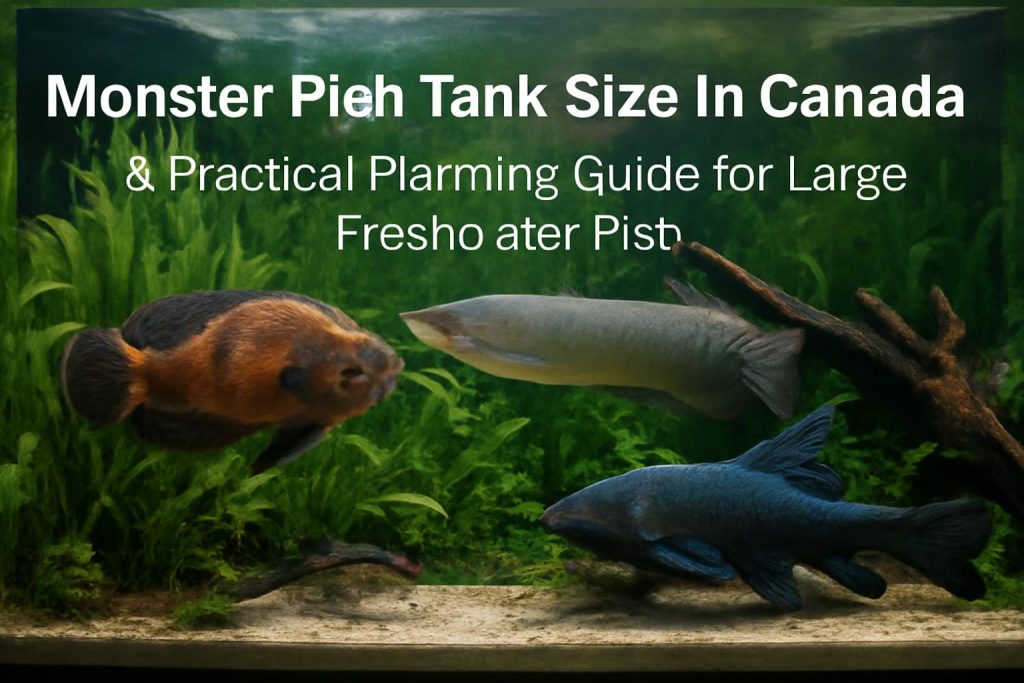
Monster Fish Tank Size in Canada: A Practical Planning Guide for Large Freshwater Fish
Nov
Large freshwater fish are among the most rewarding aquarium residents, but they also require the most careful planning. A juvenile red tail catfish, peacock bass, bichir, pacu, or large cichlid may look comfortable in a modest aquarium when it first arrives. The challenge is preparing for its adult size, waste production, behaviour, and long-term care before bringing it home.
Choosing the right monster fish tank size in Canada means looking beyond litres or gallons. Tank length, width, filtration, access to equipment, room temperature, flooring, and future upgrades all matter. A responsible setup should support the fish throughout its expected growth rather than becoming an emergency solution a few months later.
This guide explains how to evaluate a large-fish aquarium and build a practical plan for aquarists across Canada.
Why tank volume alone is not enough
Aquarium volume is useful, but it does not tell the entire story. Two aquariums can hold a similar number of litres while offering very different living conditions. A tall, narrow tank may have adequate volume but insufficient swimming space for an active fish. A long, wide aquarium usually provides better movement, turning room, and bottom area.
When planning a monster fish aquarium, consider these four measurements:
- Length: supports cruising and allows active fish to swim naturally.
- Front-to-back width: gives large-bodied fish room to turn and reduces cramped movement.
- Height: is important for some species, but it should not replace floor space.
- Water volume: helps dilute waste and creates greater stability between maintenance sessions.
For many large fish, a long and wide aquarium is more useful than a taller aquarium with the same capacity. This is particularly important for bottom-oriented species such as bichirs, large catfish, and some eels.
Start with the adult fish, not the juvenile
The most common large-fish mistake is buying for the present size rather than the adult requirement. A fish sold at 5 or 8 centimetres can grow rapidly when it receives good nutrition and stable water quality. Before ordering, identify the species’ expected adult length, body shape, activity level, temperament, and waste output.
A long, slender fish and a deep-bodied fish of the same length will not have identical space requirements. A sedentary ambush predator may use the aquarium differently from an energetic open-water swimmer. A territorial cichlid may require more usable territory than its dimensions initially suggest.
It is also wise to plan for the fish at a large adult size rather than relying on the smallest published estimate. Individual growth varies with genetics, feeding, water quality, and living conditions. A little extra space is easier to manage than an undersized aquarium.
Examples of planning considerations
- Large catfish: need substantial floor space, powerful filtration, and a strong cover. Their adult mass can also place significant stress on aquarium equipment.
- Peacock bass and other active predators: benefit from long aquariums that allow sustained swimming and turning.
- Bichirs: need bottom area, hiding places, and a secure lid because they can climb or escape through surprisingly small openings.
- Large American cichlids: require swimming space, visual barriers, and a layout that helps manage territorial behaviour.
- Pacu and similar deep-bodied fish: can outgrow typical home aquariums and should be purchased only when a suitable long-term setup is realistic.
Practical tank-size tiers for large freshwater fish
There is no single tank size that suits every monster fish. The following tiers are useful for planning, but species-specific requirements should always take priority.
75 to 125 gallons: grow-out and selected medium-large fish
These aquariums can work as temporary grow-out systems or permanent homes for carefully selected species that remain relatively moderate in size. They may suit some juvenile predators, smaller bichirs, certain plecos, and individual medium-sized cichlids, depending on behaviour and adult dimensions.
This range is usually not a suitable permanent home for fish that become very large, highly active, or exceptionally messy. If you choose a juvenile monster fish for a tank in this range, have a documented upgrade plan before purchase.
150 to 240 gallons: a more flexible large-fish range
Aquariums in this range provide more useful length and water volume for a number of large freshwater species. They can be suitable for some adult bichirs, large cichlid communities designed around compatible fish, and selected predators that do not reach extreme adult sizes.
Dimensions still matter. A 180-gallon aquarium with generous length may be more practical for an active fish than a taller aquarium with less floor area. Consider the final stand location, doorways, stairs, and flooring before ordering or transporting a large tank.
300 gallons and larger: serious long-term planning
Very large fish often require aquariums in this range or custom indoor ponds. These systems provide better swimming room and greater water stability, but they also introduce additional responsibilities. You may need stronger flooring support, dedicated electrical circuits, multiple filters, larger heaters, automatic top-off equipment, and a maintenance plan that can handle heavy water changes.
At this level, the aquarium should be treated as a permanent installation. Measure the route into the home, verify the floor can support the filled system, and leave enough clearance to service filters and reach the bottom of the tank.
How to plan filtration for a monster fish aquarium
Large fish produce more waste than a similarly sized group of small community fish. Filtration must provide mechanical removal, biological processing, water movement, and enough capacity to keep performance stable as media becomes dirty.
A practical large-fish filtration plan often includes:
- A large canister filter, sump, or other high-capacity biological filter.
- Separate mechanical filtration that can be removed and rinsed frequently.
- A pre-filter sponge on intake pipes to protect fish and extend maintenance intervals.
- Strong but controllable circulation suited to the species.
- A secure, accessible layout that allows routine cleaning without dismantling the aquarium.
Do not judge a filter only by the manufacturer’s maximum aquarium rating. Those ratings may assume a lightly stocked community aquarium. Monster fish systems are heavily stocked from a waste-management perspective, even when they contain only one or two animals.
Filtration cannot replace water changes. Regular testing and partial water changes remain essential, especially after feeding, during rapid growth, or when adding new livestock. Keep replacement water close to the aquarium’s temperature and treat it with an appropriate water conditioner.
Heating and winter planning in Canada
Canadian homes can experience substantial temperature changes between seasons, particularly in rooms near exterior walls, garages, basements, or drafty windows. Tropical fish need a stable temperature, so heating should be planned as part of the aquarium rather than added as an afterthought.
For a large aquarium, two or more appropriately sized heaters can be safer than relying on one very large unit. If one heater fails, the second may help prevent a sudden temperature drop. A temperature controller, alarm, or monitoring system can provide additional protection.
Place heaters where water movement distributes heat evenly, but keep them away from areas where décor or large fish can knock them against the glass. Use a reliable thermometer on the opposite side of the aquarium to confirm the actual water temperature.
When ordering live fish during colder months, coordinate delivery carefully. Prepare the aquarium in advance, monitor local weather, and follow the seller’s shipping instructions. A heated home aquarium does not protect livestock if a parcel is left outdoors or delayed in extreme conditions.
Decorating a large-fish aquarium safely
Monster fish often rearrange their environment. Large catfish may move décor, cichlids may dig, and active predators can damage unstable ornaments. Choose heavy, smooth, aquarium-safe materials and place them directly on the tank floor before adding substrate when appropriate.
Leave open swimming lanes rather than filling the aquarium from front to back. Large fish need room to turn, and open space makes it easier to observe breathing, feeding, injuries, and unusual behaviour.
Use caves and visual barriers strategically. A shelter can reduce stress, but every decoration should be stable and free of sharp edges. Avoid small openings where a growing fish could become trapped. Strong covers are especially important for bichirs, eels, arowana, and other species known to jump or climb.
If you are comparing available livestock and equipment, you can browse Monster Aquarium Canada for current aquarium options and specialty freshwater fish. Product availability changes, so confirm adult size and care requirements before placing an order.
Plan stocking around compatibility, not appearance
A large aquarium is not automatically a community aquarium. Predatory behaviour, territorial disputes, feeding competition, and differences in water requirements can create serious problems even when fish appear similar in size.
Before combining species, evaluate:
- Whether one fish can swallow another now or after future growth.
- Whether the species require similar temperature, pH, hardness, and oxygen levels.
- Whether the fish are active during the same part of the day.
- Whether one species is likely to dominate food or hiding areas.
- Whether the aquarium has enough separate territories and escape routes.
- Whether every fish can be quarantined before introduction.
Adding fish gradually is safer than filling a new large aquarium immediately. Each addition increases bioload and can alter aggression patterns. Quarantine new livestock whenever possible, and observe feeding behaviour before introducing a fish to an established display.
Budget beyond the aquarium price
The aquarium itself is only one part of a large-fish setup. Include the cost of a strong stand, filtration, heaters, lighting, lids, plumbing, water conditioners, test kits, food, replacement media, nets, and maintenance equipment.
Large water changes also require planning. Confirm that hoses can reach the tank, drains can handle the output, and replacement water can be prepared safely. In colder areas, avoid routing water through locations where it may freeze. A Python-style system or dedicated utility sink can make routine maintenance much easier.
Food costs can increase as fish grow. Predators may require quality pellets, frozen foods, or other species-appropriate diets, while herbivorous or omnivorous fish may need a broader feeding plan. Overfeeding is one of the fastest ways to damage water quality, so feed measured portions and remove uneaten food.
You can review available aquarium product categories while building a checklist for fish, foods, equipment, and water-care supplies. For livestock planning, the current product listing can help you see which species and related products are available, although each listing should be checked for its specific care requirements.
A simple pre-purchase checklist
Before buying a large freshwater fish, confirm the following:
- I know the fish’s realistic adult size and body shape.
- My aquarium provides enough length and width for adult movement.
- The stand, floor, and access route can support the filled system.
- Filtration is sized for heavy waste production, not light community stocking.
- The aquarium has a secure lid and safe, stable décor.
- I can maintain temperature during Canadian winter conditions.
- I have a quarantine plan for new livestock.
- I can afford food, water treatment, electricity, and ongoing maintenance.
- I have a realistic upgrade or rehoming plan if the fish outgrows the system.
Frequently asked questions
What is the best monster fish tank size in Canada?
The best size depends on the species, adult length, activity, body shape, and compatibility plan. For many large freshwater fish, a long aquarium of 150 gallons or more may be a starting point, while very large species can require 300 gallons, a custom aquarium, or an indoor pond.
Can a juvenile monster fish live in a smaller aquarium?
A smaller aquarium may work temporarily for quarantine or grow-out, but only when an upgrade plan is already in place. The fish should not be kept in a tank that restricts turning, swimming, or normal behaviour while you wait to decide what to do next.
Are large aquariums difficult to maintain?
Large aquariums require more equipment and heavier water changes, but their greater water volume can be more stable than a small, overstocked tank. Good filtration, regular testing, and a repeatable maintenance routine make the system manageable.
Should I choose a tall or long aquarium for monster fish?
In most cases, length and front-to-back width are more valuable than extra height. Active swimmers need horizontal space, while bottom dwellers benefit from usable floor area. Choose height based on the species, aquascape, and your ability to reach the bottom safely.
What should I do if my fish is outgrowing its aquarium?
Do not wait for poor water quality or stunted movement to become obvious. Contact an experienced aquarium professional, arrange a properly sized upgrade, or plan a responsible rehoming before the fish reaches an unsafe size.
Final thoughts
A successful large-fish aquarium begins before the fish arrives. Choose the species first, research its adult requirements, and then select an aquarium that supports long-term health rather than short-term convenience. In Canada, also account for winter heating, shipping conditions, floor support, and practical access for water changes.
With the right dimensions, strong filtration, secure equipment, and a realistic maintenance plan, aquarists across Canada can enjoy impressive freshwater fish while providing the space and stability they need to thrive.
