SEVERUM RED SPOTTED (Heros appendiculatus / Heros efasciatus) 1.5″ – For Sale in Canada
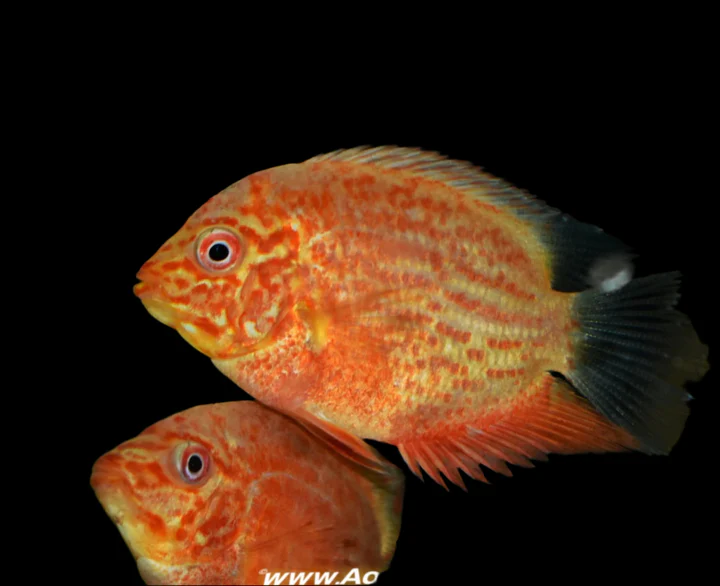
The Red Spotted Severum is a beautiful South American cichlid known for its developing red-orange spotting, elegant deep-bodied shape, and engaging personality. At 1.5 inches, this juvenile is an excellent size for aquarists who want to watch a young Severum grow and develop its adult coloration.
At Monster Aquarium Canada, we specialize in unusual and specialty freshwater fish for Canadian aquarium enthusiasts. This Red Spotted Severum is a great option for a spacious South American cichlid aquarium.
Red Spotted Severum Species Overview
Scientific Name
Heros appendiculatus / Heros efasciatus
Common Names
- Red Spotted Severum
- Red-Spotted Severum
- Red Spot Severum
- Red Spotted Hero Cichlid
- Severum Cichlid
The taxonomy surrounding the Heros group can be complex, and aquarium-trade names may be used for different forms and color varieties.
Origin
Severums are South American freshwater cichlids associated with the Amazon Basin and neighboring river systems.
Their natural habitats can contain:
- Slow-moving water
- Flooded forest
- Vegetation
- Driftwood
- Leaf litter
- Soft substrates
A natural aquarium setup with wood, plants, and open swimming areas works particularly well.
Red Spotted Severum Appearance
Developing Red-Orange Spots
The main attraction of this variety is its red to orange spotting, which can become more pronounced as the fish matures.
At 1.5 inches, this specimen is still very young, so its adult coloration and body shape have plenty of time to develop.
Potential characteristics include:
- Metallic green or olive background coloration
- Red-orange spots
- Darker body markings
- Deep oval-shaped body
- Long dorsal fin
- Long anal fin
- Attractive facial markings
- Developing metallic scales
Individual coloration can vary depending on genetics and maturity.
Aquarium Setup
Recommended Tank Size
Although this fish is only 1.5 inches, plan for its adult requirements from the beginning.
A 75-gallon aquarium or larger is recommended as a practical long-term starting point for a single adult Severum.
For a pair or a community containing several large fish, a 100-gallon-plus aquarium may be more appropriate.
Substrate
Fine sand or smooth gravel can be used.
Severums may move substrate while feeding and exploring, so avoid extremely sharp materials.
Decorations
Consider creating a South American-inspired environment with:
- Driftwood
- Smooth rocks
- Caves
- Hardy aquatic plants
- Floating plants
- Leaf litter
- Open swimming areas
Use decorations to create visual barriers and potential territories.
Water Parameters
Keep the aquarium clean and stable.
Recommended conditions include:
- Temperature: 76–82°F (24–28°C)
- pH: approximately 6.0–7.5
- Ammonia: 0 ppm
- Nitrite: 0 ppm
- Nitrate: Keep low with regular water changes
- Hardness: Soft to moderately hard
Stable water conditions are more important than constantly adjusting the aquarium toward a particular number.
Feeding a 1.5″ Red Spotted Severum
Young Severums should receive a nutritious, varied diet with food appropriately sized for their small mouths.
Recommended Foods
Offer:
- Small high-quality cichlid pellets
- Crushed flakes
- Small sinking pellets
- Spirulina-based foods
- Baby brine shrimp
- Frozen or finely sized brine shrimp
- Small portions of bloodworms
As the fish grows, gradually increase the size of its food.
Feeding Schedule
Small meals offered regularly are ideal for growing juveniles.
Avoid excessive feeding, since uneaten food can quickly affect water quality in a small juvenile’s aquarium.
A balanced diet can help support:
- Healthy growth
- Strong body development
- Normal coloration
- Good activity levels
Behavior and Temperament
Red Spotted Severums are generally considered peaceful to moderately territorial compared with many larger cichlids.
A juvenile may initially behave quite peacefully. Territorial behavior can become more apparent as the fish matures.
Aggression may increase during:
- Pair formation
- Spawning
- Territory establishment
- Competition for food
- Inadequate aquarium space
Providing a sufficiently large aquarium is important for long-term compatibility.
Tank Mates
Choose tank mates carefully and consider the adult size of every fish.
Potential companions can include appropriately sized:
- Other Severums
- Geophagus
- Angelfish
- Larger peaceful South American cichlids
- Larger tetras
- Plecos
- Peaceful catfish
- Compatible knifefish
Avoid extremely aggressive fish and very small fish that could eventually become prey.
Individual temperament always needs to be monitored.
Red Spotted Severum and Plants
Severums can be challenging with delicate live plants.
They may:
- Bite leaves
- Uproot plants
- Dig around roots
- Rearrange substrate
Hardy plants attached to driftwood or rocks can be easier to maintain.
Floating plants are another useful option for creating shade and cover.
Growth and Color Development
One of the biggest advantages of purchasing a 1.5-inch juvenile is being able to watch its transformation.
Juvenile Stage
At this size, the fish may have relatively subtle coloration and a slimmer body.
The red spotting may be less pronounced than it will become later.
Adult Development
As the fish matures, it may develop:
- More prominent red-orange spots
- Stronger metallic coloration
- Deeper body proportions
- Larger fins
- More developed facial markings
Genetics have a major influence on the final appearance of each fish.
Filtration and Aquarium Maintenance
Even though the fish starts small, it is important to establish strong filtration before it becomes an adult.
Recommended Filtration
Suitable options include:
- Canister filtration
- Sump filtration
- Strong biological filtration
- Efficient mechanical filtration
- Adequate oxygenation
Perform regular partial water changes and remove uneaten food.
Maintaining low nitrate levels is particularly important for young, growing fish.
Breeding Red Spotted Severums
Mature Severums can form pairs and breed in suitable aquarium conditions.
A breeding pair may clean and defend a flat surface such as:
- A rock
- Driftwood
- Aquarium decoration
- Smooth hard surface
Territorial behavior can become substantially stronger during spawning.
A large aquarium with visual barriers is particularly useful when maintaining a pair alongside other fish.
Why Choose a 1.5″ Red Spotted Severum?
Watch the Fish Develop
A juvenile gives you the opportunity to observe the development of body shape, size, fins, and coloration.
Attractive Red Spotting
The developing red-orange spotting makes this Severum especially appealing to cichlid enthusiasts.
South American Personality
Severums are active, intelligent fish that can become highly responsive to their keeper.
Excellent Centerpiece Potential
With proper care, this small juvenile can develop into an impressive adult centerpiece fish.
Buy Red Spotted Severum 1.5″ in Canada
Looking to buy a Red Spotted Severum (Heros appendiculatus / Heros efasciatus) 1.5″ in Canada?
Monster Aquarium Canada provides specialty freshwater fish for Canadian aquarists looking for unusual cichlids and distinctive aquarium livestock.
This 1.5-inch Red Spotted Severum is a great choice for an aquarist prepared to provide the space, filtration, nutrition, and long-term care required as the fish grows.
Canada-only sales: availability, quantities, and livestock sizes can change. Check the current Monster Aquarium Canada product listing for the latest availability before ordering.
Red Spotted Severum FAQs
1. What size is this Red Spotted Severum?
This listing is for a 1.5-inch juvenile Red Spotted Severum.
2. What is the scientific name?
It is listed as Heros appendiculatus / Heros efasciatus in the aquarium trade.
3. How large can a Red Spotted Severum become?
Severums can reach approximately 8 inches or more, depending on genetics, sex, diet, aquarium conditions, and overall care.
4. What should I feed a 1.5-inch Severum?
Use appropriately sized small cichlid pellets, crushed flakes, spirulina-based foods, and suitably sized frozen foods. Feed small portions regularly.
5. Can Red Spotted Severums live with other fish?
Yes. They can potentially live with appropriately sized, compatible South American fish when provided with sufficient aquarium space.
Be the first to review “Red Spotted Severum 1.5″ for Sale in Canada | Monster Aquarium”
Related products
Pre-Order Species
Hairy Puffer (Pao baileyi) Canada | Buy Hairy Puffer Fish Online
Predatory and Monster fish
Rocket Gar (Ctenolucius hujeta) 3 Inch for Sale Canada | Hujeta Gar Characin
All American Cichlids
Red Spotted Severum Heros for Sale in Canada | Monster Aquarium
Pre-Order Species
Blackberry Silver Dollar (Myleus sp. Blackberry) Canada | Buy Rare Silver Dollar Fish Online
Reviews
There are no reviews yet.