
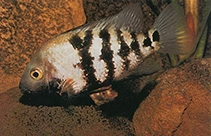
BLACKTHROAT CICHLID (Astatheros macracanthus) for Sale in Canada
The Blackthroat Cichlid (Astatheros macracanthus) is a distinctive Central American freshwater cichlid valued for its strong personality, attractive natural coloration, and robust body shape. This species is an interesting choice for aquarists who enjoy medium-to-large cichlids with territorial behaviour and the characteristic intelligence associated with Central American cichlids.
The Blackthroat Cichlid is best kept by aquarists who can provide adequate swimming space, strong filtration, suitable décor, and carefully selected tank mates. As it matures, its territorial instincts can become more pronounced, particularly when a pair forms or breeding begins.
At Monster Aquarium Canada, Astatheros macracanthus is a specialty freshwater cichlid for Canadian hobbyists looking to add an unusual Central American species to a properly planned aquarium.
Species Overview
Scientific Name
Astatheros macracanthus
Common Names
Blackthroat Cichlid, Black Throat Cichlid, Blackthroat Cichlid Fish.
Origin
The Blackthroat Cichlid is associated with Central American freshwater habitats, where it occurs in river and stream environments with rocky areas, submerged structures, and flowing water.
Species Type
Central American freshwater cichlid.
Adult Size
Depending on genetics, locality, diet, and aquarium conditions, adults can reach approximately 8–10 inches.
Because this species can become substantially larger than its juvenile size suggests, long-term aquarium planning is important.
Appearance and Coloration
The Blackthroat Cichlid develops an attractive, robust appearance as it matures.
Depending on age and mood, coloration can include:
- Gray
- Olive
- Brown
- Blue-green iridescence
- Dark vertical markings
- Dark throat coloration
- Yellow or orange highlights
- Contrasting fin coloration
The throat area can become particularly dark, contributing to the common name Blackthroat Cichlid.
Color intensity can change with environmental conditions, social interactions, breeding behaviour, and overall health.
Why Choose a Blackthroat Cichlid?
Key Features
- Distinctive Central American cichlid
- Attractive natural coloration
- Robust body shape
- Strong personality
- Intelligent and interactive behaviour
- Interesting territorial displays
- Potential breeding project
- Suitable for experienced cichlid keepers
- Excellent addition to a large Central American aquarium
This species is particularly appealing to aquarists who prefer naturally patterned cichlids rather than highly selected ornamental hybrids.
Aquarium Setup
Because the Blackthroat Cichlid can become a substantial adult, a 75-gallon aquarium or larger is a reasonable starting point for a single adult, with a larger aquarium recommended for a pair or community setup.
Substrate
Sand or smooth gravel works well.
Avoid sharp substrate that could damage the fish while it explores or moves material around the aquarium.
Decorations
Create territories with:
- Large rocks
- Driftwood
- Caves
- Root structures
- Ceramic shelters
- Hardy aquarium plants
Cichlids often rearrange their surroundings, so heavy decorations should be positioned securely.
Provide open swimming space in addition to sheltered areas.
Filtration
Strong filtration is recommended.
A mature Blackthroat Cichlid can produce considerable waste, making biological filtration and regular water changes important.
Suitable filtration may include:
- Large canister filters
- Sump filtration
- Oversized biological media
- Strong mechanical filtration
- Additional aeration
Water Parameters
Maintain stable tropical freshwater conditions:
- Temperature: 75–82°F (24–28°C)
- pH: approximately 6.8–8.0
- Hardness: soft to moderately hard
- Ammonia: 0 ppm
- Nitrite: 0 ppm
- Nitrate: preferably maintained at low levels
Stable water quality is more important than constantly attempting to achieve a specific number.
Diet and Feeding
The Blackthroat Cichlid is an omnivorous freshwater cichlid and benefits from a varied diet.
Recommended Foods
A quality cichlid pellet can be used as the primary food, supplemented with:
- Frozen bloodworms
- Brine shrimp
- Mysis shrimp
- Krill
- Insect-based foods
- Earthworms
- Spirulina-based foods
- Vegetable-rich cichlid foods
Juveniles can receive smaller meals more frequently, while adults can generally be fed once or twice daily.
Feed controlled portions to prevent obesity and unnecessary waste accumulation.
Behaviour and Temperament
Blackthroat Cichlids have the territorial personality commonly associated with Central American cichlids.
They can be active, curious, and highly responsive to their environment.
Territorial Behaviour
Aggression can increase when:
- The fish matures
- A pair forms
- Spawning begins
- Aquarium territory becomes limited
- Tank mates compete for the same hiding areas
Providing visual barriers and multiple territories can help reduce constant confrontations.
However, no aquarium layout can guarantee compatibility between individual cichlids.
Tank Mates
Tank mates should be chosen carefully and should generally be similar in size and temperament.
Potential companions in a sufficiently large aquarium may include appropriately sized:
- Central American cichlids
- Robust South American cichlids
- Large catfish
- Larger plecos
- Other sturdy aquarium fish
Avoid extremely small or delicate species.
Compatibility
A Blackthroat Cichlid may tolerate community conditions when properly planned, but individual temperament varies.
Always have a plan for separating fish if aggression becomes excessive.
Group Size
Young Blackthroat Cichlids can sometimes be raised together, but adult territorial behaviour should be expected.
A compatible pair may be maintained successfully in a large aquarium with sufficient territory.
Keeping several adults requires substantially more space and carefully designed territory boundaries.
Growth and Adult Size
Blackthroat Cichlids can grow considerably from their juvenile stage.
Adults may reach approximately 8–10 inches, depending on genetics, nutrition, and environmental conditions.
Growth can be supported by:
- High-quality food
- Clean water
- Regular water changes
- Adequate swimming space
- Low-stress conditions
- Strong filtration
Do not select the permanent aquarium based only on the fish’s current juvenile size.
Male vs Female
Sexual differences may be difficult to determine in young fish.
As adults mature, males may become larger and develop more pronounced fin extensions or coloration, while females can have a somewhat different body profile.
For juveniles, sex identification should be considered uncertain unless the fish has been specifically sexed.
Breeding
Blackthroat Cichlids can form pairs and exhibit parental care.
A breeding pair may select a protected area such as:
- A cave
- Rock surface
- Flat stone
- Piece of driftwood
- Sheltered section of the aquarium
The parents can guard eggs and fry.
During breeding, territorial behaviour may increase significantly, so provide enough space for the pair to establish a spawning territory away from other fish.
Blackthroat Cichlid for Sale in Canada
Looking to buy Blackthroat Cichlid (Astatheros macracanthus) in Canada?
Monster Aquarium Canada offers specialty freshwater fish for Canadian aquarium keepers looking for unusual cichlids and larger freshwater species.
Before purchasing a Blackthroat Cichlid, make sure you have considered its eventual adult size, temperament, filtration requirements, and compatibility with your existing fish.
For Canadian aquarists, important considerations include:
- Current specimen size
- Adult size
- Aquarium capacity
- Current inventory
- Shipping availability
- Tank-mate compatibility
- Long-term maintenance requirements
Livestock availability, size, coloration, and inventory can change. Please confirm current stock and shipping availability before ordering.
Frequently Asked Questions
1. How big does a Blackthroat Cichlid get?
A mature Blackthroat Cichlid can reach approximately 8–10 inches, although individual growth varies.
2. Are Blackthroat Cichlids aggressive?
They can be territorial, particularly as adults and during breeding. Their temperament varies between individuals, so tank mates should be selected carefully.
3. What size aquarium does a Blackthroat Cichlid need?
A 75-gallon aquarium or larger can be considered for a single adult, while a larger aquarium is recommended for pairs or community arrangements.
4. What do Blackthroat Cichlids eat?
They are omnivores and can eat quality cichlid pellets supplemented with shrimp, krill, worms, insects, frozen foods, and vegetable-based foods.
5. Can Blackthroat Cichlids breed in captivity?
Yes. Compatible adults can form pairs, spawn on protected surfaces, and guard their eggs and fry. Territorial behaviour usually increases during breeding.
Be the first to review “Blackthroat Cichlid for Sale in Canada | Astatheros macracanthus”
Related products
Peacock Bass
All American Cichlids
Gold Severum Heros efasciatus for Sale in Canada | Monster Aquarium
All American Cichlids
Snow Parrot Cichlid for Sale in Canada | Monster Aquarium Canada
Peacock Bass
Peacock Bass
Peacock Bass
Dwarf American Cichlids
Blue Guianacara (Guianacara owroewefi) for Sale Canada | Rare South American Cichlid
Reviews
There are no reviews yet.