
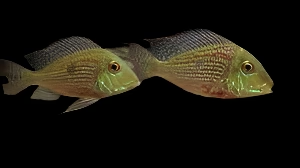
GEOPHAGUS SVENI “RIO ARAGUAIA” (Geophagus sveni)
The Geophagus sveni “Rio Araguaia” is a beautiful South American eartheater cichlid prized for its elegant body shape, shimmering coloration, peaceful temperament, and fascinating natural feeding behaviour. This Rio Araguaia form is especially appealing to aquarists and collectors interested in locality-associated Geophagus and uncommon South American cichlids.
Known for constantly sifting through sand in search of edible material, Geophagus sveni brings natural, active behaviour to a well-designed aquarium. Its combination of attractive coloration, manageable temperament, and interesting feeding habits makes it an excellent choice for a larger South American community aquarium.
Monster Aquarium Canada offers Geophagus and other specialty freshwater fish for Canadian aquarists.
Species Overview
Geophagus sveni is a South American eartheater belonging to the family Cichlidae. The species is associated with freshwater environments in Brazil, including river systems containing sandy substrates and rocky or woody structure.
The Rio Araguaia designation identifies fish associated with the Araguaia River region, making locality information particularly interesting to collectors who appreciate geographic forms.
Scientific Name
Geophagus sveni
Common Names
- Geophagus sveni
- Sven’s Eartheater
- Sveni Geophagus
- Sveni Eartheater
- Rio Araguaia Geophagus
- South American Eartheater
Origin
The species is native to Brazil, with Geophagus sveni associated with river systems including the Araguaia basin.
Natural habitats can include sandy river bottoms, submerged wood, rocks, vegetation, and flowing freshwater.
Appearance and Coloration
Geophagus sveni develops an attractive combination of metallic and earthy coloration as it matures.
Depending on age, sex, mood, genetics, and environmental conditions, mature specimens may develop:
- Metallic blue-green facial markings
- Gold or yellow body highlights
- Orange-red accents
- Iridescent scales
- Dark lateral markings
- Colourful dorsal and caudal fins
- Elongated dorsal fin extensions
The Rio Araguaia form is particularly interesting for aquarists who appreciate locality-associated fish.
Young specimens may appear relatively subdued before developing stronger adult coloration.
Why Choose Geophagus sveni “Rio Araguaia”?
This fish offers the classic appeal of an eartheater while remaining relatively peaceful compared with many large cichlid species.
Key Features
- Rio Araguaia locality
- Attractive South American eartheater
- Intelligent and active behaviour
- Peaceful community temperament
- Beautiful metallic coloration
- Fascinating sand-sifting behaviour
- Excellent group fish
- Suitable for large South American aquariums
- Attractive choice for cichlid collectors
Aquarium Setup
A 75-gallon aquarium or larger is recommended for a group of Geophagus sveni, with larger aquariums preferred as the fish mature.
Geophagus are social fish and generally look and behave best when kept in an appropriate group rather than as a solitary specimen.
Substrate
Fine sand is strongly recommended.
Eartheaters naturally take mouthfuls of substrate while searching for food. Coarse gravel or sharp substrate can interfere with this behaviour and potentially injure the mouth.
Decorations
A natural setup can include:
- Fine sand
- Driftwood
- Smooth rocks
- Root structures
- Hardy aquatic plants
- Open swimming areas
Leave substantial areas of open sand for natural feeding behaviour.
Water Parameters
Maintain clean, stable, well-oxygenated water.
Recommended conditions include:
- Temperature: 24–28°C
- pH: approximately 6.0–7.5
- Hardness: soft to moderately hard
- Strong oxygenation
- Moderate water movement
- Ammonia: 0 ppm
- Nitrite: 0 ppm
- Low nitrate
Regular water changes are particularly important for Geophagus because their constant substrate activity can contribute to suspended particles and organic waste.
Diet and Feeding
The name Geophagus is associated with the fish’s characteristic substrate-feeding behaviour. They sift sand through their mouths and gill structures to separate edible material from substrate.
In an aquarium, provide a varied diet consisting of:
- High-quality cichlid pellets
- Small sinking pellets
- Granules
- Frozen bloodworms
- Mysis shrimp
- Brine shrimp
- Daphnia
- Spirulina-based foods
Feed smaller portions several times rather than dumping large quantities of food into the aquarium.
Natural Feeding Behaviour
Watching a group of Geophagus sift through sand is one of the most enjoyable aspects of keeping these fish. They constantly investigate the substrate and process mouthfuls of sand while searching for food.
Behaviour and Temperament
Geophagus sveni is generally a relatively peaceful cichlid.
It is active, social, and intelligent, but it does not normally display the extreme aggression associated with many large Central American cichlids.
Keeping multiple individuals allows natural social behaviour to develop.
During breeding, however, territorial behaviour can increase.
Tank Mates
Geophagus sveni can work well in a large South American community aquarium.
Potential tank mates include appropriately sized:
- Angelfish
- Severums
- Peaceful South American cichlids
- Larger tetras
- Corydoras
- Plecos
- Other compatible Geophagus
Avoid highly aggressive species that may constantly harass the Geophagus.
Very small fish should also be selected cautiously as larger adult Geophagus may potentially consume extremely small tank mates.
Group Size
A group is generally preferable for Geophagus sveni.
Keeping several juveniles allows them to establish their social hierarchy naturally and can help distribute aggression between individuals.
A larger aquarium is necessary as the group matures.
Growth and Adult Size
Geophagus sveni can reach approximately 7–9 inches in captivity, although individual size varies according to genetics, nutrition, water quality, and aquarium conditions.
Juveniles may look relatively plain compared with mature fish. Good nutrition and excellent water quality can help them develop stronger adult coloration.
Breeding
Geophagus species can exhibit fascinating reproductive behaviour.
Depending on the specific species and conditions, Geophagus may use substrate-based spawning and parental care strategies. Mature pairs can become more territorial when breeding.
Providing fine sand, appropriate caves or flat surfaces, and sufficient space can encourage natural behaviour.
Geophagus sveni “Rio Araguaia” for Sale in Canada
Looking to buy Geophagus sveni “Rio Araguaia” in Canada? Monster Aquarium Canada offers specialty South American cichlids for aquarists interested in uncommon freshwater species.
The Rio Araguaia form is particularly attractive for collectors who value locality-associated fish and natural South American species.
Canadian customers searching for Geophagus sveni can shop from Toronto, Ontario, Vancouver, British Columbia, Calgary, Alberta, Montreal, Quebec, Winnipeg, Manitoba, and other Canadian destinations, subject to current livestock availability and shipping conditions.
Livestock availability, size, coloration, locality information, and inventory may change. Please confirm current stock before ordering.
Frequently Asked Questions
1. How big does Geophagus sveni get?
Adult Geophagus sveni can reach approximately 7–9 inches, depending on genetics, diet, sex, and aquarium conditions.
2. What substrate is best for Geophagus sveni?
Fine aquarium sand is the preferred substrate because the fish naturally sift sand through its mouth while feeding.
3. Are Geophagus sveni aggressive?
They are generally peaceful compared with many larger cichlids. However, territorial behaviour can increase during breeding.
4. Should Geophagus sveni be kept in groups?
Yes. They are social cichlids and generally benefit from being maintained in an appropriately sized group with sufficient aquarium space.
5. What does “Rio Araguaia” mean?
“Rio Araguaia” refers to the Araguaia River region of Brazil and is used in the aquarium trade to identify the locality or geographic origin associated with the fish.
Be the first to review “Geophagus sveni “Rio Araguaia” for Sale in Canada”
Related products
All American Cichlids
Monster Aquarium
All American Cichlids
Snow Parrot Cichlid for Sale in Canada | Monster Aquarium Canada
All American Cichlids
Nandopsis Tetracanthus 3″ for Sale in Canada | Cuban Cichlid
All American Cichlids
Red Spotted Severum Heros for Sale in Canada | Monster Aquarium
Pre-Order Species
Marbled Gar (Boulengerella maculata) 8 Inch Canada | Buy Freshwater Needlefish Online
All American Cichlids
Red Spotted Severum 3.5″ for Sale in Canada | Monster Aquarium
Pre-Order Species
Blackberry Silver Dollar (Myleus sp. Blackberry) Canada | Buy Rare Silver Dollar Fish Online
Reviews
There are no reviews yet.