RED HEADED CICHLID (Vieja synspilum) – For Sale in Canada
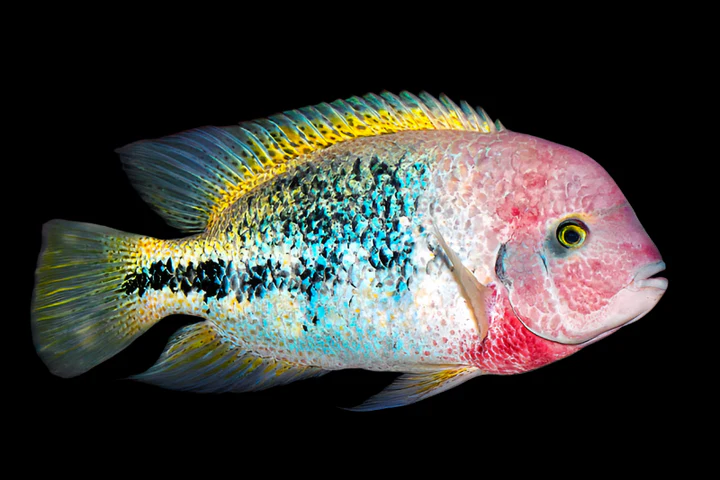
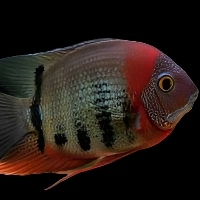
The Red Headed Cichlid (Vieja synspilum) is a spectacular Central American cichlid admired for its vibrant red-orange head, colorful body, dark markings, and impressive adult size. As this fish matures, its coloration can become increasingly dramatic, making it a fantastic centerpiece for an experienced cichlid keeper.
Also commonly called the Redhead Cichlid, Red Headed Cichlid, or Redhead Vieja, this species is best suited to a spacious aquarium with strong filtration and appropriately selected tank mates.
Monster Aquarium Canada offers quality freshwater aquarium livestock for Canadian hobbyists, with fish sizes and availability changing according to current inventory.
Red Headed Cichlid Species Overview
Scientific Name
Vieja synspilum
Common Names
- Red Headed Cichlid
- Redhead Cichlid
- Redhead Vieja
- Red Head Vieja
- Synspilum Cichlid
Origin
The Red Headed Cichlid is native to Central America, particularly freshwater systems in Mexico, Guatemala, and Belize. In the wild, it can be found in rivers, lakes, and other freshwater habitats with submerged wood, rocks, vegetation, and areas suitable for establishing territories.
Appearance and Coloration
The Red Headed Cichlid is especially popular because of its spectacular adult coloration.
Depending on age, genetics, and condition, mature fish can display:
- Brilliant red-orange coloration on the head
- Yellow, orange, or reddish body coloration
- Dark vertical bars
- Blue or turquoise highlights
- Darker dorsal and anal fins
- Iridescent markings across the face and body
- A deep, powerful body shape
Coloration can intensify when the fish is mature, healthy, displaying, or breeding.
Aquarium Setup
Recommended Tank Size
Vieja synspilum becomes a substantial cichlid, so aquarium size should be planned around its adult dimensions.
For a single adult, 75 gallons or larger is a practical starting point, while 90–125 gallons or larger is preferable for large specimens, pairs, or community setups.
A larger aquarium provides more room for swimming and helps establish separate territories.
Substrate
Good choices include:
- Fine sand
- Smooth gravel
- Rounded natural substrate
Red Headed Cichlids may dig and rearrange substrate, particularly when establishing territories or preparing for spawning.
Decorations
Use sturdy aquarium décor such as:
- Large driftwood
- Rocks
- Caves
- Roots
- Heavy aquarium-safe decorations
Secure decorations carefully because adult Vieja are powerful fish and may move objects while digging.
Water Parameters
Maintain clean and stable freshwater conditions:
- Temperature: approximately 24–28°C
- pH: approximately 6.5–8.0
- Hardness: soft to moderately hard
- Ammonia: 0 ppm
- Nitrite: 0 ppm
- Nitrate: preferably kept low
Consistency is more important than maintaining one exact pH number.
Feeding the Red Headed Cichlid
Red Headed Cichlids are omnivorous and benefit from a varied diet containing both plant-based and protein-rich foods.
Recommended Foods
Offer a combination of:
- High-quality cichlid pellets
- Cichlid sticks
- Spirulina-based foods
- Algae-based foods
- Zucchini
- Peas
- Mysis shrimp
- Brine shrimp
- Krill
- Earthworms
- Other appropriately sized frozen foods
A varied diet supports healthy growth, body condition, and coloration.
Avoid excessive feeding, especially with rich protein foods, because uneaten food and waste can rapidly affect water quality.
Behavior and Temperament
The Red Headed Cichlid is generally considered a moderately to strongly territorial cichlid.
Its temperament can change as it matures and may become more intense when:
- Establishing a territory
- Protecting food
- Forming a pair
- Breeding
- Protecting eggs or fry
It is not an ideal choice for a small peaceful community aquarium.
Experienced aquarists with large aquariums are better positioned to manage this species successfully.
Tank Mates
Choose tank mates carefully based on size, temperament, and available aquarium space.
Potential companions in a large aquarium can include appropriately sized:
- Vieja species
- Robust Central American cichlids
- Large Plecos
- Other sturdy cichlids
- Large catfish
Avoid very small or extremely peaceful fish that may be intimidated, injured, or consumed.
Even suitable tank mates can experience aggression because individual Vieja have different personalities.
Plants and Aquascaping
Red Headed Cichlids may dig around plants and can disturb delicate aquascaping.
For planted aquariums, consider attaching hardy plants to:
- Driftwood
- Rocks
- Heavy decorations
A combination of large driftwood, rocks, caves, and open swimming areas often works particularly well for this type of cichlid.
Growth and Color Development
Young Red Headed Cichlids can look relatively understated compared with mature specimens.
As the fish grows, its:
- Head coloration becomes more intense
- Body becomes deeper
- Red and orange coloration becomes more noticeable
- Facial iridescence develops
- Vertical markings become more defined
Genetics, nutrition, water quality, stress levels, and aquarium conditions all influence final coloration.
Filtration and Aquarium Maintenance
A mature Vieja produces substantial waste, making powerful filtration essential.
Recommended systems include:
- Large canister filters
- Sump filtration
- Oversized HOB filters
- High-capacity biological filtration
Use mechanical filtration to remove solid waste and biological filtration to process ammonia and nitrite.
Regular partial water changes are important for maintaining excellent water quality and supporting healthy growth.
Breeding Red Headed Cichlids
Vieja synspilum can breed in captivity when a compatible pair forms.
A spawning pair may select:
- Flat rocks
- Large pieces of wood
- Smooth aquarium surfaces
- Sheltered areas
During breeding, territorial behavior can become considerably stronger. Parents may aggressively defend eggs and fry against other fish.
A large aquarium with multiple territories is particularly important when keeping a breeding pair.
Why Choose a Red Headed Cichlid?
The Red Headed Cichlid is an excellent choice for experienced aquarists who want:
- Brilliant red-orange coloration
- A large Central American cichlid
- Strong personality
- Intelligent and interactive behavior
- Impressive adult size
- Interesting breeding behavior
- A dramatic centerpiece fish
Its combination of color, size, personality, and territorial behavior makes it especially popular among serious cichlid collectors.
Buy Red Headed Cichlid in Canada
Looking to buy a Red Headed Cichlid in Canada?
Monster Aquarium Canada provides freshwater aquarium livestock for Canadian fish keepers, cichlid enthusiasts, and collectors.
The Red Headed Cichlid is an excellent option for aquarists building a large Central American cichlid aquarium and looking for a fish that develops exceptional coloration with age.
Before purchasing, ensure your aquarium is large enough for the fish’s adult size and that your existing livestock can tolerate its temperament.
Livestock availability, specimen sizes, and inventory can change, so confirm current availability before ordering.
Frequently Asked Questions
1. How big does a Red Headed Cichlid get?
Adult Vieja synspilum can reach approximately 10–14 inches, with final size depending on genetics, sex, nutrition, aquarium conditions, and overall husbandry.
2. Is the Red Headed Cichlid aggressive?
It can be territorial and aggressive, particularly when mature or breeding. Proper aquarium size and carefully selected tank mates are important.
3. What size tank does a Red Headed Cichlid need?
A 75-gallon aquarium or larger is a reasonable starting point for a single adult, while larger tanks are recommended for pairs or community setups.
4. What does a Red Headed Cichlid eat?
It benefits from a varied omnivorous diet consisting of quality cichlid pellets, spirulina, vegetables, shrimp, krill, earthworms, and appropriately sized frozen foods.
5. Can I buy a Red Headed Cichlid in Canada?
Availability varies according to current livestock. Check Monster Aquarium Canada for current availability, specimen sizes, and Canadian shipping information.
Be the first to review “Red Headed Cichlid (Vieja synspilum) for Sale in Canada”
Related products
All American Cichlids
Salvini Cichlid 3″ for Sale in Canada | Monster Aquarium Canada
All American Cichlids
All American Cichlids
All American Cichlids
BUMBLEBEE OSCAR (astronotus crassipinnis ‘rio araguaia’ Wild caught) (RARE)
All American Cichlids
All American Cichlids
Nandopsis Tetracanthus 3″ for Sale in Canada | Cuban Cichlid
All American Cichlids
All American Cichlids
Reviews
There are no reviews yet.