
Platinum Redtail Catfish for Sale in Canada (2026 Guide)
Platinum Redtail Catfish for Sale in Canada (2026 Guide)
May
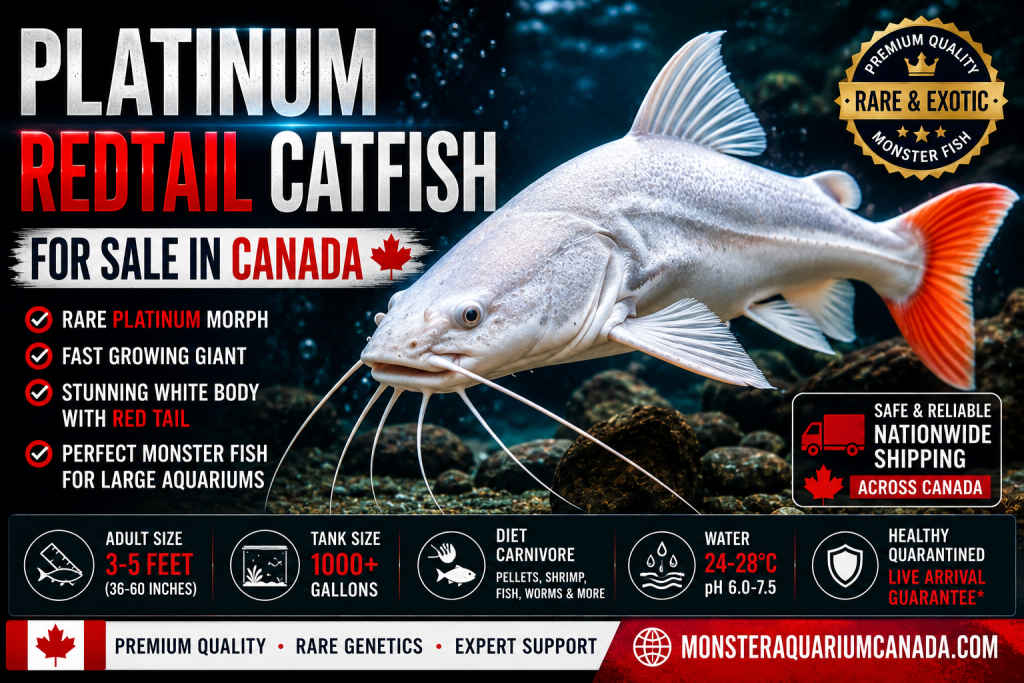
The Platinum Redtail Catfish is one of the rarest and most visually stunning monster fish available in the aquarium hobby. With its bright white metallic coloration, enormous growth potential, and powerful predatory nature, this fish has become a dream species for serious monster fish collectors across Canada. If you are searching for Platinum Redtail Catfish for sale in Canada, this complete 2026 guide covers everything from tank requirements and feeding to pricing, compatibility, and safe nationwide delivery. Platinum Redtail Catfish for Sale in Canada (2026 Guide)
What Is a Platinum Redtail Catfish?
The Platinum Redtail Catfish is a rare leucistic or platinum-colored variant of the traditional Redtail Catfish (Phractocephalus hemioliopterus). Unlike the standard variety, the platinum morph features a bright white or silver body with reduced pigmentation and a vivid orange-red tail.
Key Characteristics:
- Scientific Name: Phractocephalus hemioliopterus
- Common Name: Platinum Redtail Catfish
- Temperament: Predatory
- Lifespan: 15–20+ years
- Adult Size: 3–5 feet
- Growth Rate: Extremely fast
This fish is considered a premium collector’s monster fish due to its rarity and striking appearance.
Why Platinum Redtail Catfish Are So Popular
Monster fish hobbyists love Platinum RTCs because they combine massive size with exotic coloration.
Reasons Collectors Want Them:
- Rare platinum genetics
- Stunning white metallic body
- Impressive monster fish appearance
- Fast-growing giant catfish
- Excellent centerpiece fish for massive aquariums
Their unique coloration makes them one of the most desirable catfish morphs in the hobby.
How Big Does a Platinum Redtail Catfish Get?
Platinum RTCs grow just as large as standard Redtail Catfish.
Average Growth Timeline:
- Juvenile: 3–5 inches
- 6 months: 12–18 inches
- 1 year: 20–30 inches
- Adult: 36–60 inches
Many new owners underestimate how quickly they outgrow standard aquariums.
Tank Size Requirements
This species requires enormous tanks or indoor ponds.
Recommended Aquarium Sizes:
- Juveniles: 150–250 gallons
- Sub-adults: 300–500 gallons
- Adults: 1000+ gallons
Ideal Setup:
- Heavy-duty filtration system
- Strong water circulation
- Open swimming space
- Minimal sharp decorations
- Secure lids
Because they produce heavy waste loads, sump filtration systems are strongly recommended.
Water Parameters
Maintaining stable water conditions is essential for healthy growth.
Ideal Water Conditions:
- Temperature: 24–28°C
- pH: 6.0–7.5
- Ammonia: 0 ppm
- Nitrite: 0 ppm
- Nitrate: Below 40 ppm
Large weekly water changes are necessary for long-term health.
Platinum Redtail Catfish Diet
Platinum RTCs are powerful carnivorous fish with huge appetites.
Best Foods:
- Carnivore pellets
- Shrimp
- Fish fillets
- Mussels
- Earthworms
- Tilapia chunks
Feeding Tips:
- Feed high-quality varied foods
- Avoid excessive fatty meats
- Do not rely entirely on feeder fish
- Feed juveniles daily, adults less frequently
A balanced diet helps maintain healthy growth and coloration.
Temperament & Behavior
Platinum Redtail Catfish are predatory but not overly aggressive toward similarly sized tank mates.
Common Behaviors:
- Aggressive feeding response
- Active swimming behavior
- Territorial during meals
- Highly interactive with owners
Smaller fish will eventually become food.
Best Tank Mates for Platinum RTCs
Only keep them with large robust species.
Compatible Tank Mates:
- Silver Arowanas
- Peacock Bass
- Giant Gouramis
- Freshwater Stingrays
- Other giant catfish
Avoid:
- Small community fish
- Slow delicate species
- Tiny cichlids
If a fish can fit inside the Platinum RTC’s mouth, it is not a safe tank mate.
Platinum Redtail Catfish vs Standard Redtail Catfish
| Feature | Platinum RTC | Standard RTC |
|---|---|---|
| Coloration | White/silver body | Brown body |
| Rarity | Extremely rare | Common |
| Price | Very expensive | Affordable |
| Collector Value | High | Moderate |
Common Mistakes Owners Make
1. Underestimating Adult Size
These fish become massive very quickly.
2. Keeping Them in Small Aquariums
Long-term stunting causes health problems.
3. Weak Filtration
RTCs create enormous waste output.
4. Poor Diet Choices
Feeding low-quality foods can reduce health and lifespan.
5. Mixing With Small Fish
Most smaller tank mates eventually disappear.
Platinum Redtail Catfish Price in Canada (2026)
Because of their rarity, Platinum RTCs command premium prices.
Estimated Pricing:
- Small juveniles: $500–$1500
- Medium specimens: $2000–$5000
- High-grade rare imports: $10,000+
Prices vary depending on genetics, coloration quality, and availability.
Platinum Redtail Catfish Delivery in Canada
Shipping rare monster fish requires professional handling.
Professional Delivery Includes:
- Oxygen-filled fish bags
- Insulated shipping boxes
- Heat/cold packs for Canadian weather
- Overnight delivery services
Reliable shipping is critical for expensive rare fish.
Where to Buy Platinum Redtail Catfish in Canada
When searching for Platinum Redtail Catfish for sale in Canada, always choose a reputable monster fish specialist.
A quality seller should provide:
- Healthy quarantined fish
- Safe professional shipping
- Detailed care advice
- Live arrival guarantees when available
Is a Platinum Redtail Catfish Right for You?
This species is ideal for:
- Experienced monster fish keepers
- Indoor pond owners
- Serious collectors
- Large aquarium enthusiasts
They are not recommended for beginners or small tank setups.
Tips for Raising a Healthy Platinum RTC
To maximize healthy growth:
- Use oversized filtration
- Perform frequent water changes
- Feed high-quality protein foods
- Provide massive swimming space
- Avoid overcrowding
FAQs: Platinum Redtail Catfish in Canada
1. How big do Platinum Redtail Catfish get?
They can grow between 3 and 5 feet in captivity.
2. Are Platinum RTCs rare?
Yes, they are one of the rarest Redtail Catfish morphs available.
3. How fast do Platinum RTCs grow?
Very fast—juveniles can grow several inches monthly under optimal conditions.
4. What size tank does a Platinum RTC need?
Adults require 1000+ gallon systems or indoor ponds.
5. Are Platinum Redtail Catfish aggressive?
They are predatory but usually tolerant of similarly sized fish.
6. What do Platinum RTCs eat?
Carnivore pellets, shrimp, fish fillets, worms, and seafood-based foods.
7. Can Platinum RTCs live with Arowanas?
Yes, in extremely large aquariums with proper monitoring.
8. Why are Platinum RTCs expensive?
Their rare genetics and collector demand significantly increase pricing.
