Uncategorized
Premium Aquarium Upgrades in Canada: Functional Decor, Better Equipment, and Smarter Aquascaping
Nov
For many Canadian aquarists, upgrading an aquarium is no longer limited to buying a larger filter or adding another ornament. The current direction of the hobby is more thoughtful: aquascaping materials are selected for both appearance and function, equipment is chosen to improve stability, and small accessories are used to make maintenance safer and easier.
This approach is especially useful when shopping online. Instead of choosing products based only on colour or size, you can plan an aquarium around the needs of its inhabitants, the available space, and the practical demands of keeping water quality consistent through every season.
Whether you keep community fish, African cichlids, shrimp, discus, planted aquariums, or large predators, the best premium aquarium upgrades in Canada are those that improve the environment without creating unnecessary work. Here is how to choose them.
What makes an aquarium upgrade premium?
Premium does not always mean expensive. A high-quality upgrade should offer a clear benefit over a basic alternative. That benefit might be stronger construction, safer materials, easier cleaning, better control, or a more natural appearance.
For example, a simple cave can become a valuable upgrade when it has smooth edges, stable construction, and an opening sized for the fish using it. A basic filter can become more effective when its media is arranged correctly and its flow matches the aquarium. Even a small 3D printed part can be worthwhile if it prevents airline tubing from moving or keeps a feeding station securely in place.
Before buying, ask three questions:
- What problem will this product solve?
- Is it safe for the fish, plants, invertebrates, and water chemistry?
- Will it make routine aquarium care easier or more reliable?
Start with the livestock, not the decoration
The most common upgrade mistake is choosing attractive decor before considering the animals that will live in the aquarium. A layout suitable for small rasboras may not be appropriate for a large cichlid, pleco, crayfish, or red tail catfish.
Community and schooling fish
Tetras, barbs, rasboras, danios, and rainbowfish usually benefit from open swimming space combined with plants, wood, or rockwork around the edges. Avoid filling the centre of the aquarium with large objects that break up the swimming area. Smooth surfaces are also helpful for species that may dart around when startled.
Cichlids and territorial fish
African cichlids often use rockwork to establish territories and seek shelter. Stable structures with multiple sight breaks can reduce constant chasing. However, rocks must be arranged so they cannot collapse if fish dig beneath them. Place heavy hardscape directly on the aquarium base or on a suitable protective layer before adding substrate.
American cichlids, angelfish, discus, and other larger species may require a combination of open areas and secure retreats. Avoid sharp artificial edges, narrow holes, or decorations that could trap a fish during territorial disputes.
Large predators and monster fish
Monster fish often destroy delicate layouts simply through their size and behaviour. Large catfish, bichir, arowana, peacock bass, and similar species need robust equipment and generous swimming space. Lightweight ornaments can be moved, swallowed, or broken.
For these aquariums, a premium upgrade may be a reinforced background, heavy-duty substrate, strong filter intake protection, or a carefully planned shelter rather than a densely decorated aquascape. The goal is to create a safe, serviceable environment that can handle powerful fish.
Functional hardscape: when decoration does more
Hardscape includes rocks, wood, caves, backgrounds, ledges, and other permanent structures. In a well-planned aquarium, these features perform several jobs at once.
- Cover: gives shy fish a place to retreat.
- Territory: helps divide visual space between competing fish.
- Flow control: redirects strong currents and creates calmer areas.
- Surface area: provides places for beneficial microorganisms and algae.
- Visual structure: creates depth and makes the aquarium more natural.
When choosing materials, look for aquarium-safe products without exposed metal, peeling coatings, sharp points, or unknown chemical treatments. Natural stone should be selected carefully if you keep species that require specific water chemistry. Materials containing calcium carbonate, for instance, may raise hardness and alkalinity over time.
Planning a stable layout
Build the hardscape from the bottom up. Heavy pieces should be stable before substrate is added. Test the structure by gently pushing it from several directions. If it shifts easily, it may eventually fall when fish dig or when equipment is serviced.
Leave enough space around the glass, filter intake, heater, and cleaning tools. A beautiful arrangement that makes it impossible to remove a filter sponge is not a practical upgrade.
3D printed aquarium parts for everyday convenience
One of the most useful developments in aquarium accessories is the availability of purpose-built 3D printed parts. These products can solve small problems that standard equipment does not address well.
Common examples include airline holders, feeding rings, tubing clips, fry guards, cable organizers, filter intake protectors, and mounting brackets. Their value comes from fit and function rather than decoration.
What to check before using a 3D printed part
- Confirm that the material is intended for aquarium use and is free from unsafe coatings.
- Inspect the part for rough edges, loose fragments, or gaps that could trap small fish.
- Check whether it is suitable for freshwater, brackish water, or marine use.
- Make sure the design cannot block an intake or restrict water movement.
- Clean and rinse the part according to the seller’s instructions before installation.
Printed parts should not replace safe aquarium design. A protective intake cover, for example, must still allow adequate flow and should be checked regularly for debris. Small accessories are best viewed as maintenance tools that support good husbandry.
Equipment upgrades that improve aquarium stability
Premium aquascaping is easier when the equipment behind it is dependable. Before buying another decorative item, consider whether the aquarium would benefit more from an equipment improvement.
Filtration and water movement
Better filtration is not simply a matter of choosing the largest filter available. Mechanical media should capture waste without clogging immediately, while biological media needs consistent oxygenated flow. Flow should be strong enough to prevent stagnant areas but not so intense that fish struggle to swim.
Adding a pre-filter sponge to an intake can protect shrimp, fry, and small fish while extending the time between internal cleanings. It also provides additional biological surface area. Clean mechanical media in removed aquarium water rather than untreated tap water to avoid unnecessarily damaging beneficial bacteria.
Lighting and planted layouts
Lighting upgrades can improve plant growth and colour, but stronger light is not automatically better. Light intensity should match the plant selection, carbon availability, fertilization routine, and photoperiod.
If algae appears after a lighting upgrade, reduce the daily duration before making several other changes at once. A timer is one of the simplest premium accessories because it creates consistency, especially for aquarists who have busy schedules.
Water preparation and monitoring
Reliable water care is a foundation for every aquarium style. A water conditioner, test kit, siphon, thermometer, and appropriate bacterial supplement can be more valuable than a decorative item that provides no husbandry benefit.
Test source water and aquarium water before changing the chemistry. Buffers and mineral products should be used for a specific reason, such as meeting the requirements of a particular species or correcting a known parameter issue. Avoid chasing numbers without understanding the cause.
Premium upgrades for planted aquariums
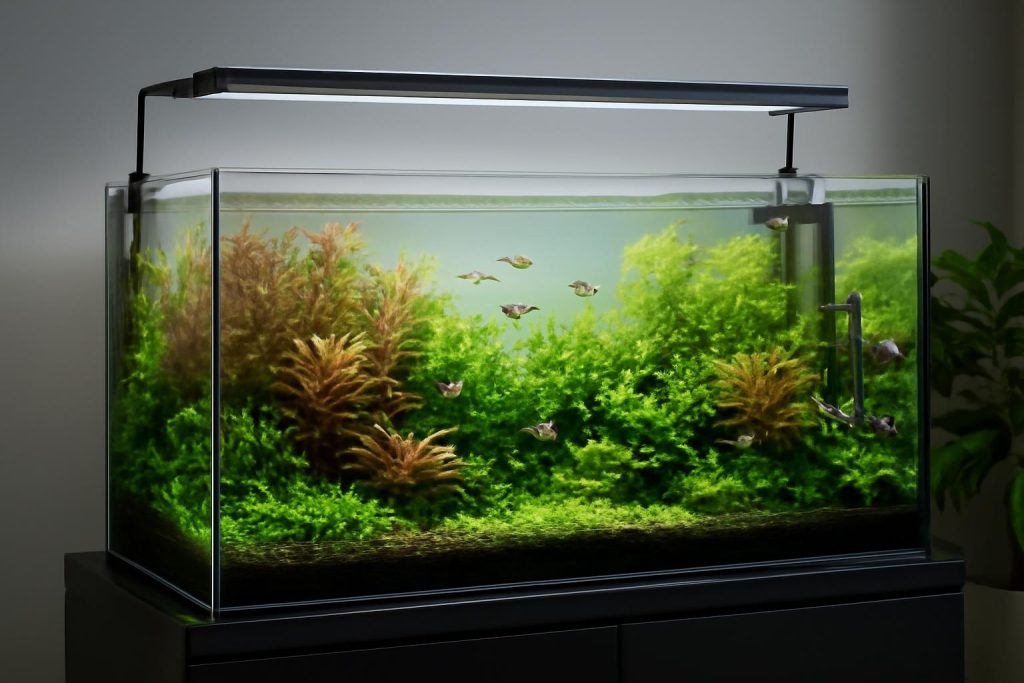
Planted aquariums benefit from upgrades that support root development, water circulation, and easy maintenance. Consider a substrate suited to the plants, a reliable light timer, plant weights or holders, and hardscape that gives stems and epiphytes secure attachment points.
Leave room for plant growth. An aquarium can look sparse immediately after planting but become crowded within a few months. Arrange taller plants toward the back, medium plants through the middle, and low-growing species near the foreground. This creates depth while preserving swimming space.
Fish selection matters as well. Some species uproot plants, while others constantly rearrange substrate. If you keep digging cichlids, large goldfish, or crayfish, choose hardy plants attached to wood or rock instead of relying only on delicate rooted species.
Choosing upgrades for shrimp and invertebrate aquariums
Shrimp, snails, crayfish, and dwarf frogs have different safety requirements from larger fish. Small animals can become trapped in oversized filter intakes, narrow gaps, or rough decorative openings.
Use fine pre-filter protection where appropriate and inspect every cave or ornament for spaces that could trap a shrimp or juvenile. Smooth, textured surfaces can encourage biofilm growth, which is useful for grazing species. However, all items should remain accessible enough to clean if waste accumulates.
For crayfish, stability is especially important. They are capable climbers and enthusiastic excavators, so lightweight decor may be moved overnight. Secure structures and a tightly fitted aquarium lid are practical upgrades.
Shopping for aquarium upgrades online in Canada
Canadian aquarists may be shopping from major cities, rural communities, or remote regions where local inventory is limited. Online shopping makes it easier to compare livestock categories, aquarium accessories, food, water treatments, and specialty equipment in one place. You can browse Monster Aquarium Canada for freshwater fish, unusual species, plants, equipment, and care products.
When comparing an item online, review its dimensions, intended use, material, compatibility, and cleaning requirements. For livestock-related accessories, consider the adult size of the animals rather than their current juvenile size. For equipment, confirm voltage, flow range, replacement media availability, and whether the product suits your aquarium volume.
If you are planning a complete setup, the site’s aquarium product categories can help you identify related groups, including fish, plants, water-quality products, bottom dwellers, cichlids, shrimp, snails, and equipment. You can also review current aquarium product listings when looking for specialty livestock or accessories that may not be available locally.
A practical upgrade plan for Canadian aquarists
You do not need to change everything at once. A staged plan is safer for both your fish and your budget.
- Test the aquarium: check temperature, ammonia, nitrite, nitrate, pH, and any species-specific parameters.
- Fix safety issues: secure unstable rocks, cover dangerous gaps, protect intakes, and repair damaged equipment.
- Improve maintenance: add a timer, pre-filter sponge, better siphon, or organized tubing system.
- Upgrade the environment: add suitable plants, wood, rocks, or shelters based on the livestock.
- Observe before adding more: watch fish behaviour, flow patterns, algae, and waste accumulation for at least several days.
This method prevents the common problem of making multiple changes at the same time and then being unable to identify what caused stress, cloudy water, or algae growth.
FAQs about premium aquarium upgrades in Canada
Are premium aquarium upgrades worth the cost?
They can be, provided the product solves a real problem. Durable, aquarium-safe items that reduce maintenance or improve fish safety often provide more value than decorative products chosen only for appearance.
What is the best first upgrade for a new aquarium?
Start with reliable water testing, a suitable filter, a timer, and safe equipment protection. These upgrades support stable water quality and prevent avoidable problems before adding more complex decor.
Can 3D printed aquarium parts be used with shrimp?
Some can, but inspect the material, finish, openings, and edges carefully. Shrimp and juveniles are easily trapped, so avoid parts with small gaps or rough surfaces unless they were specifically designed for that use.
How do I choose decorations for large fish?
Choose robust, stable materials with smooth edges and generous openings. Leave sufficient swimming space and avoid lightweight objects that large fish can move, break, or ingest.
Should I upgrade lighting or filtration first?
For most aquariums, filtration and water stability should come first. Upgrade lighting when your plant selection or viewing goals require it, and adjust the photoperiod gradually to reduce algae risk.
Final thoughts
The best aquarium upgrades combine design with responsible care. Functional hardscape, stable equipment, safe 3D printed accessories, appropriate lighting, and organized maintenance tools can make an aquarium more attractive while also improving the daily environment for its inhabitants.
Before adding anything, consider the adult size, behaviour, and water requirements of your fish or invertebrates. With that foundation in place, premium aquascaping becomes more than a visual trend: it becomes a practical way to build a healthier, easier-to-maintain aquarium anywhere in Canada.
