
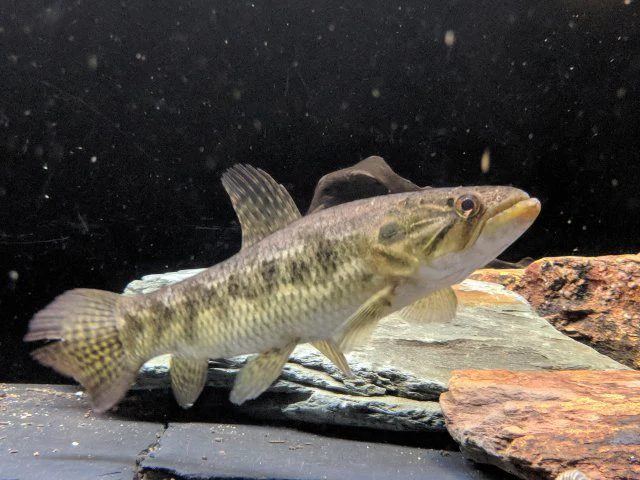
BLUE WOLF FISH (Hoplias lacerdae) for Sale in Canada
The Blue Wolf Fish (Hoplias lacerdae) is a powerful and highly predatory South American freshwater fish prized by monster-fish keepers for its rugged appearance, impressive jaws, muscular body, and predatory behaviour. Often sold in the aquarium trade as a Blue Wolf Fish, this species is an exciting choice for experienced aquarists looking for a large, aggressive predator with a very different appearance from traditional cichlids and catfish.
Hoplias lacerdae belongs to the Erythrinidae family, commonly known as the wolf fish or trahiras. It is an ambush predator that can spend long periods waiting for prey before making a sudden attack.
Because of its predatory nature and potential adult size, the Blue Wolf Fish should be considered a specialist aquarium fish. At Monster Aquarium Canada, it is best suited to experienced monster-fish keepers who can provide a large aquarium, powerful filtration, secure décor, and appropriately sized tank mates.
Species Overview
Scientific Name
Hoplias lacerdae
Common Names
Blue Wolf Fish, Blue Wolffish, Wolf Fish, Wolf Fish Cichlid (trade misnomer), Trahira, South American Wolf Fish.
Origin
Hoplias lacerdae is associated with South American freshwater habitats, particularly river systems in Brazil and surrounding regions.
The species is adapted to environments where ambush hunting is effective, including areas containing submerged vegetation, wood, rocks, and shaded structures.
Species Type
Large predatory South American freshwater fish belonging to the Erythrinidae family.
It is not a cichlid, despite the occasional use of cichlid-related terminology in the aquarium trade.
Adult Size
The Blue Wolf Fish can become a substantial predator, with adult size varying according to locality, genetics, nutrition, and aquarium conditions.
Plan for a large adult fish rather than purchasing a tank based on juvenile size.
Appearance and Coloration
The Blue Wolf Fish has the powerful body shape expected from a specialized predator.
Typical characteristics include:
- Thick, muscular body
- Large head
- Wide mouth
- Prominent teeth
- Strong jaw structure
- Dark gray to brown coloration
- Blue-gray or bluish tones in some specimens
- Subtle patterning
- Robust fins
- Predatory body profile
The intensity of the blue coloration can vary considerably between individuals.
Well-conditioned specimens can develop a striking metallic or blue-gray appearance, especially under suitable aquarium lighting and clean water conditions.
Why Choose a Blue Wolf Fish?
Key Features
- Powerful predatory freshwater fish
- Distinctive wolf-fish appearance
- Large mouth and impressive dentition
- Intelligent ambush-predator behaviour
- Excellent monster-fish centerpiece
- Suitable for experienced predator keepers
- Unique alternative to large cichlids
- Fascinating feeding behaviour
- Strong personality
The Blue Wolf Fish is particularly attractive to aquarists who enjoy observing natural predatory behaviour rather than simply keeping a colourful community fish.
Aquarium Setup
A Blue Wolf Fish should be housed in a large, secure aquarium.
Because it is a powerful predator, aquarium planning should account for both adult body size and its ability to move rapidly when striking prey.
A large 100-gallon-class aquarium or larger may be appropriate depending on the specimen’s eventual size, with substantially larger systems recommended for very large individuals.
Substrate
Sand or smooth gravel can be used.
Avoid sharp substrate because the fish may make sudden movements while hunting or reacting to food.
Decorations
Provide areas where the fish can establish an ambush position.
Suitable décor includes:
- Large driftwood
- Heavy rocks
- Root structures
- Large caves
- PVC or ceramic shelters
- Artificial plants
- Hardy live plants
All heavy decorations should be securely positioned because a large wolf fish can disturb aquarium décor.
Filtration
Strong filtration is essential.
Recommended systems may include:
- Large canister filters
- Sump filtration
- Oversized biological filtration
- Strong mechanical filtration
- Supplemental aeration
Wolf fish are messy predators, particularly when fed protein-rich foods, so regular water changes are essential.
Water Parameters
Aim for stable tropical freshwater conditions:
- Temperature: 75–82°F (24–28°C)
- pH: approximately 6.0–7.5
- Hardness: soft to moderately hard
- Ammonia: 0 ppm
- Nitrite: 0 ppm
- Nitrate: kept low through regular maintenance
Stable water conditions are more important than attempting to maintain an exact numerical value.
Diet and Feeding
The Blue Wolf Fish is a carnivorous predator.
A varied, high-quality diet is important for maintaining healthy growth and body condition.
Recommended Foods
Depending on specimen size and feeding response, suitable foods can include:
- Quality carnivore pellets
- Frozen shrimp
- Krill
- Mysis shrimp
- Earthworms
- Insects
- Frozen fish-based foods
- Other appropriately sized prepared predator foods
Live feeder fish should generally not be necessary as a staple diet and can introduce nutritional and disease risks.
A high-quality prepared predator diet is preferable for long-term aquarium maintenance.
Feeding Behaviour
Wolf fish are classic ambush predators.
They may remain motionless for extended periods before suddenly striking prey.
Do not mistake this inactivity for poor health. Their natural hunting strategy involves conserving energy and waiting for an opportunity.
Behaviour and Temperament
The Blue Wolf Fish is a predatory and territorial fish.
It may spend much of its time positioned around cover, waiting for food.
When feeding, it can become extremely fast and powerful.
Important Safety Consideration
The large mouth and teeth of a mature wolf fish make it unsuitable for careless handling.
Use appropriate aquarium equipment when performing maintenance, particularly with large specimens.
Never place your hand near the mouth of a large predatory fish.
Tank Mates
Tank-mate selection is one of the most important considerations when keeping Hoplias lacerdae.
Potential companions must be:
- Too large to swallow
- Robust enough to tolerate the fish
- Appropriately matched in temperament
- Suitable for the same water conditions
Depending on aquarium size and individual temperament, some large South American catfish and other robust monster fish may be considered.
Avoid Small Fish
Any fish that can fit into the Blue Wolf Fish’s mouth may eventually become prey.
This includes:
- Small tetras
- Small livebearers
- Juvenile cichlids
- Small barbs
- Small catfish
- Small community fish
Even if a small fish initially appears safe, predator growth can completely change compatibility.
Group Size
The Blue Wolf Fish is generally best considered a single-specimen predator unless the aquarist has a very large system and extensive experience with the species.
Keeping multiple wolf fish can result in territorial disputes and competition.
For most hobbyists, a dedicated aquarium provides the greatest control over feeding and compatibility.
Growth and Adult Size
Hoplias lacerdae is capable of substantial growth.
Growth rate depends on:
- Genetics
- Feeding
- Water quality
- Aquarium size
- Temperature
- Stress
- Overall husbandry
Do not purchase a juvenile without having a long-term plan for its adult size.
Large predatory fish can outgrow aquariums surprisingly quickly when provided with abundant nutrition.
Male vs Female
Sexual differences in young Blue Wolf Fish can be difficult to identify.
Reliable sexing generally becomes easier with mature specimens and breeding behaviour.
For juvenile fish, visual sex identification should be considered uncertain unless the seller has specifically sexed the fish.
Breeding
Breeding Hoplias species in captivity is a specialist project.
A mature pair requires substantial space, compatible individuals, suitable environmental conditions, and careful management of territorial behaviour.
Because wolf fish are predatory, breeding setups must be designed to reduce the possibility of aggression between adults.
Blue Wolf Fish for Sale in Canada
Looking to buy Blue Wolf Fish (Hoplias lacerdae) in Canada?
Monster Aquarium Canada specializes in freshwater fish and unusual monster-fish species for Canadian aquarium hobbyists.
The Blue Wolf Fish is best suited to experienced aquarists who understand the requirements of predatory freshwater fish.
Before purchasing, make sure you have:
- A sufficiently large aquarium
- Strong filtration
- Secure aquarium décor
- Appropriate predator foods
- Compatible tank mates, if any
- A long-term plan for adult size
- Safe maintenance procedures
Livestock availability, size, coloration, and inventory can change. Please confirm current stock and shipping availability before ordering.
Frequently Asked Questions
1. What is a Blue Wolf Fish?
The Blue Wolf Fish is the aquarium-trade name commonly associated with Hoplias lacerdae, a predatory South American freshwater fish in the Erythrinidae family.
2. Is the Blue Wolf Fish aggressive?
Yes. It is a predatory species that can be territorial and may attack fish that are small enough to be swallowed.
3. What does a Blue Wolf Fish eat?
It is primarily carnivorous and can be fed quality predator pellets, shrimp, krill, worms, insects, and other appropriately sized prepared foods.
4. Can Blue Wolf Fish live with other fish?
Potentially, but tank mates must be sufficiently large and robust. Any fish that can fit inside its mouth may be considered potential prey.
5. Is Hoplias lacerdae a cichlid?
No. Hoplias lacerdae belongs to the Erythrinidae family. The species is a predatory characiform fish, not a cichlid.
Be the first to review “Blue Wolf Fish for Sale in Canada | Hoplias lacerdae”
Related products
Monster Aquarium
Peacock Bass
Assorted and Interesting
Buy Arowana in Canada
Monster Aquarium
Monster Aquarium
Buy Arowana in Canada
Monster Aquarium
Reviews
There are no reviews yet.