
BUMBLEBEE OSCAR (Astronotus crassipinnis ‘Rio Araguaia’) Wild Caught – RARE
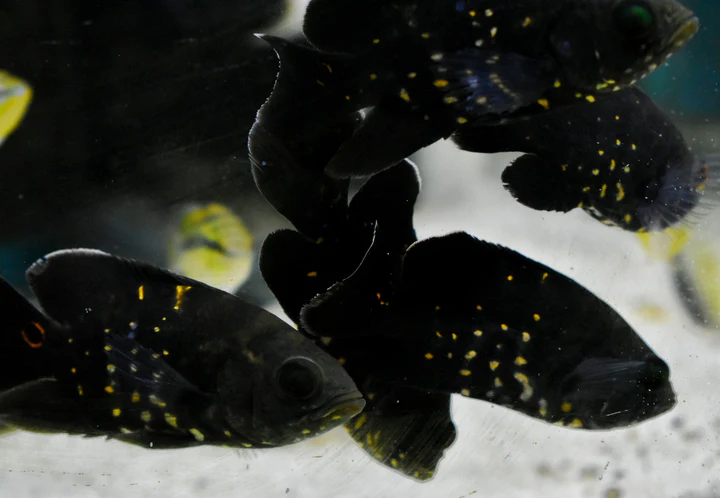
The Bumblebee Oscar (Astronotus crassipinnis ‘Rio Araguaia’) is a rare and highly desirable wild-caught Oscar-type cichlid from the Rio Araguaia region of Brazil. Known for its distinctive dark-and-golden coloration, robust body shape, and intelligent personality, this fish is an exciting choice for experienced cichlid keepers and collectors seeking something beyond the standard captive-bred Oscar.
Wild-caught specimens can display exceptional natural coloration and individual markings that develop as the fish matures. The ‘Rio Araguaia’ locality designation is particularly attractive to collectors interested in geographic forms and unusual South American cichlids.
At Monster Aquarium Canada, this is a specialty fish intended for aquarists who understand the space, filtration, feeding, and long-term commitment required by a large Oscar-type cichlid.
Species Overview
Scientific Name
Astronotus crassipinnis ‘Rio Araguaia’
Common Names
Bumblebee Oscar, Bumble Bee Oscar, Rio Araguaia Oscar, Wild-Caught Bumblebee Oscar, Wild Oscar.
Origin
This fish is associated with the Rio Araguaia drainage in Brazil, part of the Amazon basin region of South America.
The Rio Araguaia is known for diverse freshwater habitats, including rivers, tributaries, flooded areas, rocky structures, submerged wood, and areas with seasonal changes in water conditions.
Species Type
Large South American freshwater cichlid.
Collection Type
Wild Caught
Rarity
RARE
Because this is a wild-caught locality fish, availability can be considerably more limited than common captive-bred Oscar varieties.
Appearance and Coloration
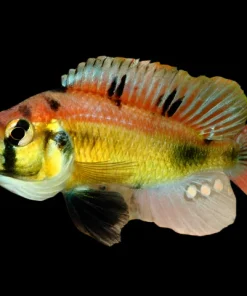
The Bumblebee Oscar name refers to the attractive contrast that can develop between dark body markings and golden, yellow, orange, or lighter areas.
Wild specimens can display considerable individual variation.
Potential characteristics include:
- Deep charcoal to black body markings
- Golden-yellow coloration
- Orange highlights
- Irregular natural patterning
- Dark vertical bars
- Metallic blue or green iridescence
- Red-orange accents around the face and fins
- Thick, powerful body shape
The exact appearance of a wild-caught fish can change significantly with age, mood, water quality, diet, and social environment.
One of the attractions of wild-caught specimens is that each individual can have its own natural pattern and coloration.
Why Choose a Bumblebee Oscar?
Key Features
- Rare wild-caught Oscar-type cichlid
- Rio Araguaia locality
- Distinctive Bumblebee-style coloration
- Large and powerful body
- Highly intelligent behaviour
- Interactive personality
- Excellent collector fish
- Natural wild coloration
- Unique individual markings
- South American freshwater species
This fish can be particularly appealing to collectors who want a locality-associated Oscar rather than a conventional commercial color morph.
Wild-Caught Considerations
Wild-caught fish should be given time to adjust to aquarium life.
After arrival, a wild specimen may initially be more cautious than a captive-raised Oscar.
Allow the fish to acclimate gradually and provide:
- Excellent water quality
- Hiding areas
- Low-stress surroundings
- Appropriate nutrition
- Stable temperature
- Strong oxygenation
- Consistent maintenance
Avoid excessive handling or unnecessary aquarium changes during the initial acclimation period.
Aquarium Setup
Bumblebee Oscars require a large aquarium because of their adult size and powerful swimming behaviour.
For long-term housing, a 75-gallon aquarium or larger is commonly recommended for a single adult, while a substantially larger aquarium is preferable for pairs or community setups.
Substrate
Fine sand or smooth gravel can be used.
Avoid sharp substrates that could damage the fish when it investigates or rearranges the aquarium.
Decorations
Oscar-type cichlids can rearrange aquarium décor, so decorations should be heavy and secure.
Suitable options include:
- Large driftwood
- Smooth rocks
- Large caves
- Root structures
- Robust aquarium ornaments
Leave plenty of open swimming space.
Filtration
Powerful filtration is essential.
A large Oscar produces significant waste, so consider:
- Oversized canister filtration
- Sump filtration
- Strong mechanical filtration
- High-capacity biological filtration
- Adequate water circulation
Regular water changes are just as important as filtration.
Water Parameters
Maintain stable tropical freshwater conditions:
- Temperature: 75–82°F (24–28°C)
- pH: approximately 6.0–7.5
- Hardness: soft to moderately hard
- Ammonia: 0 ppm
- Nitrite: 0 ppm
- Nitrate: preferably kept low
Wild-caught fish should not be subjected to unnecessary fluctuations in temperature or water chemistry.
Stable conditions are particularly important during acclimation.
Diet and Feeding
Bumblebee Oscars are opportunistic omnivores and should receive a varied, nutritious diet.
Recommended Foods
A quality large-cichlid pellet can form the foundation of the diet, supplemented with:
- Krill
- Shrimp
- Mysis shrimp
- Earthworms
- Insect-based foods
- Frozen bloodworms
- Frozen brine shrimp
- High-quality cichlid foods
- Occasional vegetable-based foods
Wild-caught fish may require patience when first introduced to prepared aquarium foods.
Gradually introduce high-quality pellets and other prepared foods while providing suitable frozen or natural-style foods during acclimation.
Feeding Juveniles
Smaller specimens can be fed small portions several times throughout the day.
As the fish grows, feeding can transition toward one or two controlled meals per day.
Avoid excessive feeding because Oscars produce considerable waste.
Behaviour and Temperament
Oscars are intelligent, curious, and highly interactive cichlids.
A Bumblebee Oscar may learn to recognize its keeper and can become very responsive around feeding time.
However, personality varies between individual fish.
Although Oscars are not necessarily among the most aggressive large cichlids, they can become territorial and may attack smaller or incompatible tank mates.
Tank Mates
Because this is a large cichlid, tank mates should be selected carefully.
Potential companions in a sufficiently large aquarium can include appropriately sized:
- Large South American cichlids
- Severums
- Large Geophagus
- Compatible large catfish
- Silver Dollars
- Other robust fish of similar size
Avoid small fish that can fit into the Oscar’s mouth.
Compatibility Warning
A wild-caught Bumblebee Oscar should not automatically be assumed to accept every community fish.
Individual temperament matters, and tank size plays a major role in determining compatibility.
Always have a backup plan if aggression develops.
Group Size
A single Bumblebee Oscar can make an excellent centerpiece fish.
If keeping multiple Oscars, provide a substantially larger aquarium and carefully monitor aggression as the fish mature.
Pairs can become territorial, especially during breeding.
For a rare wild-caught specimen, many collectors may prefer a dedicated aquarium that allows the fish’s natural coloration and personality to be the focus.
Growth and Adult Size
Oscar-type cichlids are fast-growing fish when provided with excellent care.
An adult can reach approximately 12–14 inches, depending on genetics, nutrition, environment, and individual growth.
Because the fish can become large and heavy-bodied, plan the aquarium around its adult requirements rather than its juvenile size.
A small fish purchased today can eventually require a very substantial aquarium and filtration system.
Male vs Female
Sexing young Oscars can be difficult.
There are generally no highly reliable external characteristics that allow the sex of a juvenile to be determined with certainty.
Mature fish may show behavioural differences during breeding, but reliable sex identification is usually easier when observing spawning behaviour or reproductive characteristics.
Breeding
Oscars are substrate-spawning cichlids.
A compatible mature pair may clean a flat surface such as:
- A large rock
- Slate
- Flat piece of driftwood
- Other smooth aquarium surface
The female lays eggs on the prepared surface, and both parents can participate in guarding and caring for the eggs.
Breeding can increase territorial behaviour considerably.
Bumblebee Oscar for Sale in Canada
Looking to buy a rare wild-caught Bumblebee Oscar (Astronotus crassipinnis ‘Rio Araguaia’) in Canada?
Monster Aquarium Canada specializes in unusual freshwater fish for Canadian aquarium hobbyists and collectors.
This RARE wild-caught Rio Araguaia fish is best suited to experienced aquarists who can provide:
- A large aquarium
- Powerful filtration
- Excellent water quality
- Appropriate nutrition
- Long-term space planning
- Careful tank-mate selection
Wild-caught availability can be limited, and individual coloration may vary.
Current size, coloration, availability, inventory, and shipping options can change. Please confirm current stock before ordering.
Frequently Asked Questions
1. What is a Bumblebee Oscar?
The Bumblebee Oscar is a rare Oscar-type fish associated with Astronotus crassipinnis ‘Rio Araguaia’, known for contrasting dark and golden coloration and its South American locality association.
2. Is the Bumblebee Oscar wild caught?
Yes. This listing is specifically for a wild-caught Rio Araguaia specimen.
3. How big can a Bumblebee Oscar get?
Oscar-type cichlids can reach approximately 12–14 inches under suitable conditions, although individual growth varies.
4. Are Bumblebee Oscars aggressive?
They can be territorial and should be kept with appropriately sized, compatible fish. Individual temperament varies considerably.
5. What size aquarium does a Bumblebee Oscar need?
A 75-gallon aquarium or larger should be considered for a single adult, with larger systems recommended for pairs or community arrangements.
Be the first to review “Bumblebee Oscar for Sale in Canada | Wild Caught Rio Araguaia”
Related products
Buy Snakehead Fish in Canada
Pre-Order Species
Spider Kelberi Peacock Bass (Cichla kelberi “Spider”) Canada | Buy Rare Peacock Bass Online
Pre-Order Species
Spotted Swamp Eel (Synbranchus marmoratus) Canada | Buy Rare True Freshwater Eel Online
Pre-Order Species
Yellow Belly Albert Cichlid 3” Show Male Canada | Buy Astatotilapia aeneocolor Online
Buy Snakehead Fish in Canada
Reviews
There are no reviews yet.