Yellow Pea Puffer Captive Bred (Carinotetraodon travancoricus) for Sale in Canada
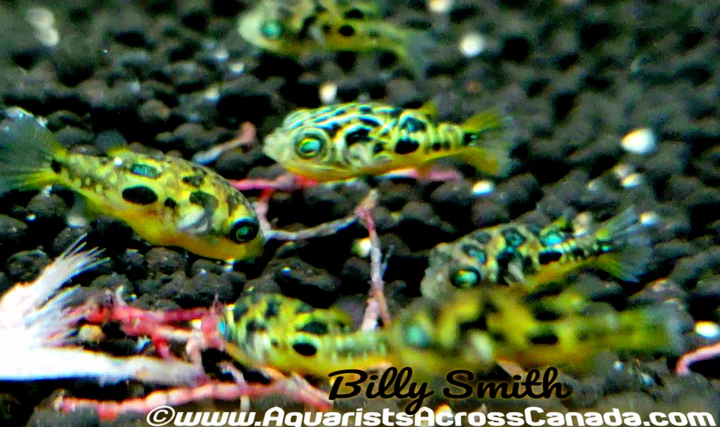
The Yellow Pea Puffer (Carinotetraodon travancoricus) is a fascinating freshwater aquarium fish known for its compact size, expressive eyes, curious personality, and attractive yellow-green body covered with distinctive dark markings. Also known as the Pea Puffer or Dwarf Puffer, this species may be small, but it is famous for having a huge personality.
This listing features a captive-bred Yellow Pea Puffer, making it an excellent choice for aquarists interested in a fish raised under aquarium conditions. Pea Puffers are intelligent, highly observant, and active hunters. Many individuals quickly become interested in activity around the aquarium and spend their time exploring plants, décor, and every corner of their environment.
Unlike many other pufferfish, Carinotetraodon travancoricus is a true freshwater species and does not require brackish or marine water. With proper care, stable water conditions, and a varied carnivorous diet, the Yellow Pea Puffer can become one of the most entertaining fish in a freshwater aquarium.
Monster Aquarium Canada offers Captive Bred Yellow Pea Puffers for aquarium hobbyists across Canada.
Why Choose a Captive-Bred Yellow Pea Puffer?
A Tiny Freshwater Puffer With an Enormous Personality
Yellow Pea Puffers are admired for their:
Unique Features
Premium Characteristics
- Captive-bred specimen
- Attractive yellow-green coloration
- Distinctive dark markings
- Large, expressive eyes
- Curious and intelligent behaviour
- Fascinating hunting instincts
- True freshwater pufferfish
- Compact aquarium-friendly size
- Individual personalities
- Excellent species-focused aquarium fish
Every Pea Puffer can have its own personality, making each fish especially interesting to observe.
Aquarium Size
A 10-gallon aquarium or larger can be suitable for a single Pea Puffer when properly maintained. Larger aquariums are recommended for multiple fish.
Pea Puffers can be territorial, so providing enough space, dense planting, and visual barriers is extremely important.
Recommended Aquarium Setup
- Mature biological filtration
- Gentle water movement
- Stable temperatures
- Excellent water quality
- Dense live plants
- Driftwood
- Smooth rocks
- Caves and hiding places
- Visual barriers
- Open areas for hunting
- Secure aquarium lid
A heavily planted aquarium can provide security while helping to break lines of sight between fish.
Water Parameters
- Scientific Name: Carinotetraodon travancoricus
- Common Name: Yellow Pea Puffer
- Also Known As: Pea Puffer, Dwarf Puffer
- Origin: India
- Adult Size: Approximately 1–1.5 inches (2.5–3.5 cm)
- Temperature: 24–28°C (75–82°F)
- pH: 6.5–7.8
- GH: 5–15 dGH
- Care Level: Moderate
- Temperament: Territorial and highly individual
- Diet: Carnivorous
- Swimming Level: All levels
- Lifespan: Approximately 3–5+ years with proper care
A mature aquarium with stable water parameters is important. Avoid sudden changes in temperature or water chemistry.
Feeding Your Yellow Pea Puffer
Pea Puffers are carnivorous and require a varied diet of appropriately sized meaty foods.
Recommended Foods
- Frozen bloodworms
- Live or frozen blackworms from safe sources
- Brine shrimp
- Daphnia
- Small pest snails
- Other appropriately sized invertebrate foods
- High-quality carnivorous foods when accepted
Individual feeding preferences can vary, so offering variety is beneficial.
The Importance of Small Snails
Small hard-shelled snails can provide natural feeding enrichment and may help support normal beak wear. They should be part of a varied feeding program rather than the only food offered.
Are Yellow Pea Puffers Good Community Fish?
Tank Mate Selection Requires Care
Pea Puffers are not always suitable for a traditional community aquarium. Individual temperament varies, and some fish may nip fins or harass other tank mates.
For many aquarists, a species-focused aquarium is the safest and most rewarding setup.
Tank Mate Considerations
In larger, heavily planted aquariums, experienced aquarists may attempt carefully selected companions. However, compatibility cannot be guaranteed.
Avoid:
- Long-finned fish
- Slow-moving fish
- Small ornamental shrimp
- Highly aggressive species
- Very small fish that may be harassed
- Fish that require significantly different water conditions
Always monitor introductions carefully and have a backup aquarium available if separation becomes necessary.
Keeping Multiple Pea Puffers
Captive-bred Pea Puffers can sometimes be maintained in groups, but careful planning is essential.
Important Considerations
- Use a sufficiently spacious aquarium
- Provide dense planting
- Create multiple visual barriers
- Add plenty of hiding places
- Avoid overcrowding
- Feed appropriately
- Monitor individual behaviour
- Be prepared to separate aggressive fish
Individual personality plays a major role. Some Pea Puffers may coexist peacefully, while others can become territorial.
Benefits of Captive-Bred Pea Puffers
Captive-bred fish may offer several advantages for aquarium hobbyists.
Potential Benefits
- Raised under aquarium conditions
- Familiarity with captive environments
- Potentially easier transition to prepared or frozen foods
- Reduced pressure on wild populations
- Known captive-raised origin
Individual behaviour and feeding response can still vary, so careful acclimation and observation remain important.
Supporting Healthy Colour and Condition
The appearance and overall health of your Yellow Pea Puffer depend on genetics, nutrition, water quality, and aquarium conditions.
Care Tips
- Maintain excellent water quality
- Feed a varied carnivorous diet
- Avoid overfeeding
- Provide dense planting and cover
- Create natural hunting opportunities
- Maintain stable temperatures
- Minimize unnecessary stress
- Perform regular aquarium maintenance
Healthy Pea Puffers are generally alert, active, and highly curious about their surroundings.
Breeding Yellow Pea Puffers
Captive breeding of Carinotetraodon travancoricus is possible for experienced aquarists.
Breeding Considerations
- Use healthy, well-conditioned adults
- Provide dense vegetation
- Maintain excellent water quality
- Feed a varied protein-rich diet
- Provide numerous hiding places
- Monitor interactions carefully
Dense plants and mosses can provide useful cover for spawning and developing fry.
Raising Fry
Young fry require extremely small foods during their earliest development. As they grow, they can gradually transition to larger, appropriately sized live and prepared foods.
Successful breeding requires planning and access to suitable foods for developing fry.
Why Buy Captive-Bred Yellow Pea Puffer from Monster Aquarium Canada?
Unique Captive-Bred Aquarium Fish
Monster Aquarium Canada offers unique freshwater fish for hobbyists looking for unusual and exciting additions to their aquariums.
Carefully Selected Aquarium Fish
Fish are selected for qualities such as:
- Healthy body condition
- Alert behaviour
- Active swimming
- Strong feeding response
- Attractive appearance
Canadian Aquarium Fish Supplier
Monster Aquarium Canada specializes in freshwater fish, rare tropical fish, monster fish, freshwater shrimp, crayfish, aquatic snails, aquarium plants, fish foods, medications, and aquarium supplies for Canadian aquarists.
Frequently Asked Questions
1. How large does a Yellow Pea Puffer grow?
Carinotetraodon travancoricus generally reaches approximately 1–1.5 inches (2.5–3.5 cm) as an adult.
2. Is the Yellow Pea Puffer a true freshwater fish?
Yes. The Pea Puffer is a true freshwater species and does not require saltwater or brackish water.
3. Are Yellow Pea Puffers peaceful?
Their personalities vary. Pea Puffers can be territorial and may nip or harass tank mates, so a species-focused aquarium is often recommended.
4. What do Captive-Bred Yellow Pea Puffers eat?
They are carnivorous and can eat appropriately sized foods such as bloodworms, brine shrimp, daphnia, and small snails as part of a varied diet.
5. What does captive bred mean?
Captive bred means the fish was bred and raised in captivity rather than being collected directly from the wild.
Be the first to review “Captive Bred Yellow Pea Puffer for Sale Canada | Buy Carinotetraodon travancoricus”
Related products
Reviews
There are no reviews yet.