
PERSIMMON BLOOD PARROT (Amphilophus citrinellus × Paraneetroplus synspilus)
Persimmon Blood Parrot Overview
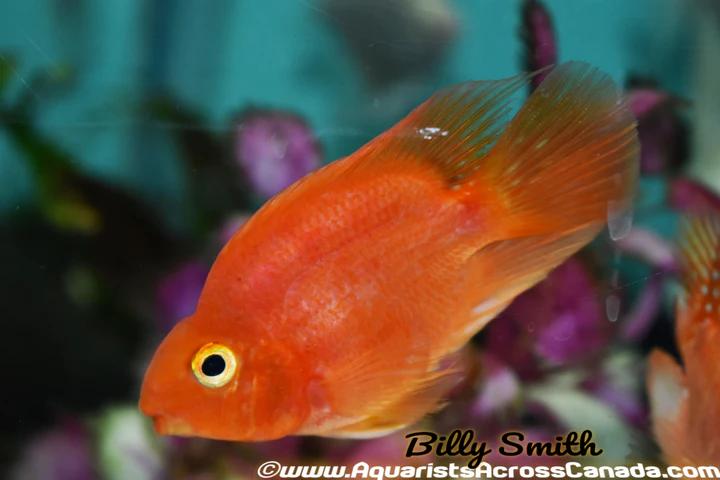
The Persimmon Blood Parrot is a distinctive ornamental cichlid hybrid prized for its warm persimmon, orange-red, and peach coloration. This fish combines the bold personality of Central American cichlids with the compact, rounded body shape associated with Blood Parrot-type hybrids.
At Monster Aquarium Canada, the Persimmon Blood Parrot is an excellent choice for aquarists looking for a colorful centerpiece fish with plenty of personality.
Scientific name: Amphilophus citrinellus × Paraneetroplus synspilus
Common name: Persimmon Blood Parrot
Family: Cichlidae
Type: Ornamental freshwater cichlid hybrid
Origin: Captive-bred hybrid
Water type: Freshwater
Temperament: Semi-aggressive
Diet: Omnivorous
Lifespan: Commonly several years with proper care
Taxonomy note: Blood Parrot-type fish are captive-produced hybrids, and their exact parentage and appearance can vary between breeding lines. The parentage listed here is the supplied identification for this Persimmon Blood Parrot variety.
Appearance and Coloration
Persimmon Color
The main attraction of this variety is its rich persimmon coloration. Depending on age, genetics, diet, lighting, and water quality, the body can display shades ranging from peach and orange to deeper reddish-orange.
Body Shape
Like other Blood Parrot-type hybrids, it typically has a rounded, deep-bodied appearance with a relatively small mouth. The combination gives the fish a unique appearance that stands out in a community aquarium.
Color Development
Young fish may initially appear less intensely colored than mature specimens. Color can strengthen as the fish grows and settles into a suitable aquarium environment.
Good nutrition, stable water conditions, and low stress are important for maintaining strong natural coloration.
Aquarium Setup
A Persimmon Blood Parrot should be kept in a well-filtered, mature aquarium with plenty of swimming space.
Recommended Tank Size
For a single adult, a tank of approximately 55 gallons or larger is a good starting point. Larger aquariums are recommended for groups or community setups.
More space is especially important when keeping this fish with other cichlids because territorial behavior can increase as the fish matures.
Substrate
A fine or smooth substrate such as sand or rounded gravel works well.
Avoid sharp gravel that could potentially damage the fish while it searches for food.
Decorations
Provide a combination of:
- Smooth rocks
- Caves
- Driftwood
- Artificial or hardy live plants
- Open swimming areas
Blood Parrot-type cichlids often appreciate shelters and visual barriers that allow them to establish territories.
Filtration
Use strong biological and mechanical filtration. These fish produce a considerable amount of waste, so efficient filtration is essential.
A canister filter, large hang-on-back filter, or appropriately sized combination of filters can work well depending on aquarium size and stocking.
Water Parameters
Aim for stable, clean freshwater conditions.
Recommended range:
- Temperature: 75–80°F (24–27°C)
- pH: approximately 6.5–8.0
- Hardness: Soft to moderately hard
- Ammonia: 0 ppm
- Nitrite: 0 ppm
- Nitrate: preferably kept below approximately 20–40 ppm
Consistency is generally more important than trying to maintain one exact number.
Regular partial water changes help maintain water quality and reduce accumulated organic waste.
Diet and Feeding
The Persimmon Blood Parrot is an omnivorous cichlid that benefits from a varied diet.
Recommended Foods
A quality cichlid pellet can form the foundation of the diet. Supplement with:
- High-quality sinking pellets
- Floating cichlid pellets
- Frozen foods
- Bloodworms
- Brine shrimp
- Mysis shrimp
- Insect-based foods
- Spirulina-based foods
Feed appropriately sized portions once or twice daily, depending on the fish’s age and activity.
Avoid excessive feeding because Blood Parrot-type fish can be prone to overeating.
Behavior and Temperament
Personality
One of the reasons these fish are popular is their personality. They can become active and recognizable aquarium residents that learn feeding routines and investigate activity around the aquarium.
Semi-Aggressive Nature
Although often more manageable than many large Central American cichlids, they should still be treated as semi-aggressive cichlids.
Individual temperament varies considerably.
Provide enough space, hiding areas, and visual barriers to reduce territorial disputes.
Tank Mates
Suitable tank mates should generally be similar in size, temperament, and water requirements.
Potential companions can include appropriately sized:
- Severum
- Larger peaceful-to-semi-aggressive cichlids
- Larger tetras
- Medium-to-large catfish
- Some plecos
- Compatible Blood Parrot-type cichlids
Avoid very small fish that could be harassed or eaten, as well as extremely aggressive species that may constantly intimidate the Blood Parrot.
Always introduce tank mates according to aquarium size and the temperament of the individual fish.
Plants and Aquascaping
Persimmon Blood Parrots can work in planted aquariums, but delicate plants may be disturbed.
Best Choices
Consider hardy plants such as:
- Anubias
- Java fern
- Vallisneria
- Amazon sword
- Cryptocoryne
Attaching plants such as Anubias and Java fern to rocks or driftwood can reduce the chance of them being uprooted.
Growth and Development
The growth rate depends on genetics, diet, water quality, tank size, and general care.
Provide:
- High-quality nutrition
- Excellent filtration
- Regular water changes
- Adequate swimming space
- Stable temperature
- Low-stress surroundings
A spacious aquarium is particularly important as the fish develops its adult body shape and personality.
Breeding
Blood Parrot hybrids have complicated reproductive histories. Many Blood Parrot-type fish have reduced fertility, although breeding behavior can still occur.
Fish may display behaviors such as:
- Pair formation
- Territorial defense
- Cleaning a spawning surface
- Courtship
- Egg laying
Successful reproduction depends heavily on the genetics of the individual fish and its particular breeding line.
Why Choose a Persimmon Blood Parrot?
The Persimmon Blood Parrot is an excellent choice for aquarists who want something different from conventional cichlid varieties.
Key Highlights
- Beautiful persimmon-orange coloration
- Unique Blood Parrot-type body shape
- Interesting personality
- Eye-catching centerpiece fish
- Suitable for larger community aquariums with compatible tank mates
- Attractive option for cichlid collectors
- Captive-bred ornamental hybrid
Its unusual coloration makes it particularly appealing to hobbyists building a collection of distinctive freshwater fish.
Persimmon Blood Parrot for Sale in Canada
Looking to buy a Persimmon Blood Parrot in Canada?
Monster Aquarium Canada specializes in unusual freshwater fish and aquarium livestock for Canadian aquarists.
This fish can make an impressive centerpiece for a properly established aquarium, particularly when provided with adequate swimming space, filtration, and compatible tank mates.
Livestock availability, size, coloration, and exact appearance can vary. Availability may change without notice, so check the current Monster Aquarium Canada livestock selection before ordering.
Canada-Only Livestock Sales
Monster Aquarium Canada focuses on serving aquarists in Canada. When purchasing live fish, always ensure your aquarium is fully cycled and prepared before the livestock arrives.
Frequently Asked Questions
1. How big does a Persimmon Blood Parrot get?
Adult size varies by genetics and breeding line, but Blood Parrot-type hybrids can reach several inches in length. Providing a spacious aquarium allows the fish to develop properly.
2. Is the Persimmon Blood Parrot aggressive?
It is generally considered semi-aggressive. Individual personality varies, so adequate aquarium space and carefully selected tank mates are important.
3. What size tank does a Persimmon Blood Parrot need?
A 55-gallon aquarium or larger is a reasonable starting point for a single adult, with larger tanks preferred for multiple fish or community setups.
4. What should I feed a Persimmon Blood Parrot?
Feed a quality cichlid pellet or similar staple food and supplement it with appropriately sized frozen or prepared foods such as bloodworms, brine shrimp, mysis shrimp, and insect-based foods.
5. Can I buy a Persimmon Blood Parrot in Canada?
Yes, availability depends on current livestock inventory. Monster Aquarium Canada offers freshwater aquarium livestock to Canadian customers, with availability and sizes changing regularly.
Be the first to review “Persimmon Blood Parrot for Sale in Canada | Monster Aquarium Canada”
Related products
Reviews
There are no reviews yet.